Aviation
Currency in the Clouds: Customs Rallies Airline Operators in War Against Illicit Funds
At 35000 feet above sea level, while flight attendants serve coffee and cross-check seatbelts, another battle brews silently, a battle against the unlawful movement of cash across borders. In a landmark move to clip the wings of money laundering, the Nigeria Customs Service (NCS), in collaboration with sister agencies, has taken the fight directly to the skies on Saturday, July 5, 2025, when it held a strategic sensitisation session for international airline operators at the Nnamdi Azikiwe International Airport, Abuja.
The high-level engagement was aimed at strengthening Nigeria’s anti-money laundering regime and promoting strict compliance with the country’s currency declaration laws. Airline operators were urged to actively support the enforcement process by ensuring that passengers are informed both on board and on the ground about their obligation to declare funds exceeding $10,000 or its equivalent.
“We have dedicated search rooms, secondary inspection points, and designated posts for currency declarations. Announcements are now being made through the Public Address System, and we’ve secured the commitment of airline operators to replicate these messages in-flight,” said Assistant Comptroller of Customs, Salihu Mas’ud, who led the exercise.
Assistant Comptroller of Customs in charge of the Anti-Money Laundering and Countering the Financing of Terrorism Unit, Salihu Mas’ud

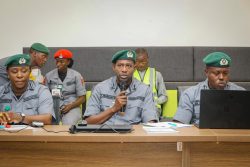
Mas’ud, who oversees the Anti-Money Laundering and Countering the Financing of Terrorism Unit, described the exercise as timely, adding that sustained cooperation between airlines, airport authorities, and law enforcement agencies was essential to plug financial leakages exploited by criminal networks.
Under Nigeria’s financial regulations, travellers entering or exiting the country with amounts above $10,000 are legally required to declare the funds to customs officials. Non-compliance may lead to confiscation, interrogation, and prosecution under the Money Laundering (Prohibition) Act.
Officials explained that enforcement mechanisms have been significantly enhanced to detect violators and promote deterrence.
“We expect higher compliance going forward. This sensitisation will reinforce our enforcement architecture and ensure that defaulters are detected and referred for investigation and prosecution,” Mas’ud added.
A key focus of the session was the mandatory electronic submission of flight manifests , including complete passenger information such as names, origin and destination countries, and flight details prior to landing. This, officials said, enables targeted risk assessments and improves the capacity of customs and intelligence operatives to identify high-risk passengers.

A cross section of attendees
The NCS noted that these digital tools now form part of its real-time border surveillance system, which integrates airline data with security intelligence to intercept suspicious financial flows.
READ ALSO: Apapa Customs Intercepts ₦9.2bn Worth of Unregistered Pharmaceuticals, Codeine, Other Items
The event also spotlighted the importance of multi-agency collaboration, with representatives from the Nigeria Immigration Service (NIS), Economic and Financial Crimes Commission (EFCC), NDLEA, FAAN, and the Department of State Services (DSS) in attendance.
According to Mas’ud, inter-agency cooperation remains critical in safeguarding national economic interests and combating the financing of terrorism, smuggling, and organised crime At 35000 feet above sea level.
As Nigeria intensifies efforts to meet international standards in financial transparency and border control, the NCS has reaffirmed its commitment to awareness, enforcement, and strategic stakeholder engagement.
Saturday’s session marks a significant step in turning airline operators into proactive partners in the fight against money laundering — reminding all that compliance is no longer optional, and ignorance is no longer excusable.
For more on currency declaration guidelines or to report suspicious financial activities, visit the Nigeria Customs Service website: www.customs.gov.ng