Crime
High on Despair: Nigeria’s Youth Trapped in the Grip of Drugs
In the heart of Nigeria’s bustling streets, beyond the noise of politics and the gloss of celebrity scandals, a silent epidemic is spreading one that steals potential, silences dreams, and sows death in slow motion.
They call it “getting high,” but thousands of Nigeria’s youths are sinking low dragged by the claws of drug and substance abuse into an abyss where hope is a hallucination, and healing is nowhere in sight.


Some abused drugs and substances
From the lean corners of Ajegunle to the dusty back alleys of Kano, the scourge has become an uninvited guest in homes, schools, and even religious gatherings. Tramadol, codeine syrup, cannabis, rohypnol, crystal meth (popularly called “ice”), and newer synthetic poisons are now the “breakfast” of a generation gasping for direction.
According to a 2018 report by the United Nations Office on Drugs and Crime (UNODC), over 14.3 million Nigerians aged 15- 64 had used drugs other than tobacco and alcohol, with one in every four drug users being a woman. The numbers have only grown grimmer, and still, the national response remains a paper tiger roaring with words but toothless in action.
“We’re losing a whole generation to the lie of temporary escape,” says Dr. Obasi, a psychiatrist and addiction specialist at the Neuropsychiatric Hospital, “They think drugs make them forget their problems, but what they really do is erase their future. Rehabilitation centers are overstretched, underfunded, and in some states, nonexistent.”

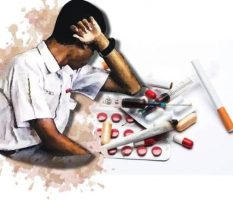
Drug abuse :High on Despair
In the small town of Osogbo, Mrs. Balogun, a 68 Years old trader, popularly called mama adugbo, still speaks of how Tobi the only son of her former tenants he’s been gone for three years.

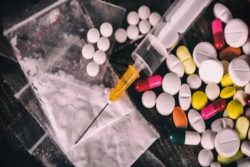
Drug and substance abuse
“He was just 19, bright and full of laughter. One day, he left home as usual to hang out with his peers, He said he wanted to ‘go chill.’ Not knowing he had been introduced to taking pills and drinking cough syrup. Before we knew it, he had dropped out of school. His life style changed. He became someone we couldn’t recognize, violent, paranoid, thin like a broomstick,” she says, wiping away tears with her headscarf. “Then one night he came back home as usual slept and didn’t wake up from that sleep. They said his heart stopped. Our hearts stopped too.”
READ ALSO:Naira weakens to N1,535/$ at official market despite CBN’s interest rate hold
In the chaos of Lagos, Joshua O, a 35 Years-old graphic artist, speaks with rage and regret about the many friends he has buried in the past five years.
“We used to share ideas, now we share funeral photos. Too many good guys lost to crack and codeine. The street is full of zombies. Go to any party in Surulere or Lekki someone’s passing pills like candy. No one cares until the body drops.”
While the National Drug Law Enforcement Agency (NDLEA) has made notable seizures and arrests, its fight often feels like mopping the ocean with a towel. For every trafficker caught, ten more operate in the shadows. For every user rehabilitated, dozens fall through the cracks.
“It’s like we’re applying band-aids on bullet wounds,” laments Dr. Obasi. “We need aggressive prevention, not just punishment. Mental health education, youth engagement, family support, and functional rehab must be made national priorities.”
But in a country where unemployment climbs, poverty deepens, and despair thickens, drugs offer a seductive illusion: instant relief. A temporary passport out of hardship. But the visa expires quickly and the cost is always paid in pain and sometimes jail time.
Nigeria’s youth are often called the leaders of tomorrow but tomorrow is burning, and the fire is not from passion, it’s from pipes and pills. They’re not chasing dreams anymore; they’re chasing highs.
The streets don’t whisper anymore they scream. “Ice” is no longer cold; it’s melting minds. “Loud” “Kolos” is not just a slang it’s a death knell. Syrup has become the lullaby that lures many to sleep, never to wake.
The question is not whether Nigeria is in crisis. The question is how many more must die before we act like it?
Until solutions are not just drafted but delivered until drug lords are not just arrested but dethroned until rehabilitation is not a privilege but a right the future will keep overdosing on the failures of today.
Because right now, the only thing getting high in Nigeria… is the body count.