
Education
UK tuition fees for international students may rise with inflation, says Education Secretary

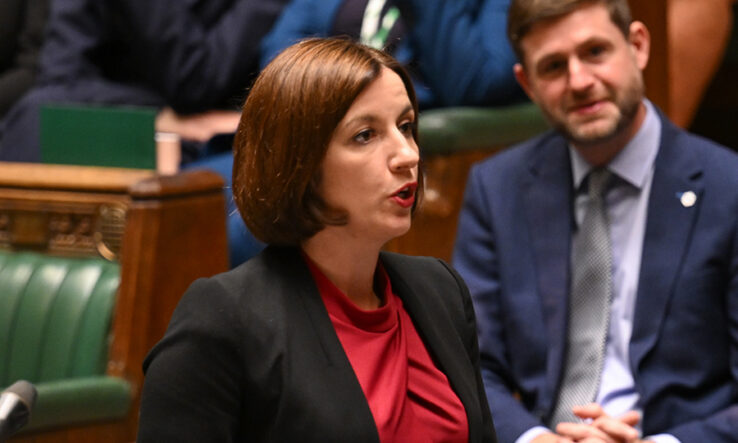
Tuition fees for international students in the United Kingdom (UK) may increase in line with inflation, as announced by the Secretary of State for Education, Bridget Phillipson.
However, she stated that it is unlikely there will be any increase in tuition fees for domestic students, which have remained relatively stable since they were raised to £9,000 in 2012 and later to £9,250 in 2017.
Phillipson emphasized that universities in England facing severe financial difficulties should not expect government bailouts, despite warnings from the sector about potential job losses, course closures, and bankruptcies.
She affirmed that the new Labour government will maintain the graduate route, allowing international students to apply to stay in the UK and work or seek employment after graduation.
Acknowledging the significant impact of international students on the local economy and regeneration efforts, Phillipson highlighted the ‘soft power’ and global reach these students provide when they return home after their studies.
She criticized the previous Conservative government for its adversarial approach towards the higher education sector, stressing the need for appropriate regulation.
READ ALSO: Foundation holds career dialogue on children education in Ewulu, Delta State
The potential increase in tuition fees is seen as a response to the UK’s university funding crisis, which has gained significant media attention. This financial strain has forced 66 universities—over a third of the sector—to cut jobs and courses. Phillipson noted that universities are autonomous and are expected to manage their budgets without seeking taxpayer support.
She called for a sharper focus on regulating the sector to ensure universities are financially stable.
Earlier this year, UK study visa applications fell to record lows following the previous government’s implementation of rules banning master’s students from bringing dependents. The UK’s appeal was further diminished by the review of the Graduate Route and negative messaging surrounding migration and international students.
Viviene Stern, chief executive of Universities UK, stated that the sharp downturn in student numbers has been a significant challenge for universities. She called for a positive government statement affirming the welcome of international students and the continuation of the graduate route.
The UK’s university funding crisis has been described by the Sunday Times as a “catastrophe,” with more than a third of universities cutting jobs and courses.
According to Universities UK, which represents 142 institutions, approximately 70 universities are actively implementing cost-saving measures, including job and course cuts. Institutions like Goldsmiths, University of London, and the universities of Lincoln, Huddersfield, and Central Lancashire are among those affected.
To mitigate financial challenges, universities have increasingly relied on recruiting students from Nigeria, China, and India. However, recruitment from these markets has been impacted by the ban on dependents and the devaluation of the Nigerian currency, causing financial volatility for universities dependent on international student enrollment.
The potential increase in tuition fees may further reduce student numbers from Nigeria if implemented.


-

 Sports3 days ago
Senegal opens Dakar 2026 Youth Olympic Games, Africa’s first Olympic event
-

 Latest5 days ago
Tinubu endorses Nigeria’s participation in 2026 World Travel Market London
-

 Football4 days ago
U-17 Women’s World Cup: Flamingos Beat Mexico to Reach Quarter-Finals
-

 News1 week ago
Rugby: Borthwick Faces Key Selection Questions as World Cup Looms
-

 Latest3 days ago
Netanyahu, Eisenkot face coalition deadlock as Israel struggles to form new government
-
 Featured4 days ago
How court ruling reshapes APC’s Imo West Senatorial contest
-

 Crime1 week ago
Passengers feared abducted on Kebbi-Abuja journey as viral video shows armed men threatening captives (VIDEO)
-
 Business2 days ago
NNPC’s N66-per-litre petrol discount set to end October 31