Health
Beyond the Blue Tube: Rethinking Nigeria’s Fluoride Habit for Biomimetic Oral Care
By Dr. Anthony Oseghale
For over half a century, Nigerian households have shared a virtually identical morning ritual: squeezing a ribbon of minty paste from a tube stamped with the promise of “strong teeth and cavity protection.” Across Lagos, Kano, Port Harcourt, and Enugu, fluoride toothpaste has long been accepted as an undisputed law of personal hygiene.
Yet across global toxicology circles, functional medicine networks, and integrative dental research, a paradigm shift is taking place. Emerging science and the rise of biomimetic dentistry prompt a critical question: Has our reliance on fluoride overlooked its potential risks, and is it time to adopt safer, bio-identical alternatives?
The Unspoken Risks: Toxicological Scrutiny and Systemic Warnings
To understand why toxicologists and integrative health experts are sounding alarms, one must examine how fluoride interacts with the human body beyond the tooth surface.
In young children whose swallowing reflexes are still developing, regular ingestion of fluoride toothpaste poses a direct threat: dental fluorosis. Characterized by mottled, chalky white spots or brown staining on developing enamel, fluorosis is no longer just an aesthetic nuisance—it is a visible sign of systemic overexposure.
Beyond enamel, recent toxicological reports scrutinize systemic accumulation. Studies, including a landmark monograph by the U.S. National Toxicology Program (NTP), highlight potential links between high fluoride exposure and subtle neurodevelopmental changes in children. Prominent medical authorities have voiced growing concern:
“Fluoride is a neurotoxin that carries zero essential physiological function in the human body. Accumulating research indicates that ingested fluoride during early developmental windows can impair cognitive development.”
— Dr. Philippe Grandjean, Harvard T.H. Chan School of Public Health
“When applied topically, fluoride alters tooth mineral surface, but when ingested systematically—as occurs routinely with young children swallowing toothpaste—the safety margin between cavity prevention and systemic toxicity is dangerously narrow.”
— Dr. Paul Connett, Professor Emeritus of Toxicological Chemistry, St. Lawrence University
While industrial defenders argue topical toothpaste is harmless if spit out, pediatric dentists acknowledge young children consistently swallow up to 40% of their toothpaste. In Nigeria, where clean water access varies and dietary variables fluctuate, adding daily ingested fluoride to a child’s chemical load carries unnecessary risks.
A Global Policy Shift: Mass Fluoridation Under Siege
Skepticism surrounding fluoride is no longer confined to academic journals—it has reached the highest corridors of global policy.
In the United States, U.S. Health and Human Services Secretary Robert F. Kennedy Jr. spearheaded a federal campaign to re-evaluate community water fluoridation under his “Make America Healthy Again” initiative, instructing the CDC to drop its support due to developmental risks.
This federal push reflects growing state-level action:
- Utah’s Historic Ban: Utah became the first U.S. state to enact a total legislative ban on fluoride in public drinking water.
- Legislative Momentum: Multiple state legislatures introduced bills aiming to eliminate added fluoride from municipal water supplies.
If major global powers are actively dismantling mid-20th-century mass fluoridation policies over health concerns, continuing to view fluoride as an irreplaceable requirement in consumer products requires urgent re-examination.
Evaluating Source Bias: Why Has Fluoride Dominated So Long?
If evidence against unmonitored fluoride intake is mounting, why does traditional guidance remain immovable?
- Funding Sources & Institutional Inertia: Major oral care conglomerates heavily funded dental research chairs, public health campaigns, and professional endorsements for decades. Reversing an established regulatory standard is financially and bureaucratically difficult.
- Methodological Limitations: Conventional studies championing fluoride often evaluate it in isolation against zero-treatment controls rather than comparing it directly against modern biomimetic agents under real-world conditions.
- The Local Reality: In Nigeria, public health bodies historically promoted fluoride as a cheap, mass-market intervention for tooth decay in under-resourced communities. While well-intentioned, this one-size-fits-all model overlooks modern chemical sensitivities and clean-ingredient alternatives.
Acknowledging the Counter-Argument
Defenders of fluoride correctly note that decades of public health data link fluoridated regimens to reduced dental decay. Fluoride reacts with natural tooth minerals to create fluorapatite, an acid-resistant barrier on enamel. In populations with zero access to preventive dental care or balanced nutrition, fluoride served an unquestioned historical purpose.
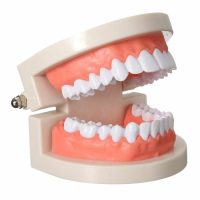

However, acknowledging fluoride’s past utility does not mean ignoring its modern flaws. The crucial point isn’t whether fluoride can prevent decay—it is that we no longer need to accept toxicity risks to achieve optimal oral health.
The Clean Alternative: Hydroxyapatite and Xylitol
Modern dental science has opened the door to biomimetic oral care—products designed to work with human biology rather than forcing synthetic chemical reactions.
- Hydroxyapatite (HAp): Hydroxyapatite is the actual calcium-phosphate mineral making up 97% of human tooth enamel and 70% of dentin. Instead of altering enamel chemically, Hydroxyapatite deposits microscopic, identical tooth building blocks into enamel micro-fissures. It repairs early cavities, relieves sensitivity, and restores shine. Crucially, HAp is 100% non-toxic and biocompatible—if swallowed by a toddler, the body processes it as a harmless mineral.
- Xylitol: Derived from natural plant fibers, Xylitol is a natural birch-sugar alcohol that starves cavity-causing bacteria (Streptococcus mutans). Unlike harsh antibacterial chemicals, Xylitol prevents bacteria from adhering to teeth without disrupting the oral microbiome.
A New Era for Nigerian Oral Care
As Nigerian consumers become increasingly conscious of ingredient lists in skincare, food, and wellness products, oral hygiene deserves the same scrutiny. Relying on mid-20th-century chemical standards when bio-identical, non-toxic alternatives exist is an unnecessary compromise.
By switching to Hydroxyapatite and Xylitol, Nigerian families can achieve superior enamel remineralization, pristine cavity protection, and lasting freshness—without the systemic burden or toxicological shadow of fluoride. It is time to retire the blue tube and step into the future of clean, biomimetic dentistry.