Crime
From camp to captivity: How kidnappers now target NYSC Corps members on highways
The rescue of 10 prospective National Youth Service Corps (NYSC) members abducted along the Owerri-Onitsha Road in Imo State has once again exposed a persistent vulnerability in Nigeria’s national service programme: the danger graduates face while travelling to and from orientation camps and places of primary assignment.
The latest incident occurred at about 6:30 a.m. on October 1, when suspected armed men attacked two buses carrying prospective corps members and other passengers travelling from Ibadan to destinations in the South-East and South-South.
The Imo State Police Command said the buses were attacked near Umunoha, while the Nigerian Army’s operational report placed the incident at Umonuwa village along the Onitsha-Owerri Road in Mbaise Local Government Area.
The differing descriptions of the location notwithstanding, both accounts confirm the same broad incident and the rescue of 10 victims.
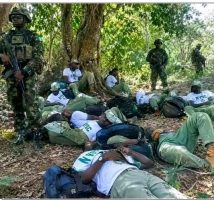
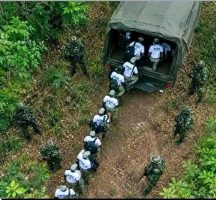
The police said tactical teams and other security agencies responded rapidly, recovering the two buses and rescuing 10 victims. However, the command initially said the total number of people abducted was still being verified, indicating that the rescue did not immediately bring the entire incident to a close.
The development is particularly significant because it came only weeks after another major attack involving corps members in Kogi State.

READ ALSO; Why NYSC remains Nigeria’s last standing bridge
A disturbing pattern on Nigeria’s highways
On August 26, 15 NYSC members were reportedly abducted along the Aloma-Egane Expressway in Ofu Local Government Area of Kogi State while returning from their orientation programme in Bayelsa State.
Gunmen reportedly blocked two buses around the Ogene Zaria/Onicha-Igo junction, forcing passengers into the surrounding bush. Security forces subsequently rescued 11 victims, including the drivers of the two buses.
The operation eventually resulted in the rescue of all 15 corps members and six other abductees from a kidnappers’ hideout in the Ofu forests, according to President Bola Tinubu.
One of the rescued corps members, David Ayodele, later described being beaten and kicked by his captors, who allegedly threatened to keep the victims in the forest for a month and kill them.
The Kogi episode was not an isolated occurrence. Security agencies had already reported other kidnapping incidents along roads in Ofu Local Government Area, raising questions about the vulnerability of travellers using highways that run close to forest corridors.
From camps to captivity
The threat is not limited to corps members who have already commenced their service year.
In January 2026, Lateefah Binuyo, a prospective corps member travelling to an orientation camp in Taraba State, was abducted in Kogi State and reportedly spent 10 days in captivity before regaining her freedom. The incident subsequently prompted calls for improved security along routes used by corps members.
There have also been cases involving serving corps members away from orientation camps. In May, Abuja-based lawyer and corps member Eunice Ameh was abducted in Maitama, Abuja, before later regaining her freedom. Corps member Musa Abba was also reportedly abducted while travelling to Sokoto in January.
The problem predates the latest incidents.

In 2023, eight prospective corps members travelling from Uyo to Sokoto were abducted after their bus was intercepted in Zamfara. The NYSC later confirmed that all eight were eventually rescued, with the last victim, Solomon Daniel Bassey, freed in August 2024. The victims were subsequently issued discharge certificates rather than being mobilised for service.
READ ALSO; 15 NYSC members rescued in Kogi recount ordeal in kidnappers’ forest hideout [VIDEO]
The ransom economy
Investigations by the Foundation for Investigative Journalism found that kidnappers had extracted at least N46.1 million from families of abducted corps members between 2023 and early 2025.
Among the documented cases was that of Rofiat Lawal, whose family reportedly paid N1.1 million after she was abducted while travelling from Edo to Oyo State. Other cases involved ransoms ranging from N1 million to N30 million.
That history helps explain why interstate journeys involving young graduates can present an attractive target to criminal groups: the victims are identifiable, often travelling predictable routes and, in many cases, families are desperate to secure their release.
A national-service security dilemma
The repeated attacks raise a broader question about whether existing arrangements adequately protect prospective corps members during interstate travel.
In November 2025, troops rescued 74 corps members stranded near the Buratai-Kamuya road in Borno State after their three buses broke down close to a known kidnapping hotspot. The incident was described as a likely abduction attempt.
The emerging pattern is therefore broader than one dangerous road. Corps members have been attacked while travelling to camps, returning from orientation, moving between states and reporting to places of primary assignment.
The immediate success of security forces in rescuing the 10 victims in Imo is significant. But the recurring attacks demonstrate that rescue operations, while critical, address the consequences after an interception has occurred.
The more difficult security question is whether the routes used by thousands of young Nigerians each year can be made sufficiently secure to prevent corps members from becoming easy targets in the first place.
For families preparing to send graduates across state lines, the latest Imo incident is another reminder that participation in the national service scheme can begin with a journey through some of the country’s most vulnerable transport corridors.