Crime
OMOJUWA: The crooked path of an influence merchant on Twitter
For 11 years, he cozied up in a glass house, hurling stones. It was hip until now it’s all crashing on him
By Elijah Olusegun
They started off as bloggers and citizen journalists, copped out because there was little to show for raiding other websites for contents, then pivoted, and became social media warriors, calling out newsmakers, a sort of activism that got them Twitter-famous. With hundreds of thousands of humans and bots following, these guys appeared to have hit pay dirt online after a while.
Sometimes the raking is clean; sometimes it’s mucky. The thing is, show them the color of the money, they go for anything: overseas funded ENDSARS protest, #BBOG, donor-sponsored feminist agitation, brand storytelling, political campaigns, and others.
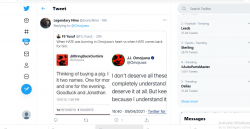
And it was all pretty buttoned up until Twitter and foreign media unveiled Alpha Reach Media, its big honcho Japheth Omojuwa, Pamilrin Adegoke, Nollywood star Tonto Dike, and other little known but nonetheless horn-tooting social media influencers.
The deal, a media and legal campaign for Alex Saab, a US-wanted fugitive trapped in Cape Verde, is, obviously, fully entrenched in Nigeria.
Saab’s legal team is headed by rights activist and Lagos Lawyer Femi Falana; its court of public opinion handled by Digital Good Governance for Africa (DIGA), a UK-based firm that Christian Elemele, a Nigerian, cofounded, working along with Omojuwa’s Abuja-based Alpha Reach Media. A Journalist with the Tribune and a freelance contributor to TheCable, and other Twitter hotshots like Dike and Pamilerin also got in on it, Buzzfeed reported.
All of these legal and social media influencers are no strangers to one another. The October 20 agitation to end police impunity, among other conscious activities, connected many of them. They all tweeted in support; they expounded the legal implication of the army deployment that worsened the matter at the Lekki Toll Gate. Falana is still holding briefs for some of the victims. Pamilerin got foreign donor funds wired to him to help the cause, and his account was frozen by the CBN in the investigation that followed the incident. Omojuwa was among the 40 opinion leaders a local businessman sued (court dismissed the suit) for allegedly inciting the violence that ruined his business.
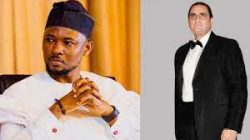

For the ENDSARS campaign, rights activism could have brought them together—on the face of it. But the Saab case, a campaign to defend the rights of a money launderer arrested and detained in Cape Verde while on the run, revealed the sleaze beneath Nigeria’s social media influencers’ activism.
It’s always about money, not common good. Even on occasions their activism and business meld into each other, like Omojuwa’s Alpha Reach contract, brand integrity doesn’t matter. And such monkey business prospers thanks to the hype and figure-fudging social media brands do to make money. Omojuwa comes across as one of such.
His hustle, just like Pamilerin’s, started from citizen journalism—some kind of forage into the media already blighted by social media. The graduate of agric economics ran a website and a blog then— he still runs them. Neither of them is spinning that kind of money or landing any gig, despite his crowning as one of Nigeria’s foremost social media influence juggernauts, with over one million followers in 11 years. It’s curious his social media influence isn’t fungible in the sweat and blood world of online news media business. The followers wouldn’t spend a split second on his blog jjomojuwa.com or his contents farm www.omojuwa.com.
Currently jjomojuwa.com ranks 6.1 million globally, with 197 daily visits, and about the same figure for daily impressions. The second website, 1.7 millionth globally, and last updated three years ago, has 1500 daily visits, and about the same figure for impressions. With all his followers, Omojuwa can only make about $6.83 cents from his websites.
He probably left blogging way back. But as unprofitable as his blogging was then, his hype was selling. He did talkshops on making money from blogging and social media; he got invites even outside of Nigeria. He once boasted of places he has been to—places his critics will never get to in their first life. As expected, he’s put all that, his experience, his Twitter thought leadership, together in a book, a potboiler: Digital: New Code of Wealth. The book was well launched—by the very people he called out and rubbished on his way up the social media influence ladder. APC Gov Nasir El Rufai graced the launch in Abuja in August 2019.
There’s no record of how many copies he sold on his websites. No idea of how much he raked in from his one million plus followers, and the over 4,000 following. But, certainly, the book is no chartbuster.
Which shows more clearly the exaggeration of Omojuwa’s social media influence—Twitter influence. Analyses of his Twitter account on SparkToro and Twitter Follower Audit reveal these: fake followers, including bots and spams, make between 3 percent and 24 percent, over 260,000 of his 1.1 million followers. While none of the accounts of his followers is verified (with a blue badge of authenticity), and just 2.5 percent of them protected, Omojuwa sure has 96 percent of them active. Trouble is, the quality—authenticity and other factors— of the followership is not, ordinarily, bankable. The analyses of the quality reveal between 0.1 percent and 24 percent of his followers score 10 on a scale of 1 to 10.

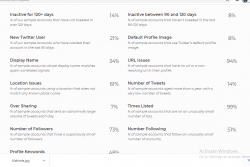
SparkToro Fake Followers Audit of @JJ Omojuwa
Sampling Omojuwa’s tweets randomly, one can see he has 30 retweets on average, and 192 likes per tweet. All that makes SparkToro pegs his engagement at 21 out 100. Other than when he promotes his clients—in form of pushing suggestive news, like he did in #Free Alex Saab—Omojuwa doesn’t lead any thought in his tweeting. Over 40 percent of his conversations are retweets. Many of his followers hardly see eye to eye with him when he expresses his own thought. They accuse him of introducing toxicity to social media conversation—for political reasons. The free AlexSaab scandal threw up some of his vitriolic tweets, including his take on ex-President Goodluck Jonathan before the 2015 election.
How Omojuwa ended up as Nigeria’s social media powerhouse was obviously about stats—not influence. Twitter presence alone in Nigeria is not enough to meter social media influence. Twitter ranks No. 6 social media platform Nigerians use, coming behind WhatsApp, Facebook, U-Tube, Instagram, and Facebook Messenger, in that order, according to the Digital Report 2021. That apart, there’s no definite figure of the number of Nigerians on Twitter. Whatever the figure is, Jack Dorsey, Twitter CEO, in 2019 said, “It is not enough.”