Latest
Ramaphosa decries xenophobic unrest, directs forceful response to vigilante (video) activity
President Cyril Ramaphosa has strongly condemned a fresh wave of xenophobic attacks in South Africa, describing the violence as “unacceptable” and “un-South African,” while warning that such actions undermine the country’s constitutional values and its standing across Africa.
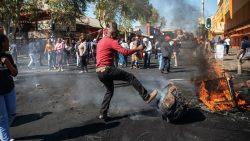
His remarks come amid growing tensions and reports of vigilante activity targeting foreign nationals in 2026, particularly in communities grappling with unemployment, informal trade competition, and rising social frustration.
Speaking during his State of the Nation Address (SONA 2026), Ramaphosa reiterated that no foreign national should be unlawfully denied access to public services such as schools and healthcare facilities.
He stressed that violence or exclusion based on nationality has no place in South Africa, insisting that such conduct contradicts the country’s democratic principles.
“Violence and exclusion have no place in our society,” the president said, warning communities against taking immigration enforcement into their own hands.

READ ALSO: NiDCOM warns Nigerians in South Africa to steer clear of protests, close shops
Ramaphosa directed the Ministry of Police to take decisive action against vigilante groups allegedly targeting foreign nationals and their businesses. He emphasized that law enforcement must uphold order “without exception,” regardless of public sentiment or grievances.
Security agencies have reportedly intensified operations in affected areas as authorities seek to curb attacks, looting, and intimidation linked to anti-immigrant sentiment.
The president further condemned the targeting of migrants, stating that “attacking foreigners is not patriotism… it is immoral, racist and criminal.”
He warned that such behaviour not only violates South African law but also damages the country’s moral standing on the continent and globally.
Ramaphosa also cautioned that South Africans living abroad could face similar treatment if xenophobic behaviour continues domestically.
The president reminded citizens that South Africa’s actions have consequences within the broader African community, particularly under frameworks such as the African Union (AU) and the Southern African Development Community (SADC).
He stressed that continued attacks on foreign nationals undermine regional solidarity and cooperation.
“We cannot be seen attacking Africans in our country; that is not allowed and it has to stop now,” he said.
Reports indicate that nationals from countries such as Zimbabwe, Nigeria, Ghana, and Somalia have been frequent targets of recent unrest. Some surveys have also suggested widespread mistrust of African immigrants among segments of the population.
Analysts say the violence is largely driven by economic pressure, including high unemployment, poverty, and competition in the informal sector, where migrants are often accused of undercutting local businesses.
While Ramaphosa has consistently condemned xenophobic violence, he has faced criticism from opposition voices and civil society groups. Some argue that government responses have been too slow or insufficient, while others claim past political rhetoric may have contributed to rising tensions.
At the same time, the president has warned that xenophobic sentiment is increasingly mutating into broader tribal and ethnic divisions among South Africans themselves, raising concerns about deeper social fragmentation.