Latest
Sahel Under Siege: Coordinated Mali attacks raise alarm across West Africa, stir fears in Nigeria
A series of coordinated and highly sophisticated attacks across multiple cities in Mali on Saturday, April 25, 2026, has pushed the Sahel region into heightened security alert, triggering concern across West Africa, particularly in Nigeria.
The large-scale offensive, which struck the capital and key military strongholds, is being described as one of the most significant escalations in militant activity since the withdrawal of international peacekeeping forces. Security analysts warn that the intensifying crisis in the Sahel is no longer contained, with signs that instability is edging closer to Nigeria’s borders.
The attacks began in the early hours of Saturday, hitting several strategic locations almost simultaneously. In Bamako, explosions and heavy gunfire erupted near the main airport and military facilities, forcing flight cancellations and prompting diplomatic missions to issue shelter-in-place advisories. In Sevare and Gao, key logistics and military hubs in central and northern Mali came under sustained assault involving mortar fire and ground operations. Fighting also reportedly continued into Sunday in Kidal, a northern stronghold long regarded as a volatile flashpoint between government forces and separatist groups.
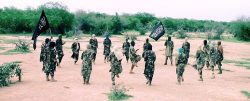

Authorities in Mali, supported by Russian-linked Africa Corps operatives, say security forces repelled the attacks and inflicted heavy casualties on the assailants. However, the scale and coordination of the operation suggest a high level of planning and tactical capability. Intelligence sources indicate the involvement of Jama’at Nusrat al-Islam wal-Muslimin (JNIM), alongside Tuareg factions linked to the Azawad Liberation Front.
The developments have raised immediate concerns in Nigeria, where security experts warn of a potential spillover of extremist activity. Northwestern states already grappling with insecurity—including Sokoto State, Katsina State, Zamfara State, and Kebbi State are increasingly viewed as vulnerable to infiltration and escalation.
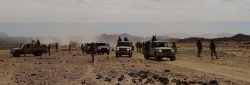

Analysts point to a growing network of cross-border militant linkages, including the emergence of the Lakurawa group in northwest Nigeria, which is believed to maintain ideological and logistical ties with extremist factions operating in Niger and Mali. At the same time, the proliferation of advanced weaponry across the Sahel, ranging from drones to improvised explosive device components is raising concerns that such capabilities could find their way into Nigeria’s already complex security landscape. These risks are further compounded by weakened regional cooperation following the withdrawal of Mali and Niger from ECOWAS, a move that has strained intelligence-sharing mechanisms and made border surveillance more difficult.
Beyond the security implications, the crisis is also deepening humanitarian concerns. The withdrawal of the MINUSMA has left millions of civilians without adequate protection or aid, creating a vacuum that militant groups are increasingly exploiting. In some rural areas, armed factions are reportedly stepping into governance roles, further entrenching their presence.

António Guterres has expressed deep concern over the situation, calling for stronger international coordination to address what he described as a rapidly evolving and dangerous threat across the Sahel.
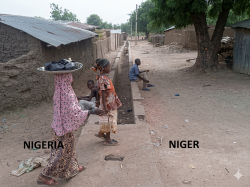
In Nigeria, authorities have reportedly placed border security agencies on high alert in response to the unfolding developments. However, security experts caution that physical border enforcement alone may not be sufficient to contain the spread of extremist networks. With the Sahel now widely regarded as the global epicenter of militant activity, there are growing fears that both ideology and operational coordination could continue to cross borders.
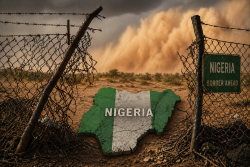

For Nigeria and its neighbors, the unfolding crisis underscores a broader regional challeng, one that extends beyond territorial boundaries and demands a coordinated, long-term response.