Latest
Beyond chemotherapy: Loveworld powers emerging radiopharmaceutical cancer treatment
Nigeria’s emerging radiopharmaceutical cancer-treatment capacity received a major boost on Friday as medical experts, researchers and policymakers converged in Lagos to promote precision oncology, strengthen nuclear medicine expertise and expand access to advanced cancer care.
The development took centre stage at the 2026 International Symposium on Radiopharmaceutical Therapy (ISRT) held at the Loveworld Medical Centre, Oregun, Lagos, where stakeholders called for increased investment in radiopharmaceutical therapy, research, specialised infrastructure and manpower development.
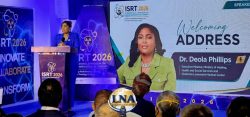

The two-day international symposium was organised by the World Association of Radiopharmaceutical and Molecular Therapy (WARMTH), the International Centres for Precision Oncology Foundation and Chris Oyakhilome Loveworld Medical Centre.
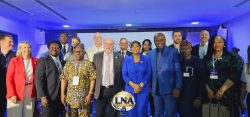
The gathering brought together nuclear medicine specialists, oncologists, researchers, scientists, healthcare professionals, policymakers and international experts to examine the growing role of radiopharmaceuticals and theragnostics in cancer diagnosis and treatment.
Representing the Minister of State for Health and Social Welfare, Iziaq Salako, the Deputy Director of Research at the Nigerian Institute of Medical Research (NIMR), Yaba, Dr David Oladele, said Nigeria needed to move beyond dependence on conventional cancer treatment and embrace emerging technologies capable of delivering more targeted care.
Dr.Oladele, who also represented NIMR Director-General, Prof John Obafunwa, described radiopharmaceutical therapy as an important frontier in modern medicine because it combines nuclear medicine, molecular imaging, pharmaceutical sciences, oncology and precision medicine.
He said developing Nigeria’s capacity in the field was crucial to improving access to advanced cancer treatment and addressing some of the limitations associated with conventional therapies.


READ ALSO; Nuclear medicine: Loveworld Medical Centre to save Nigerians cost of medical tourism
According to him, Nigeria’s cancer response must increasingly focus on innovation, research and development, specialised manpower and the establishment of appropriate infrastructure and regulatory systems for the safe and sustainable delivery of advanced therapies.
He said the Federal Government remained committed to strengthening the national health system under President Bola Tinubu’s Renewed Hope Agenda and the Health Sector Reform Investment Initiative.
The minister urged participants to deepen collaboration between Nigerian and international institutions, promote technology transfer and local capacity development and establish partnerships that would make radiopharmaceutical therapy more accessible to Nigerians.
He expressed hope that the symposium would produce actionable recommendations capable of strengthening cancer care and advancing precision medicine in Nigeria.
Loveworld Positions Nigeria for Precision Cancer Care
Opening the symposium, Dr Deola Philips, Executive Minister, Ministry of Healing, Health and Social Services, and Chairman of Loveworld Medical Centre, described the event as a significant milestone in the development of advanced cancer treatment in Nigeria and Africa.
Philips said the central concept behind the symposium was theragnostics, an approach that combines diagnosis with targeted treatment.

She explained that the technology enables clinicians to identify specific disease pathways and target tumour cells with treatment, potentially reducing damage to healthy tissues.
According to her, the objective of modern cancer treatment should not be limited to extending survival but should also include preserving patients’ dignity, self-esteem and quality of life.
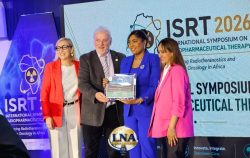
She disclosed that Loveworld Medical Centre had been officially recognised and accredited as an international Centre of Excellence in Theragnostics, with dedicated clinical capabilities for endocrine neoplasia and prostate cancer.
Dr. Philips said the 2026 symposium would witness a landmark development involving actinium-225 and lutetium-177 tandem treatment, which she described as a historic first for Africa.
She said WARMTH was facilitating the transfer and multiplication of expertise in radiopharmaceutical and molecular therapy across the continent.

The first edition of the ISRT was held in Nigeria in July 2024, while the 2026 edition has expanded to provide a broader platform for international knowledge exchange and practical training.
Beyond Cancer: Loveworld’s Wider Healthcare Intervention
Philips also used the occasion to highlight Loveworld’s broader humanitarian healthcare initiatives.
READ ALSO; Nuclear medicine: Loveworld Medical Centre opens new opportunities for advance medical care
She said the Trauma Care International Foundation had conducted more than 152,000 intensive first aid and CPR training sessions, helping to create a large network of trained first responders.
According to her, about 745,597 first responders have been trained, including citizens, students, educators, law-enforcement personnel, road safety marshals and military personnel.
She said the network was designed to strengthen emergency response and pre-hospital care by ensuring that trained individuals are available to respond when emergencies occur.
Dr.Philips further disclosed that the foundation had reached more than 64.9 million beneficiaries through its various programmes.
She said the foundation had also established a voluntary blood donor registry comprising more than 147,000 donors and mobilised over one million pints of safe blood in partnership with national and international blood banks.
Four Million Volunteers Across 126 Countries
She also highlighted the Loveworld volunteer medical network, describing it as a global network of healthcare professionals and students comprising physicians, surgeons, paramedics and nurses.
According to Philips, the network has grown to more than four million members across 126 countries.
Together, she said, the volunteers had reached about 82 million beneficiaries and carried out approximately six million direct acts of humanitarian care.
DR. Philips said Loveworld’s healthcare intervention extended to community clinics providing free primary and secondary healthcare services.
She disclosed that the clinics currently operate in six states in Nigeria, offering consultations, medications, admission and other medical services to thousands of beneficiaries.
Vision 10,000 Exceeds Original Target

Another major initiative highlighted at the event was the Vision 10,000 programme, established to provide free eye-care services to people with visual impairment.
Philips said the programme had exceeded its initial target, reaching more than 22,439 beneficiaries.
It has also provided more than 9,000 prescription eyeglasses, specialised medications and 874 complex eye surgeries, she said.
The organisation, she added, had also launched the Limb Enhancement and Assisted Prosthetic Programme to provide free prosthetic limbs to amputees.
The initiative, according to her, is aimed at helping beneficiaries regain mobility, preserve their livelihoods and restore their dignity.
Loveworld Medical Centre Expands to 43 Specialties
DR. Philips said Loveworld Medical Centre had expanded rapidly since its establishment and now offers about 43 medical specialties.
The specialties include internal medicine, general surgery, obstetrics and gynaecology, paediatrics, neurosurgery, orthopaedic surgery, thoracic surgery, advanced virology, optometry, orthodontics, speech therapy, paediatric endocrinology, intensive care, dialysis and nuclear medicine.
The centre, she said, is equipped with advanced diagnostic and treatment technologies, including MRI and CT scanners and a dedicated nuclear medicine department.
Its nuclear medicine department is also equipped with a gamma camera, which Philips described as one of only a few such facilities in Nigeria.
She said the development demonstrated Loveworld’s commitment to building a medical institution capable of delivering advanced treatment within Nigeria.
Cancer Patient’s Story Highlights Promise of New Treatment
Dr. Philips also shared the story of a breast cancer patient who received free nuclear medicine treatment at the medical centre.
According to her, the patient had suffered from an open breast-cancer wound for more than a year and had been concerned about the potential applications and side effects of chemotherapy.
The woman subsequently learnt that Loveworld Medical Centre offered nuclear medicine treatment and sought care at the facility.
Philips said she met the patient shortly before the symposium and witnessed the dramatic improvement in the wound following treatment.
She said the patient, who had undergone two cycles of treatment, was visibly emotional while expressing gratitude for receiving the treatment free of charge.
For Dr.Philips, the experience demonstrated why the success of cancer care should not be measured solely by how long patients survive.
She said the quality of life, dignity, self-esteem and ability of patients to continue with their lives should also form part of the measure of progress in cancer treatment.
Experts Back Collaboration, Research
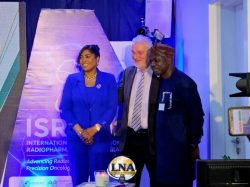
Masha Maharaj, President-elect of WARMTH, Scientific Chair of ISRT and Director of Operations at Loveworld Medical Centre, said collaboration, education and research were critical to advancing nuclear medicine.
She said ISRT provides practical workshops that enable young scientists and emerging medical departments to acquire specialised knowledge, build confidence and collaborate with international experts.
Maharaj explained that theragnostics combine diagnosis and treatment by identifying disease pathways and directly targeting tumour-specific receptors.
The approach, she said, could potentially reduce harm to healthy cells and improve patients’ quality of life.
She added that research had demonstrated the potential of theragnostics in the management of advanced prostate cancer, while Nigeria had begun using actinium-based treatments in selected cases involving breast cancer, sarcoma and lung cancer.
Global Nuclear Medicine Leaders Support Initiative
In a video message played during the symposium, Savvas Frangeras, a nuclear physician from Cyprus and President of the World Federation of Nuclear Medicine, commended Maharaj and her team for promoting cooperation in nuclear medicine and radiopharmaceutical therapy.
Frangeras said the symposium was contributing to global efforts to strengthen nuclear medicine capacity in Africa and develop sustainable solutions to the continent’s healthcare challenges.
He expressed hope that the Nigerian Society of Nuclear Medicine and Molecular Imaging would join the initiative.
Richard Baum, a pioneer in molecular imaging, theranostics and radiopharmaceutical therapy, described the symposium as an important platform for learning, professional exchange and international friendship.
He commended the organisers for creating opportunities to advance radiopharmaceutical therapy, precision oncology and international partnerships focused on improving cancer treatment.
Precision Oncology Offers Alternative to Conventional Treatment
The Medical Director of Loveworld Medical Centre and Chairman of ISRT 2026, Dr Emeka Eze, said precision oncology was opening new possibilities for targeted cancer treatment.
Eze explained that radiopharmaceuticals can target diseased cells and assist physicians in both detecting and treating cancers and other diseases.
He described the nuclear medicine technology available at Loveworld Medical Centre as a significant development in Nigeria’s healthcare sector.
While commending the Federal Government for supporting nuclear medicine, he stressed the need to make patients aware of scientifically validated treatment alternatives.
He, however, acknowledged that advanced medical care remained expensive and would require sustained investment and partnerships to become more accessible to a wider population.
Loveworld Plans Further Healthcare Expansion
The Director of Health Services, Ministry of Healing, Health and Social Services, Loveworld Nation, Anthony Oseghale, said ISRT 2026 reflected Loveworld’s broader commitment to precision medicine and humanitarian healthcare.
Oseghale highlighted the Vision 10,000 programme, volunteer medical corps and community clinics as examples of initiatives aimed at taking healthcare services to underserved populations.
He said the volunteer medical corps brings together millions of healthcare professionals and students who provide medical services in communities where there is need.
He also disclosed plans to expand Loveworld’s healthcare footprint outside Nigeria, including the proposed establishment of a community clinic in Kenya.
The initiative, he said, is intended to improve access to specialised medical services and reduce the need for African patients to travel abroad for treatment.
A New Chapter in Nigeria’s Cancer Fight
The discussions at ISRT 2026 underscored a growing push to position radiopharmaceutical therapy and theragnostics as part of Nigeria’s future cancer-care strategy.
For the organisers and participating experts, the challenge now extends beyond introducing sophisticated technology. It includes developing local expertise, strengthening research, establishing reliable infrastructure, improving regulation and ensuring that advanced cancer treatment becomes affordable and accessible to patients.
As Nigeria continues to confront its cancer burden, stakeholders at the Lagos symposium said the combination of science, precision medicine, international collaboration and compassionate care could provide a new pathway beyond conventional chemotherapy and toward more personalised cancer treatment.