
Business
CBN forex reforms under scrutiny as Nigeria’s reserves drop $300m in 10 days

Nigeria’s foreign exchange reserves have come under renewed pressure, shedding approximately $300 million in just 10 days, raising fresh concerns about the sustainability of the Central Bank of Nigeria’s (CBN) foreign exchange management strategy and the strength of the country’s external buffers.
Official CBN data showed that external reserves declined from $55.17 billion on November 2, 2026, to $54.87 billion on November 12, representing a reduction of approximately 0.54 per cent within the period.
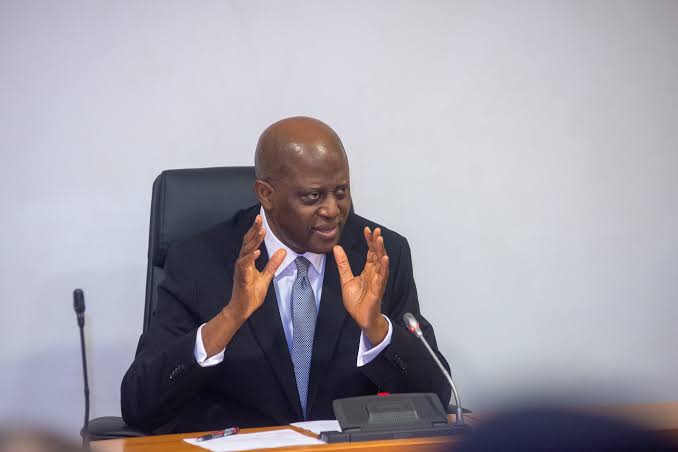
The latest decline comes despite ongoing monetary and foreign exchange reforms introduced by the apex bank under Governor Olayemi Cardoso to improve market transparency, attract foreign capital, strengthen liquidity and stabilise the naira.
More concerning is the pace of the decline. The latest $300 million reduction follows another reported $90 million depletion within five days, suggesting that pressure on the country’s external reserves has persisted despite the improvement in Nigeria’s foreign exchange position earlier in the year.
Although the current reserve level remains substantial, the successive reductions raise questions about the extent to which the CBN may be deploying foreign currency to support market stability, meet external obligations and manage volatility in the foreign exchange market.
Naira stability versus reserve preservation
The pressure on reserves comes against the backdrop of continued uncertainty in the foreign exchange market.
The naira closed on Friday at N1,353.10 per dollar at the official market, while the parallel market rate stood at approximately N1,430 per dollar.
The difference between the two rates highlights the continuing challenges of achieving full convergence and restoring confidence across Nigeria’s foreign exchange market.
READ ALSO; CBN introduces digital fiscal reporting for 36 states, FCT, 774 LGAs
For the CBN, the policy challenge is increasingly complicated. Maintaining adequate foreign exchange liquidity and limiting excessive exchange-rate volatility are important for economic stability.
However, sustained intervention using external reserves could weaken the country’s capacity to withstand future external shocks if foreign currency inflows fail to compensate for outflows.
External reserves serve as a critical financial buffer, providing resources for international transactions, debt-service obligations, import financing and other foreign currency commitments.
A sustained decline could therefore affect market confidence, particularly if investors begin to question the adequacy of the country’s external liquidity position.
What is driving the reserve decline?
The latest figures alone do not establish the specific reasons for the $300 million reduction.
However, movements in external reserves are influenced by several factors, including foreign exchange interventions, government external debt payments, oil-related inflows, foreign investment transactions and other international financial obligations.
Nigeria’s ability to replenish its reserves depends significantly on the volume of foreign currency entering the economy, particularly from crude oil exports, non-oil exports, foreign direct investment and portfolio investments.
Consequently, the sustainability of reserve accumulation will depend not only on CBN monetary policies but also on improvements in oil production, export earnings, fiscal management and the broader investment environment.
The gap between the official and parallel market exchange rates also remains an important indicator of the foreign exchange market’s underlying challenges.
MPC meeting puts CBN under fresh scrutiny
Attention is now shifting to the 308th Monetary Policy Committee meeting scheduled for November 23 and 24, 2026.
Decisions from the meeting could influence foreign portfolio investment flows, exchange-rate expectations, inflation management and the broader outlook for external reserves.
Investors will be watching whether the CBN maintains its existing monetary policy stance or introduces further adjustments to support price stability and exchange-rate confidence.
Higher interest rates could help sustain the attractiveness of naira-denominated assets to foreign investors, potentially supporting capital inflows. However, elevated borrowing costs could also increase financing pressures for businesses and constrain domestic economic activity.
Ultimately, the latest reserve decline presents another test for the Cardoso-led CBN.
While the $54.87 billion reserve position provides Nigeria with a substantial external buffer, the more important question is whether the country can sustain reserve growth while stabilising the naira without relying excessively on foreign exchange interventions.
The November MPC meeting will offer another opportunity for the apex bank to demonstrate how its monetary policy framework intends to balance these competing objectives


-
 Business6 days ago
DisCos urge Minister to end blame game, apologise to Nigerians over blackouts
-

 Health7 days ago
Study links Pfizer COVID-19 vaccine to higher death rates than Moderna shot
-

 Business1 week ago
Power supply to improve in 72 hours as FG moves to restore generation – Tegbe
-

 Business5 days ago
Fuel price: Our eyes on you, FCCPC tells oil marketers
-

 Football6 days ago
Flamingos arrive in Abuja after historic U-17 Women’s World Cup victory
-
 Business6 days ago
After weeks of blackout, electricity returns to Lagos, Ogun, Oyo, Kwara, FCT
-

 Latest6 days ago
Abati questions former CSU lecturer’s authority in fresh Tinubu certificate dispute [VIDEO]
-

 Football1 week ago
Bernardo Silva Succeeds Ronaldo as Portugal Captain