Comments and Issues
Drug Lords’ Assets: To seize or not to seize?
There is really no doubt that law enforcement agencies in Nigeria have vigorously argued in support of the forfeiture of ill-gotten wealth and assets as a strategic and effective punishment for members of organised crime networks, such as corrupt government officials, hard-drug barons and other economic criminals. The concept of asset seizure as a strategic approach to effectively combating hard-drug trafficking has reverberated in Nigeria and has become one of the issues that many scholars of criminology and criminal justice are now engaging with. These conversations were ignited by the charismatic Chairman and Chief Executive Officer of the National Drug Law Enforcement Agency (NDLEA), Brigadier General Mohamed Buba Marwa, who recently delivered a lecture on the subject at a global forum in the United Kingdom.
A respected scholar from the University of Ibadan is known to have written an academic paper in which he sharply and fundamentally disagreed with the central argument and objective of the lecture delivered by the ebullient chairman of the NDLEA. The academic agreed that asset forfeiture is a good idea but argued that it is not sufficiently deterrent to dissuade chronic offenders and members of sophisticated organised crime networks from engaging in criminal activities, even where their assets are seized by the government.
The two sides of the argument will be presented here, after which we will draw our considered conclusion based on the opinions advanced by these experts.
Specifically, the Chairman and Chief Executive Officer of the National Drug Law Enforcement Agency, Brigadier General Buba Marwa (retd.), has said that arrests alone cannot defeat drug trafficking without a corresponding effort to seize and recover the proceeds of crime.
Marwa stated this on the penultimate Tuesday while delivering a presentation titled, “Criminal Property and the Criminal Process: How Can We Make It More Effective?” at the 43rd Cambridge International Symposium on Economic Crime, organised by the Centre for Geopolitics, University of Cambridge, United Kingdom.
This was contained in a statement by the spokesman of the agency, Femi Babafemi.
Speaking before an international gathering of judges, law enforcement chiefs, financial intelligence experts and academics, the NDLEA chairman said the success of the criminal justice system should not be measured solely by the number of convictions secured.
He said the process should also be assessed by its ability to make crime unprofitable.
According to him, “A trafficker who loses his liberty but retains his fortune has not truly been defeated. His wealth can finance another operation, support his associates and sustain the criminal enterprise.”
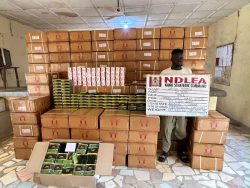

Marwa said the ultimate objective should be to deny criminals the proceeds of their crimes promptly and lawfully while preserving the value of seized assets.
He likened arresting a trafficker without dismantling his financial empire to “pruning a weed at the stem while leaving its roots undisturbed,” warning that illicit wealth could resurface under different names, front companies or jurisdictions.
The NDLEA boss outlined six strategies adopted by the agency to strengthen asset recovery, anchored on the NDLEA Act 2004, the Proceeds of Crime (Recovery and Management) Act 2022 and the Money Laundering (Prevention and Prohibition) Act 2022.
He cited the forfeiture of the Hook Hotel, a property linked to a fugitive drug suspect, as an example of the agency’s use of non-conviction-based forfeiture.
According to him, the property was sold for $4.2 million, with the proceeds paid into the Federal Government’s forfeited assets account domiciled with the Central Bank of Nigeria.
Marwa said the development demonstrated that fleeing the country could not enable a fugitive to retain the benefits of alleged criminal activities.
He also disclosed that NDLEA investigators and prosecutors were now working together from the commencement of cases, a development he said had shortened the period between arrest and the securing of restraint orders.
The NDLEA chairman said the agency froze bank accounts containing more than $7 million in the previous month and secured interim forfeiture orders covering multibillion-naira assets, including filling stations, multi-storey buildings and exotic vehicles allegedly linked to a fugitive methamphetamine syndicate.
On the case involving Nigerian businessman Amadi Simon, whom the agency described as a suspected drug baron, Marwa said three hotels linked to the suspect had been placed under the management of professional asset managers instead of being shut down.
He said the measure was aimed at preserving the value of the hotels as going concerns pending the outcome of the trial.
Marwa further highlighted the use of provisions relating to unexplained wealth and living beyond legitimate means as investigative triggers, as well as the interlocutory sale of perishable and depreciating assets to prevent their value from declining before final judgment.
He said the measures had been incorporated into Nigeria’s National Drug Control Master Plan 2026–2030, making the financial disruption of drug trafficking organisations a sustained national priority.
The NDLEA chairman identified speed, preservation of value and institutionalisation as three principles guiding the agency’s asset recovery efforts.
He, however, acknowledged challenges, including delays in mutual legal assistance, limited forensic accounting capacity and the need to balance the rights of accused persons with the responsibility of the state to preserve assets pending trial.
Marwa called for faster international cooperation and stronger cross-border recognition of non-conviction-based forfeiture orders.
He reaffirmed the agency’s readiness to strengthen partnerships with foreign jurisdictions and institutions in efforts to dismantle the financial structures supporting drug trafficking.
As scientifically and factually compelling as the substance of these claims on asset forfeiture, as presented with lucidity by the NDLEA chairman, may be, a doctoral scholar at the University of Ibadan has offered a different opinion.
The scholar went into the history of the adoption of asset forfeiture in different jurisdictions and noted that criminal asset forfeiture is a tool adopted in many jurisdictions as a means of deterrence and retribution from the perspective of criminal justice administration.
He then reminds us that his study seeks to answer whether asset forfeiture, if adopted as is the case in many jurisdictions, serves as an appropriate criminal penalty against the commission of crime. More importantly, does it prevent the further commission of crime?
In evaluating its effectiveness, he affirmed that his essay relies on statutes and asset-forfeiture cases and focuses on contemporary substantive legal provisions.
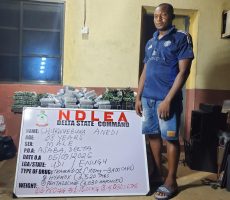

He then argued, in a way with which some of us disagree, as follows:
«“The study finds that asset forfeiture does not serve as adequate deterrence against crime as the total number of forfeitures carried out and the amounts recovered remain at modest levels compared to the rising corruption profile in Nigeria. The author observes that the challenge in Nigerian asset recovery is not with the legal provisions but with political influence and the vendetta flavour which has clouded the measures in Nigeria. The work recommends, among others, further deterrence through imprisonment for those caught, as society’s disapproval for such acts.”»
Anyway, I think what he said in that piece is not an entirely original idea that has not been tested, because that is precisely what the NDLEA is doing by combining asset forfeiture with vigorous prosecution of hard-drug barons, with the ultimate aim of securing lengthy prison sentences where convictions are obtained.
The good thing is that this scholar stated the obvious: the use of asset forfeiture as a means of crime control has ancient roots dating as far back as English common law. It is a concept deeply rooted in Western jurisprudence and was developed primarily in admiralty law to prevent ship owners from continuing in the smuggling of cargoes.
Forfeiture
Asset forfeiture has become one of the more innovative tools for combating economic and financial crimes because it addresses the ownership of property suspected to be the proceeds of illegally acquired wealth. As a result, it is not uncommon to see governments utilise asset forfeiture as a form of deterrence against criminal tendencies. This is one reason why forfeiture as a punishment is not limited to corruption cases but extends to the war against drugs, although this form of punishment has been more prevalent in Nigeria in high-profile corruption cases.
As Akujobi Alero Toju (Ph.D.) stated in the study An Evaluation of the Efficiency of Asset Forfeiture in Nigerian Criminal Justice Administration, asset forfeiture has become an important mechanism within the criminal justice system for addressing the proceeds and instrumentalities of crime.
The position of the NDLEA is also endorsed by the Chairman and Chief Executive Officer of the Economic and Financial Crimes Commission (EFCC), Mr Ola Olukoyede, who, like the NDLEA chairman, has argued that corrupt individuals must not be allowed to enjoy the proceeds of their crimes.
Olukoyede: EFCC Boss Says Corrupt Persons Must Not Enjoy Proceeds of Crime
The Executive Chairman of the Economic and Financial Crimes Commission, EFCC, Mr Ola Olukoyede, disclosed that the Commission’s efforts at tracking illicit assets and effecting seizures are driven by the need to hold corrupt persons accountable for their actions and secure restitution for victims of fraudulent activities.
He stated this on Tuesday, May 27, 2025, at a summit organised by the Ministry of Justice on asset recovery. The summit, with the theme “Synergizing Towards an Effective Asset Recovery and Management and Unveiling of National Central Database of Forfeited Assets and Proceeds of Crime (POCA) Regulations 2024,” was held at the Continental Hotel, Abuja.
“At the EFCC, our experience with asset tracing, recovery and management is anchored on the philosophy that those who obtained wealth through corrupt means must be held accountable and that victims of graft get justice through restitution. In an environment where legal barriers encumber speedy determination of corruption cases, the recovery and seizure of stolen wealth retain enormous deterrence value. The Commission, employing both conviction and non-conviction-based strategies, yearly recovers assets running into billions of naira,” he said.
Based on the foregoing, the Human Rights Writers Association of Nigeria (HURIWA) considers the profoundly knowledgeable and factually compelling position of Brigadier General Mohamed Buba Marwa, as aforementioned, to be the more persuasive position. We believe that the forfeiture of drug lords’ assets can have significant deterrent value when it is combined with effective investigation, prosecution and imprisonment following conviction.
This writer once met a convicted drug offender who had lost valuable assets following a decision of the Federal High Court, after arguments were successfully advanced by the legal team of the NDLEA. He lamented his dramatic reversal of fortune, describing his journey as one from “grass to grace and back to grass.”
According to him, he had come from poverty but accumulated billions of naira illicitly through the trafficking of hard drugs. He had, however, suddenly lost substantial assets to the Federal Government following the effective and fearless prosecution mounted by the NDLEA.
That personal encounter illustrates the central argument advanced by Marwa: if criminal enterprises are deprived not only of their liberty but also of the financial rewards that sustain their operations, the economic incentive to engage in organised crime can be significantly weakened.
The question, therefore, should not necessarily be whether Nigeria should seize the assets of drug lords, but whether asset forfeiture is being applied lawfully, fairly, transparently and effectively alongside prosecution and imprisonment.
Where the law permits it and due process is observed, the seizure and forfeiture of the proceeds of crime should remain an important weapon in Nigeria’s fight against drug trafficking and organised crime.
EMMANUEL NNADOZIE ONWUBIKO is the founder of the Human Rights Writers Association of Nigeria (HURIWA) and was a National Commissioner of the National Human Rights Commission of Nigeria