Crime
Fake drugs, poisonous cosmetics: Inside Nigeria’s growing counterfeit trade
By Olusegun Odunewu
Nigeria’s counterfeit goods trade has evolved from the sale of imitation fashion accessories into a dangerous underground economy threatening public health, undermining legitimate businesses and weakening consumer confidence, raising fresh questions about the effectiveness of market surveillance and enforcement, Nationaldailyng.com has gathered.
From suspected substandard medicines and adulterated beverages to toxic cosmetics and inferior electrical cables, counterfeit and substandard products remain a major concern for consumers, regulators and manufacturers.
The danger is particularly acute for low-income households, many of which face difficult choices between affordable goods and products whose safety and authenticity can be difficult to establish.
As inflation and pressure on household incomes push consumers towards cheaper alternatives, unscrupulous traders can exploit price sensitivity, weak product traceability and gaps in regulatory enforcement to circulate potentially dangerous merchandise.
Public health researcher Amina Suleiman described the phenomenon as “a poverty tax paid in lives,” highlighting how financially vulnerable consumers may bear the greatest consequences of unsafe products.
However, the scale of the problem cannot be established through anecdotal accounts alone. Reliable assessments require current seizure data, laboratory testing, market surveillance findings and documented cases of illness linked to counterfeit products.
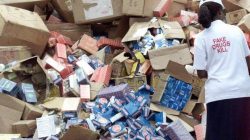

Fake medicines raise public health concerns
Counterfeit and substandard medicines pose particularly serious risks because patients may unknowingly consume products containing incorrect ingredients, inadequate quantities of active pharmaceutical ingredients or harmful contaminants.
Such medicines can fail to treat infections and other illnesses, prolong recovery and, in severe cases, contribute to treatment failure, poisoning or organ damage.
A medical practitioner quoted in discussions about the problem warned that certain harmful products could cause kidney and liver damage, underscoring the need for stronger regulatory oversight.
The distinction between counterfeit and substandard products is important. Counterfeit medicines deliberately misrepresent their identity, composition or source, while substandard medicines fail to meet applicable quality standards. Both can endanger patients, although the circumstances and regulatory responses may differ.
Cosmetics also require scrutiny. Products containing prohibited or excessive concentrations of substances such as mercury and hydroquinone can cause significant harm, particularly when used repeatedly or without appropriate medical guidance.
The challenge for consumers is that dangerous products may appear genuine, carry convincing packaging and be sold through ordinary retail outlets.
READ ALSO; NAFDAC arrests two men over fake Bullet Energy Drinks in Lagos
Poverty and weak traceability create opportunities
Economic hardship can make price the decisive factor in purchasing decisions, particularly for medicines, food, personal-care products and household essentials.
When consumers cannot afford trusted brands or obtain medicines through reliable channels, they may turn to informal vendors whose supply chains are difficult to verify.
Yet affordability is only one part of the problem. Counterfeit products can also enter legitimate-looking distribution networks, making it difficult for consumers to distinguish genuine merchandise from imitations.
Experts say the response must therefore extend beyond public warnings. Manufacturers and distributors need stronger product-tracking systems, while consumers require accessible ways to verify products and report suspected counterfeiting.
Legitimate businesses bear the economic cost
The counterfeit economy also threatens Nigeria’s manufacturing and investment environment.
Legitimate manufacturers invest in production facilities, quality assurance, regulatory compliance, taxes and distribution. Criminal operators who bypass these obligations can undercut their prices while transferring the risks to unsuspecting consumers.
Over time, this imbalance can weaken sales for compliant businesses, discourage investment in local production and expose workers to the consequences of reduced output or factory closures.
Dr Emeka Offor, identified in the supplied material as a former Executive Secretary of the Nigerian Investment Promotion Commission, described the crisis as “both an economic challenge and a public health emergency requiring urgent action.”
He also highlighted the importance of surveillance technology and regional cooperation in tackling the problem.
His assessment reflects a wider policy concern: investors are less likely to commit capital to markets where intellectual property protection, product standards and enforcement are unreliable.
The extent to which counterfeiting has reduced investment or employment in Nigeria, however, requires supporting economic data rather than assumptions.
NAFDAC, SON face enforcement challenges
The National Agency for Food and Drug Administration and Control (NAFDAC) and the Standards Organisation of Nigeria (SON) are among the principal agencies responsible for addressing unsafe products within their respective mandates.
Their work includes inspections, product testing, market surveillance, investigations and enforcement actions against violations of applicable regulations.
However, seizures and warehouse raids alone cannot permanently dismantle organised counterfeiting networks if offenders can quickly replace confiscated stock or move operations elsewhere.
A more effective strategy would combine intelligence-led investigations, stronger border controls, forensic product testing, transparent prosecution records and closer cooperation among regulators, customs authorities, law enforcement agencies and manufacturers.
Digital authentication systems, serialised packaging and traceable distribution records could also help investigators identify where suspicious products enter legitimate supply chains.
Experts call for stronger deterrence
Public health and consumer-protection specialists generally favour a coordinated approach combining enforcement, prevention and consumer education.
First, regulators need adequate funding, laboratory capacity and personnel to investigate suspicious products before they reach consumers. Second, prosecution should focus not only on street-level sellers but also on the financiers, importers, manufacturers and distribution networks behind large-scale operations.
Third, authorities should publish accessible information about confirmed counterfeit products, recalls, seizures and successful prosecutions. Such transparency would help consumers make informed decisions and allow businesses to respond quickly to emerging threats.
Lawmakers and policymakers also need to examine whether existing penalties adequately deter repeat offenders, while ensuring that enforcement distinguishes organised criminal activity from cases involving unwitting retailers.
Until supply chains become more transparent and enforcement reaches the networks financing and distributing fake products, consumers will continue to face risks that extend from their medicine cabinets to their kitchens and homes.