Agribusiness
Strengthening Nigeria’s Food Production Through Reliable Water Storage Infrastructure
Nigeria’s agricultural sector is at the centre of the country’s economic future. From rice farms in Kebbi to tomato production in Kano and cassava cultivation across Benue and Ogun, food production feeds growing cities and drives local trade.
While Nigeria possesses vast agricultural potential, one challenge still holds many farmers back: reliable access to water.
Climate change has made rainfall patterns across the country more unpredictable. Some regions face prolonged dry spells while others experience destructive flooding that washes away crops and damages farmland. Some regions face prolonged dry spells while others experience destructive flooding that washes away crops and damages farmland.
As such, reliable water storage infrastructure is becoming essential for food security and long-term agricultural growth.

The Growing Pressure on Nigerian Agriculture
Nigeria’s population continues to expand rapidly, placing greater pressure on domestic food production. At the same time, rising fuel prices and global supply chain disruptions have increased the cost of imported food products.
This has intensified the need for stronger local agricultural systems that capable of producing consistently throughout the year.
For many farmers, however, water access is still seasonal. Excess water may be available during the rainy months but difficult to store effectively. Once the dry season arrives, crops often struggle while irrigation systems become expensive and unreliable.
This cycle affects smallholder farmers as well as commercial agricultural operations that need stable yields.
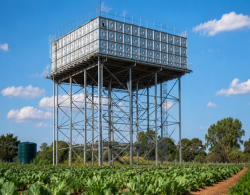
With properly designed water storage tanks Nigeria, farms can capture and retain water during periods of abundance, then redistribute it during drier months when crops need support most.
Water Storage as a Tool for Agricultural Stability
Modern water storage tanks Nigeria infrastructure gives farmers greater control over their production cycles. Instead of depending entirely on inconsistent rainfall, agricultural businesses can keep their irrigation schedules while reducing the risk of crop failure.
This capability is especially important in states heavily dependent on agriculture. In northern Nigeria, where drought conditions can severely impact farming communities, stored water helps sustain livestock along with irrigation systems. In southern regions with heavier rainfall, water storage supports flood management while preserving excess water for later agricultural use.
Reliable water systems also help farmers diversify production. A grower who once relied on a single rainy-season harvest can begin cultivating high-value crops year-round, which strengthens household income while creating more stable food supply chains for local markets.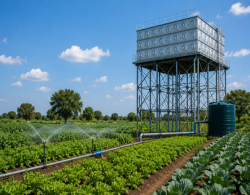

Supporting Rural Communities and Food Security
Water infrastructure strengthens entire rural economies. Surrounding businesses benefit when farmers produce stronger yields.
For example, local retailers gain consistent stock while food processing businesses secure more dependable supply. Stable agricultural production can also help reduce food inflation pressures that affect households across Nigeria.
Added to this, young Nigerians entering agriculture are more likely to stay in farming when modern infrastructure reduces the uncertainty and improves profitability. This is vital in a country where agriculture is still one of the largest sources of employment.
Building Long-Term Agricultural Prospects
As climate pressures intensify, investment in durable water storage infrastructure will likely become one of the defining factors that affect Nigeria’s agricultural future. Galvanized tanks, along with large-scale tanks and integrated water management systems are helping farms operate more efficiently while reducing vulnerability to seasonal extremes.
Scalable storage solutions from Abeco Tanks can support smallholder farmers and expanding agribusinesses alike. With the right infrastructure in place, Nigerian agriculture gains the flexibility to expand and feed a growing nation more effectively.Top of Form