
Aviation
UK updates customs rules, lists duty-free allowances and prohibited items for travellers

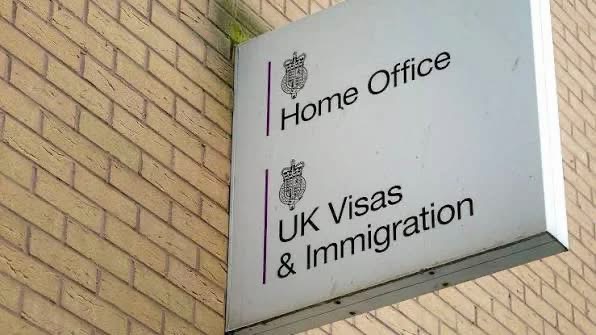
HM Revenue and Customs (HMRC), in conjunction with the UK Border Force, has released updated guidance outlining duty-free allowances, restricted items and prohibited goods for travellers entering Great Britain.
The updated guidance applies to passengers arriving by air, sea or rail from outside the United Kingdom and explains what goods may be brought into the country for personal use without attracting customs duty or enforcement action.
According to the revised rules, duty-free allowances apply only to goods intended for personal use or as gifts. Items imported for commercial purposes or resale must be declared regardless of their value.
Under the updated allowances, travellers aged 17 and above may bring into the UK up to 42 litres of beer, 18 litres of still wine and either four litres of spirits containing more than 22 per cent alcohol by volume or nine litres of alcoholic beverages with an alcohol content of 22 per cent or less, such as fortified wine, sparkling wine or cider. The allowance for spirits and lower-strength alcoholic drinks may also be shared proportionately.
For tobacco products, eligible travellers may bring in up to 200 cigarettes, 100 cigarillos, 50 cigars, 250 grams of tobacco or 200 heated tobacco sticks. The allowance may also be divided across different tobacco products.
Passengers are also permitted to bring in other personal goods, including clothing, jewellery, gifts and electronic devices, with a combined value of up to £390. The limit is reduced to £270 for those arriving by private aircraft or private boat.
HMRC noted that travellers under the age of 17 are not entitled to duty-free allowances for alcohol or tobacco products, and any such items must be declared upon arrival.
The guidance also reiterates the UK’s list of prohibited and restricted goods. Items that are strictly prohibited include controlled drugs, offensive weapons such as flick knives, pepper spray and CS gas, counterfeit goods, obscene materials and certain meat and dairy products from outside approved countries.
Restricted items—including firearms, ammunition, explosives, regulated plants and products made from endangered species protected under the Convention on International Trade in Endangered Species of Wild Fauna and Flora (CITES)—may only be imported with the appropriate licences or permits.
The tax authority warned that travellers who exceed the duty-free allowance for any category will be required to pay customs duty and taxes on the entire quantity in that category, not just the amount above the limit.
To simplify the process, HMRC said passengers may submit customs declarations online up to five days before arriving in the UK. Those carrying goods above the permitted limits or transporting restricted items are required to use the Red Channel or designated customs declaration points at ports of entry.
The agency cautioned that travellers who fail to declare dutiable or restricted goods and instead use the Green Channel risk having their items confiscated and could face financial penalties or criminal prosecution.


-

 Featured5 days ago
Inside INEC’s race to prepare for Nigeria’s 2027 elections
-

 Featured5 days ago
2027: APC unveils nationwide campaign timetable, Tinubu to rally in 12 states
-

 Latest1 week ago
UCTH faces morgue crisis as 50 unclaimed corpses await mass burial
-

 Business6 days ago
President Tinubu and the Low Transport Fares Fiasco
-

 Business1 week ago
BREAKING: Nigeria’s Inflation Rate Drops to 14.63% in September
-

 Business5 days ago
Court dismisses ₦170m Trade Fair contract claim, says Zenith Bank was not a party
-

 Business3 days ago
Naira faces exchange rate gap as Dollar hits N1,380 on parallel market
-

 Latest6 days ago
Global excitement builds as Healing Streams Live Services returns October 23