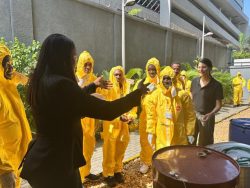
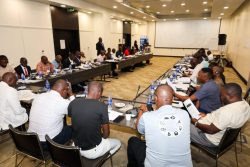
A joint initiative by the United States Department of State and the United Nations Office on Drugs and Crime has commenced a specialized training program aimed at strengthening the capacity of West African drug enforcement agencies to combat the rising threat of synthetic drug production.
The program, announced on Friday, April 24, 2026, by the U.S. Mission in Nigeria, is being coordinated through the Bureau of International Narcotics and Law Enforcement Affairs (INL). It brings together operatives from the National Drug Law Enforcement Agency and counterparts from nine other countries in the region, marking a significant push toward coordinated, intelligence-driven anti-narcotics operations.
At the heart of the training is the detection and dismantling of clandestine laboratories used in the production of synthetic drugs such as methamphetamine. West Africa, once primarily a transit route for narcotics, has increasingly become a production hub, prompting concern among international and regional authorities.
Officials noted that Nigeria alone has uncovered at least 21 illicit drug laboratories since 2011, highlighting the growing sophistication of trafficking networks. The training equips officers with technical expertise to safely handle hazardous chemicals and disrupt manufacturing sites.
According to the U.S. Mission, the initiative is designed to shift enforcement strategies from reactive seizures to proactive disruption of criminal supply chains. Participants are being trained in advanced investigative methods, including digital intelligence gathering and controlled delivery operations that help trace shipments back to key figures within trafficking networks.
The program also emphasizes chemical diversion control, enabling officers to identify and intercept precursor substances commonly used in the production of synthetic drugs. Enhanced regional cooperation is another key focus, with the goal of improving intelligence sharing across borders.
The initiative comes amid rising concern over the spread of methamphetamine in Nigeria, locally known as “Mkpuru Mmiri,” which has had severe social impacts in several communities. Authorities believe targeting production networks will help reduce both local consumption and the financial strength of organized criminal groups.
Chairman of the NDLEA, Mohamed Buba Marwa, has previously emphasized that disrupting drug trafficking networks also undermines funding streams for extremist groups operating across the Sahel region.
Upon completion of the training, participating countries are expected to implement a coordinated regional action plan over the next year, supported by continued collaboration between international partners. The broader objective is to eliminate West Africa’s status as a low-risk zone for global drug cartels and strengthen long-term security across the region.