Football
World Cup 2026: When brothers become opponents on football’s biggest stage
The 2026 FIFA World Cup in the United States, Canada, and Mexico is shaping up to be more than just a celebration of football excellence—it is also becoming a showcase of family ties stretched across national borders.
As the expanded 48-team tournament approaches, several sets of brothers with shared ancestry but different international allegiances are set to represent different countries on football’s biggest stage, underscoring how migration, dual nationality, and global football development continue to reshape international competition.
While national teams are defined by flags and anthems, the 2026 edition highlights a deeper narrative: family heritage that transcends geography.
Doué Brothers: France and Côte d’Ivoire Split


One of the most compelling stories comes from the Doué family, where brothers Désiré and Guéla Doué have taken different international paths despite their shared upbringing in France to Ivorian parents.
Désiré Doué has emerged as one of Europe’s brightest attacking prospects, breaking into the French national setup as part of a new generation aiming to sustain the country’s recent dominance on the global stage. He is expected to play a key role for France national football team at the tournament.
His older brother, Guéla Doué, chose to represent their parents’ homeland and has become a key figure in the rebuilding project of Côte d’Ivoire national football team. His decision reflects a growing trend among dual-nationality players opting to connect with their ancestral roots.
Together, the brothers embody a rare split narrative: one chasing European glory, the other carrying African hopes on the global stage.
Williams Brothers: Spain and Ghana, a Story of Migration and Identity


Few football families illustrate the intersection of migration and identity more vividly than the Williams brothers.
Iñaki Williams and Nico Williams were born in Spain to Ghanaian parents who undertook a perilous journey across the Sahara and the Mediterranean in search of a better life.
Their story has become symbolic of modern European multiculturalism. Iñaki, the elder, initially represented Spain before switching allegiance to Ghana national football team, strengthening the Black Stars’ attacking options.
Nico, meanwhile, has remained with Spain national football team, where he has developed into one of Europe’s most dangerous wingers.
A potential World Cup meeting between Ghana and Spain would turn their contrasting international careers into one of the tournament’s most emotionally charged fixtures.
Souttar Brothers: Scotland and Australia on Opposite Sides


The Souttar brothers offer another striking example of divided international representation.
John Souttar represents Scotland national football team, the country of his birth, while his brother Harry Souttar—also born in Scotland—opted to play for Australia national football team through family eligibility.
Harry has since become a defensive mainstay for the Socceroos and played a crucial role in their qualification campaign for the 2026 tournament.
Despite their different allegiances, both brothers remain key figures in their respective national setups, highlighting how eligibility rules continue to shape international football identity.
Luckassen and Brobbey: Dutch Development, Ghanaian Roots
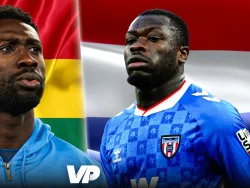

Another example of football’s global identity is seen in the careers of Derrick Luckassen and Brian Brobbey.
Both players came through the Netherlands’ highly regarded football development system and share Ghanaian heritage, but have taken different international paths.
Brobbey remains part of the Netherlands national football team setup and is expected to play a major role as the Dutch aim for World Cup glory.
Luckassen, on the other hand, has committed to Ghana national football team, strengthening the Black Stars’ defensive pool as they look to make a deep tournament run.
Football Beyond Borders
Experts say the growing number of split-nationality siblings at the World Cup reflects broader global trends in migration, dual citizenship, and talent development systems that span continents.
Football analysts note that national team choices are increasingly influenced by playing opportunities, personal identity, and emotional ties rather than geography alone.
They argue that the 2026 World Cup will not only highlight tactical battles on the pitch but also deeper narratives of identity, belonging, and family heritage.
As the tournament approaches, these sibling rivalries promise to add an emotional dimension to the global spectacle—where shared bloodlines will compete under different flags, and family pride will intersect with national ambition on football’s biggest stage.