
Comments and Issues
20 Critical Fixes to Save Nigeria’s Democracy from Electoral Fraud

Published
1 month agoon
By
Tom Obaseki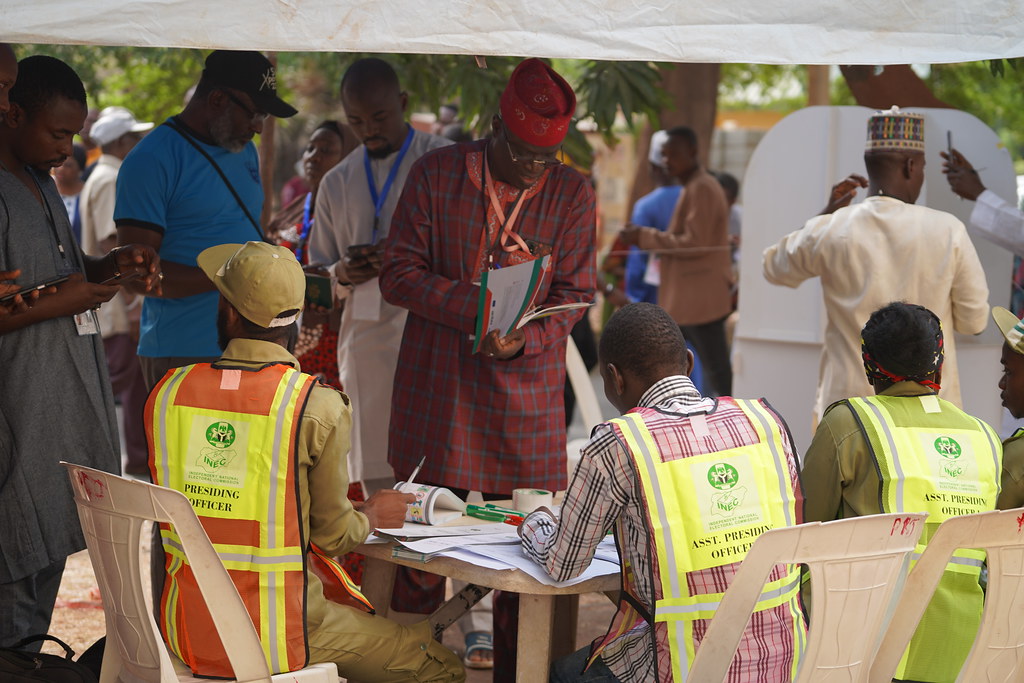
Below is a comprehensive set of 20 specific loopholes, ambiguities, weaknesses, and gaps in the Electoral Act 2022 that must be corrected to help produce genuinely free, fair, credible and transparent elections in Nigeria — with particular emphasis on issues around BVAS (Bimodal Voter Accreditation System) and IReV (INEC Results Viewing Portal) that have shaped debates since the 2023 general elections. I have attempted to recommend corresponding 20 critical reforms that would have the greatest immediate impact on producing elections that reflect the actual votes cast, especially regarding BVAS and IReV under the Electoral Act 2022 and the operations of the Independent National Electoral Commission (INEC).
These 20 are prioritized based on four criteria:
• Impact on result integrity
• Reduction of manipulation risk
• Litigation prevention
• Public confidence restoration
I. RESULT TRANSMISSION & LEGAL STATUS (Top Priority – System Integrity)
1. Make Real-Time Electronic Transmission Mandatory
Electronic transmission from polling unit must occur immediately after voting and before movement to collation centre.
Why critical:
Prevents result rewriting during physical collation.
2. Make Electronically Transmitted Result the Primary Legal Result
Where conflict exists, the electronic result must prevail unless forensic audit proves compromise.
Why critical:
Ends ambiguity exploited in 2023.
3. Give IReV Statutory Status as Part of Collation
IReV must not be merely a “viewing portal” but legally integrated into collation architecture.
Why critical:
Removes legal loophole used to disregard uploaded results.
4. Recognise BVAS Accreditation as Sole Valid Accreditation Record
No manual accreditation permitted under any circumstance.
Why critical:
Stops inflated accreditation figures.
5. Abolish Incident Forms Entirely
No fallback to manual accreditation.
Why critical:
Incident forms historically enabled over-voting.
6. Criminalise Failure to Upload Results
Strict criminal liability for presiding officers who do not upload without lawful cause.
Why critical:
Creates deterrence.
7. Mandatory Upload Before Leaving Polling Unit
Presiding officer cannot move until upload confirmation is received.
Why critical:
Prevents collation centre manipulation.
8. Automatic Nullification Where BVAS Data Is Missing
If BVAS accreditation data cannot be produced, results from that polling unit are void.
Why critical:
Prevents “ghost accreditation.”
II. OVER-VOTING & EVIDENCE REFORM (Litigation & Judicial Credibility)
9. Redefine Over-Voting Strictly by BVAS Data
Votes greater than BVAS accreditation = automatic cancellation.
Why critical:
Removes ambiguity.
10. Certified BVAS Data as Prima Facie Evidence
Tribunals must accept certified BVAS logs without requiring thousands of witnesses.
Why critical:
Makes justice accessible.
11. Mandatory Disclosure of Electronic Data to Petitioners
INEC must release logs within 7 days upon request.
Why critical:
Prevents suppression of evidence.
12. Tribunal Power to Declare Rightful Winner Based on Electronic Record
Where electronic data clearly shows winner.
Why critical:
Prevents endless reruns and instability.
III. TECHNOLOGY INTEGRITY & SECURITY
13. Mandatory Independent Pre-Election Technology Audit
Certified by neutral third-party experts at least 6 months before elections.
Why critical:
Builds public trust before election day.
14. Mandatory Post-Election Publication of Raw Polling Unit Data within defined time limit
Machine-readable datasets publicly available.
Why critical:
Enables civil society verification.
15. Mandatory Preservation & Sealing of BVAS Devices for 180 Days
To allow forensic inspection.
Why critical:
Prevents post-election tampering.
16. Clear Network Failure Protocol (No Manual Override)
Encrypted storage + auto-transmission when signal returns.
Why critical:
Stops abuse of “network failure” excuse.
IV. ELECTORAL OFFENCES & ENFORCEMENT
17. Establish Independent Electoral Offences Commission
Separate body to investigate and prosecute offences.
Why critical:
INEC cannot regulate and prosecute itself effectively.
18. Criminalise Security Agency Interference in Collation
Direct liability for officers interfering in results.
Why critical:
Addresses collation centre intimidation.
19. Increase Penalties for Vote Buying & Result Manipulation
Minimum 10-year imprisonment.
Why critical:
Current penalties are weak deterrents.
V. SYSTEMIC STRUCTURAL REFORM
20. Constitutional Backing for Electronic Transmission
Amend Constitution to remove any conflict between constitutional collation provisions and electronic transmission.
Why critical:
Prevents future judicial interpretation disputes.
If implemented, these reforms would:
✔Make BVAS accreditation binding
✔ Make electronic transmission compulsory
✔ Make uploaded results legally superior
✔ Prevent manual collation manipulation
✔ Reduce need for 20,000 polling unit witnesses
✔ Strengthen tribunal authority
✔ Increase public trust
If only these 20 reforms are passed, it will have the following impact:
• 70–80% of manipulation risk is eliminated
• 60% of post-election litigation complexity reduces
• Transparency becomes structural, not discretionary
Summary
In essence, many of the gaps that undermined public confidence in the 2023 elections stem not from technology failure alone but from how the Electoral Act left these systems under-defined, discretionary, and without robust enforcement mechanisms. This has meant that expectations set by law and practice have diverged, particularly around real-time result transmission and legally binding accreditation records.
If these 20 loopholes are addressed — by making technical provisions clear and mandatory, enforcing penalties for non-compliance, strengthening evidence rules, broadening inclusion, and tightening campaign finance and dispute resolution procedures — the legal foundation for truly free, fair and credible elections that reflect the actual vote cast would be significantly strengthened.
About the Author: Dr. Tom Obaseki, Pharm D, specialises in infrastructure, environmental management, and procurement. Voted Digital Local Government Chairman of the Year 2024 by the Presidency’s Bureau of Public Sector Reforms for deploying a novel digital service platform in Oredo LGA, Edo State, he is a Harvard Kennedy School-certified Public Leader and Fellow of the Nigeria Environmental Society.
Date Issued: February 14, 2026

You may like
Trending

 Football6 days ago
Iraq ends 40-year World Cup exile as Baghdad erupts in joy

 Crime1 week ago
12 feared killed in Jos night attack, authorities enforce 48-hour lockdown

 Business5 days ago
Nigeria braces for cost surge amid 2026 inflation projections

 Crime6 days ago
Kano-based lawyer reportedly dies after being trapped in Abuja hotel lift

 Business1 week ago
Petrol price hikes trigger surge in transport fares nationwide
 Business6 days ago
CBN unveils mandatory cybersecurity self-assessment tool for Banks

 Football7 days ago
Woman alleges 18 years of abuse by Mikel Obi’s family as she seeks divorce from former captain’s brother

 Business5 days ago
CBN confirms 33 Banks meet minimum capital requirements as recapitalization deadline ends