Seventy-one days after President Bola Ahmed Tinubu declared a national security emergency, Nigeria continues to witness a troubling wave of violent attacks, with no fewer than 316 civilians reportedly killed by gunmen across at least 15 states, raising serious concerns about the effectiveness of the emergency measures.
President Tinubu announced the security emergency on November 26, 2025, following a series of coordinated terrorist attacks, including assaults on a church in Kwara State and schools in Kebbi and Niger states, which led to the abduction of more than 350 people within a short period.
In his nationwide address at the time, the president ordered the recruitment of additional military personnel and directed that police officers attached to very important persons (VIPs) be redeployed to frontline duties to increase security presence in vulnerable areas.
He also announced plans to deploy forest guards to “flush out terrorists and bandits lurking in our forests,” declaring that there would be “no more hiding places for agents of evil.”
However, just over two months after the declaration, data compiled from reported incidents shows that the same “agents of evil” have continued to strike with deadly frequency.
Since the president’s announcement, at least 316 civilians have been killed in more than 31 reported attacks, averaging violent incidents almost every other day. Observers note that these figures only reflect attacks reported in the media, suggesting the actual toll could be higher.
A timeline of major attacks since the declaration highlights the scale and geographic spread of the violence.
Barely a week after the emergency declaration, gunmen attacked Gatawa and Shalla communities in Sabon Birni and Isa Local Government Areas of Sokoto State, killing seven people.
A day later, worshippers at St. Andrews Anglican Church in Isiokwe, Ihiala LGA of Anambra State, were attacked, leaving two people dead, including the wife of the church priest.
READ ALSO: Insecurity threatens Tinubu’s electoral prospects in Edo, analyst warns
On December 10, armed militias reportedly attacked returning internally displaced persons (IDPs) in Tse Ajogo village, Wukari LGA of Taraba State, killing at least 17 people. That same day, two more people were killed in separate gun attacks on Adabka and Mashayar Zaki communities in Zamfara State.
The violence continued on December 16, when gunmen opened fire at a mining site in the Fan community of Barkin Ladi LGA, Plateau State, killing at least 12 people.
Four days later, in Benue State’s Guma LGA, three people were killed in Daudu, including two brothers who were attacked while preparing rice ahead of Christmas.
On Christmas Day, a suicide bomber detonated an improvised explosive device (IED) inside a mosque at Gamborun Market in Maiduguri, Borno State, killing five worshippers.
Another IED explosion around the same period claimed nine lives along the Magami–Dansadau road in Maru LGA of Zamfara State.
Further attacks followed on December 28, when gunmen invaded a house in Pindiga village, Akko LGA of Gombe State, killing two siblings and abducting other family members. The next night, suspected Boko Haram fighters attacked Mubang and Zar villages in Hong LGA of Adamawa State, killing 14 people.
Two days before the end of the year, three residents were killed when gunmen attacked Kunza in the Ashigye community of Lafia LGA, Nasarawa State.
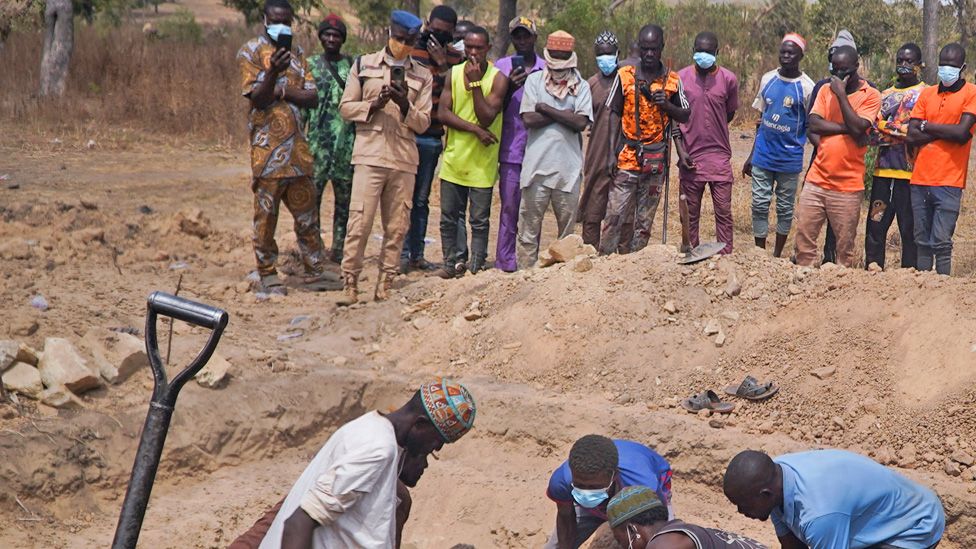
The deadliest single incident within the period occurred on January 3, when gunmen stormed Kasuwan Daji Market in Borgu LGA of Niger State in the late afternoon.
Traders, shoppers and bystanders were caught in the attack as the assailants moved through the market and nearby communities. The attackers were also reported to have operated in parts of Agwarra LGA for about a week without resistance.
By the end of the attacks, at least 42 people were confirmed killed, while several others, including children, were abducted.
The continued bloodshed has renewed public debate over Nigeria’s security strategy and raised questions about the pace and impact of the measures announced by the federal government.
Analysts and civil society groups are increasingly calling for a reassessment of current approaches, improved intelligence coordination, and stronger protection for rural and high-risk communities as the country grapples with persistent insecurity.



 Latest7 days ago
 Football6 days ago
 Business6 days ago
 Latest6 days ago
 Health7 days ago
 Latest1 week ago
 Latest7 days ago
 Latest5 days ago