
Latest
Buhari’s economic legacy: Mixed fortunes mark presidency of late Nigerian leader

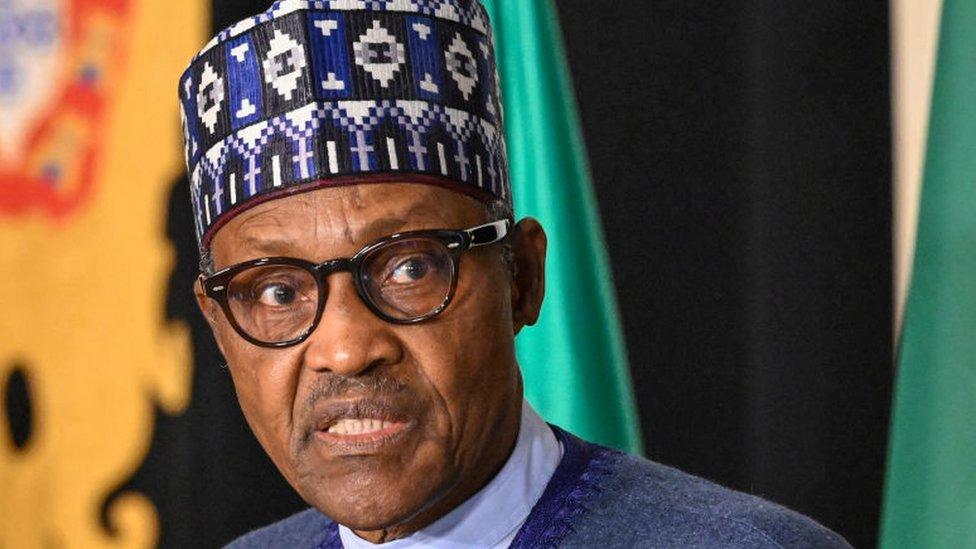
Former Nigerian President Muhammadu Buhari died on July 13, 2025, at the age of 82 in a London clinic, marking the end of an era in Nigerian political history.
A former military ruler turned elected leader, Buhari’s death has stirred widespread reflection on his turbulent but impactful presidency, particularly on the economic front.
Buhari, who first governed Nigeria as a military head of state from 1983 to 1985, returned to power as a democratically elected president in 2015, serving two terms that ended in 2023.
His administration was defined by a staunch anti-corruption drive, sweeping structural reforms, and a controversial approach to economic management that left a complex legacy.
Twin Recessions and Economic Shockwaves
Buhari’s presidency saw Nigeria slip into recession twice — first in 2016 following a global oil price crash and again in 2020 due to the COVID-19 pandemic. It was the first time the country experienced two recessions under a single administration, casting a shadow over his economic credentials.
Despite initial optimism, critics faulted the administration’s handling of both recessions, especially the delayed response to the 2016 currency crisis, which led to widespread capital flight and inflation.
Efforts to Elevate Nigerians on Global Stage
Buhari actively supported Nigerian professionals on the global front. His administration endorsed Ngozi Okonjo-Iweala as Director-General of the World Trade Organization (WTO), backed Akinwumi Adesina for a second term as President of the African Development Bank, and supported Benedict Oramah’s reappointment as Afreximbank President.
COVID-19 Stimulus and Poverty Reduction Plan
To mitigate the economic fallout of the pandemic, Buhari launched a N2.3 trillion Economic Sustainability Plan (ESP) in 2020, aimed at job creation and support for small and medium enterprises.
He also initiated the National Poverty Reduction with Growth Strategy (NPRGS) to lift 100 million Nigerians out of poverty in a decade, though results remained mixed.
Treasury Single Account (TSA) and Financial Reforms
A key transparency achievement was the full implementation of the Treasury Single Account (TSA) in 2015, which consolidated government revenues and reduced leakages across ministries and agencies.
However, efforts to reform Nigeria’s economy were often undermined by controversial policies such as the 2019 land border closures, which drove up food prices and disrupted trade, despite government claims of promoting local production.
Decline in Oil Production and Rising Oil Theft
Despite being Africa’s top oil producer, Nigeria under Buhari struggled with falling production. In 2022, output dropped below 1 million barrels per day (bpd), the lowest in decades, even as global oil prices surged due to the Russia-Ukraine war.
Rampant oil theft further worsened the situation. Reports showed Nigeria lost over $2 billion to crude theft between January and August 2022 alone.
Petrol Import Scandal and Fuel Scarcity
READ ALSO: Buhari’s death sparks criticism, calls for political accountability
In early 2022, the country experienced its worst fuel contamination crisis after off-spec petrol was imported by several firms. The incident led to nationwide fuel scarcity, widespread public outrage, and a sharp drop in trust in regulatory agencies.
NNPC Transition and Structural Reform
In July 2022, Buhari oversaw the historic transformation of the Nigerian National Petroleum Corporation (NNPC) into a limited liability company—NNPC Limited. The transition, which removed the company from certain regulatory controls, was meant to boost profitability and efficiency in the oil sector.
Surging Debt and Deficit Spending
Buhari’s tenure witnessed an unprecedented increase in public debt. From N12.1 trillion in 2015, Nigeria’s debt stock ballooned to N77 trillion by 2023. External debt also rose from $7.35 billion to $37.2 billion, with debt servicing costs increasing fivefold to N5.24 trillion.
The country’s fiscal deficit stood at N33.97 trillion between 2016 and 2022, with significant portions funded through domestic borrowing and the controversial use of the Central Bank’s “Ways and Means” facility, which exceeded N25 trillion.
Exchange Rate Instability and Naira Redesign
The naira weakened significantly under Buhari. The official exchange rate moved from N197 to over N460/$1 between 2015 and 2023, while black market rates averaged N762/$1.
In late 2022, Buhari launched a naira redesign project targeting the N200, N500, and N1000 notes. The policy was intended to reduce money laundering, ransom payments, and inflation but was met with skepticism. Critics labelled it a mere “repainting” that failed to address deeper economic issues.
A Divisive Economic Legacy
While Buhari is credited with instituting key reforms like the TSA and supporting Nigerian voices on global platforms, his administration’s economic record remains contentious.
Economist Bismarck Rewane described Buhari’s economic strategy as “a mix of conservative monetary control and ad hoc fiscal responses that failed to deliver sustained growth.”
Policy analyst Eyo Ekpo added: “The administration’s obsession with control and nationalism often overshadowed the need for competitive market reforms and investor confidence.”
As Nigeria reflects on the life and leadership of Muhammadu Buhari, the economic dimensions of his presidency continue to provoke debate—highlighting both the promises fulfilled and the opportunities missed.
His passing not only marks the end of a political chapter but reignites conversations about the path Nigeria must take to achieve long-term economic stability and inclusive growth.


-

 Football1 week ago
UEFA threatens FIFA World Cup boycott over proposed private investment plan
-

 Education4 days ago
University of Ibadan releases 2026/2027 post-UTME screening results
-

 Business6 days ago
Information Minister, VON DG to lead ARCON’s 2026 Advertising Industry Colloquium
-

 Business6 days ago
Cooking gas dealers slash prices amid intensifying market competition
-
 Aviation5 days ago
Canada issues 10 key tips to help immigration applicants avoid processing delays
-

 Football4 days ago
Unpaid £185m Club World Cup fund sparks fresh FIFA controversy
-
 Business3 days ago
Breaking: NNPCL reduces pump price of petrol as competition intensifies
-

 Energy1 week ago
Dangote Refinery offers fresh hope for Nigeria’s industrial transformation