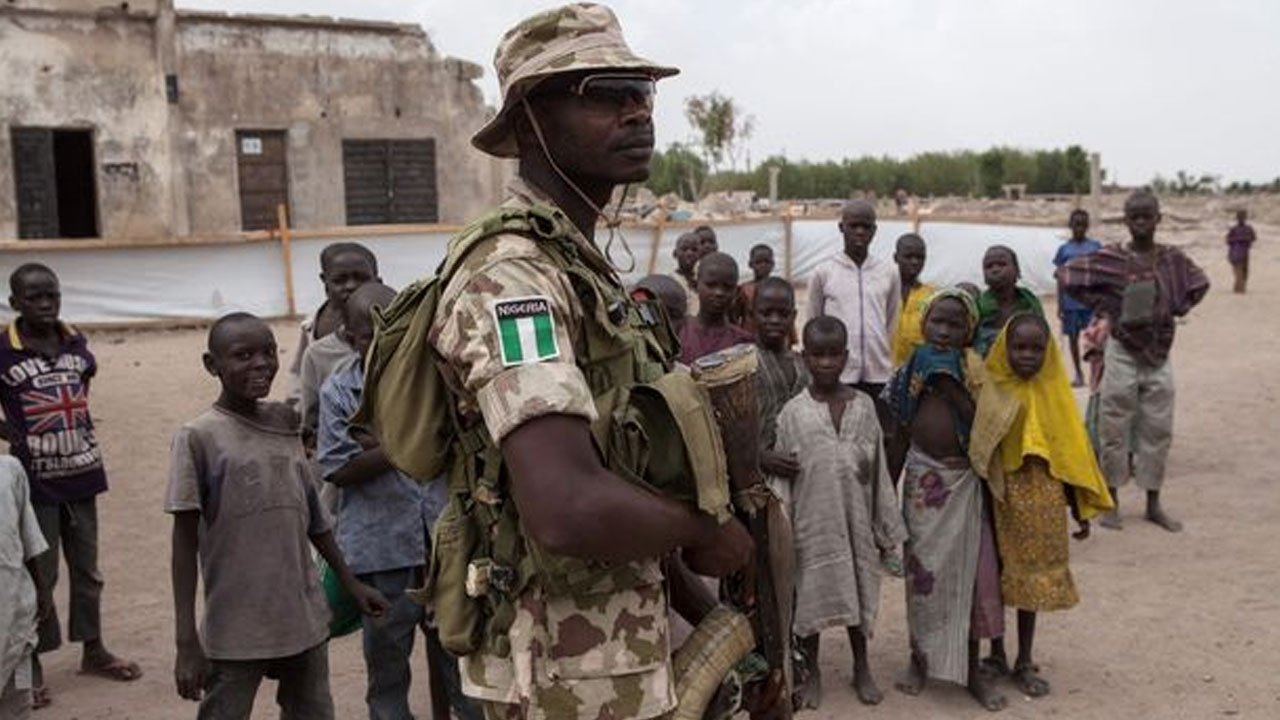
Nigeria’s frontline soldiers, often deployed with insufficient gear and limited public recognition, have faced a deadly escalation of ambushes between 2019 and 2025.
A new report by SBM Intelligence, The Kill Zone, documents at least 454 soldiers killed in ambushes during the six-year period, alongside scores of police officers and other security personnel—an indicator of how perilous the country’s security environment has become.
These statistics represent more than data points. They reflect individual stories of sacrifice: a corporal writing home from remote patrol bases, a lieutenant missing family milestones due to back-to-back operations, and commanders leading from the front—some never returning.
The recent killing of Brigadier General Musa Uba in Borno State underscores the vulnerability of officers who still accompany troops into insurgent-dominated terrain.
The SBM report reveals that insurgent factions—including ISWAP and coordinated bandit networks—have evolved in tactical sophistication.
Their methods now include drone surveillance, advanced reconnaissance, and coordinated ambush formations engineered to neutralise even senior officers.
Ambushes remain heavily concentrated in the North-East and North-West but are spreading to other zones as militants replicate battlefield strategies.
Routine patrols and supply convoys have become high-risk missions, where a single intelligence breach can produce catastrophic outcomes.
Many soldiers face these threats with aging equipment, slow supply chains, and improvised battlefield solutions—conditions that often turn bravery into avoidable loss.
The Kill Zone highlights recurring operational security breaches. In conflict zones where insurgents blend easily with civilians, information slips—sometimes from informants, compromised communication devices, or predictable patrol patterns—have enabled militants to set deadly kill zones.
Fixing this, analysts warn, requires more than equipment upgrades. It requires cultural reform inside units, strengthened counterintelligence, and secure communication systems.
Security analysts and defence specialists say the findings of the report reaffirm long-standing concerns about Nigeria’s military preparedness.
Dr. Ayo Olanrewaju, a national security researcher, said the data reflects a force that is overstretched and exposed.
“Nigerian soldiers are not losing because they lack courage—they are losing because they are fighting sophisticated adversaries with outdated tools. The system is failing them.”
Retired colonel and military strategist Col. Danladi Hassan (rtd.) added that ambushes succeed because of predictable movement patterns and insufficient intelligence fusion.
“You cannot fight an irregular enemy with regular routines. Without real-time intelligence, encrypted communication, and rapid air support, troops will always be vulnerable.”
“Behind every ambush casualty is a broken home. Widows struggling, children dropping out of school. Nigeria cannot continue to treat frontline losses as mere statistics.”
Despite systemic weaknesses, field reports show repeated acts of heroism—counterattacks under fire, rescue missions for civilians, and stubborn defence of isolated outposts. Yet these sacrifices often go unnoticed amid political arguments over procurement, welfare, and strategy.
Analysts say the country must shift focus: honour the fallen, support their families, and confront bureaucratic failures that endanger troops.
“These measures,” said defence economist Dr. Akin Ajayi, “are not luxuries—they are force multipliers. A well-supported soldier fights better, survives more, and wins more.”



 Football1 week ago
 Crime7 days ago
 Health7 days ago
 Energy1 week ago
 Politics7 days ago
 Crime4 days ago
 Aviation1 week ago
 Trending Stories1 week ago