The Country Director of the International Human Rights Commission (IHRC), Nigeria Chapter, Ambassador Abdullahi Bakoji Adamu, has cautioned that emergency powers granted to the President must not be used to override the democratic mandate freely given to elected officials by the people.
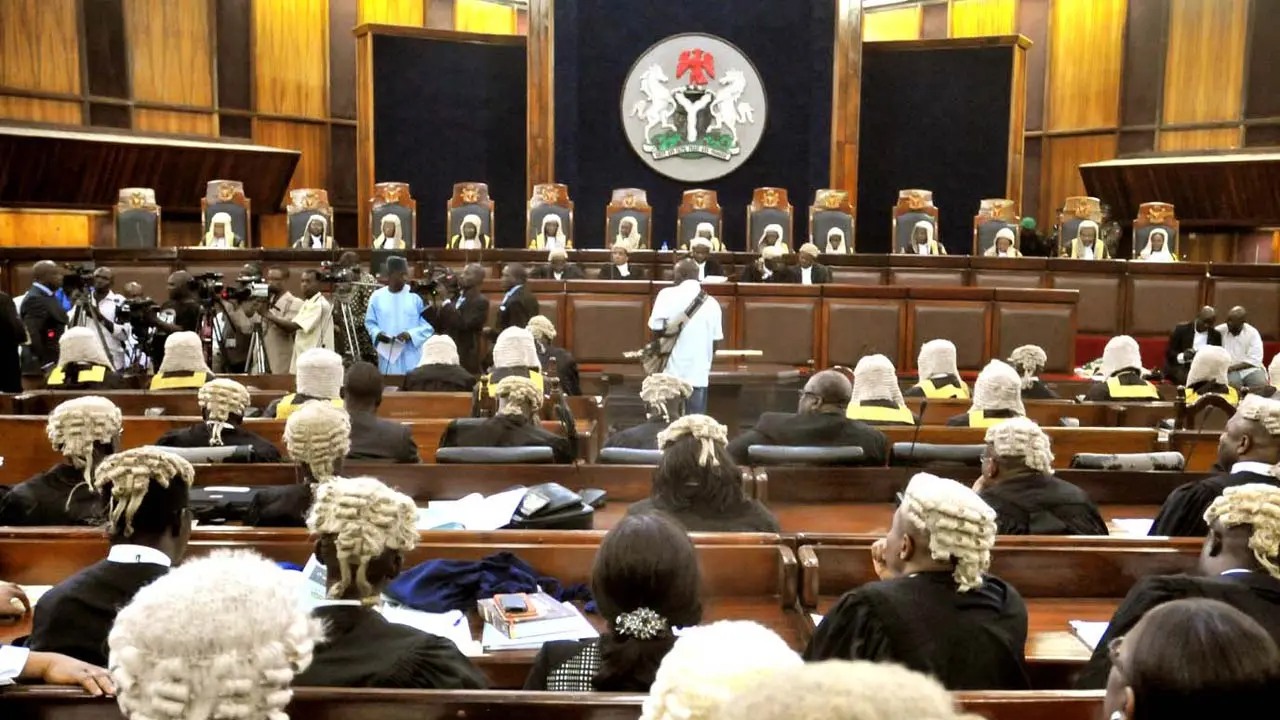
Bakoji Adamu gave the warning while reacting to a recent Supreme Court judgment that affirmed the President’s authority to proclaim a state of emergency and remove elected officials.
While acknowledging the constitutional basis of such powers, he described the ruling as one that demands restraint, caution, and strong constitutional safeguards to prevent abuse.
According to him, emergency powers are recognised in constitutional democracies worldwide and are designed to enable governments respond swiftly to extraordinary situations such as grave security threats, breakdown of public order, or other national emergencies.
“There is no doubt that emergency powers are recognised within constitutional systems. They exist to enable the government to respond swiftly and effectively to exceptional situations such as serious security threats, breakdown of public order, or national emergencies,” he said.
From this perspective, Bakoji noted that the Supreme Court’s ruling could be viewed as strengthening the executive’s ability to maintain stability during periods of crisis. However, he stressed that decisive executive action must always be balanced with respect for the rule of law and the will of the electorate.
He expressed concern over the implication of removing duly elected officials through emergency proclamations, describing such actions as a serious democratic issue.
“The removal of duly elected officials through emergency proclamation raises serious concerns,” he said. “Elected leaders derive their authority from the people, and any action that suspends or removes that mandate must be treated with extreme caution and backed by strong legal justification.”
The human rights advocate further warned that emergency rule often leads to a concentration of power in the executive arm of government, which could weaken democratic institutions if not properly checked.
“A core principle of constitutional democracy is separation of powers,” Bakoji explained. “Emergency powers, by their nature, place enormous authority in the executive. Without clear limits on duration, scope, and oversight, there is a real risk of undermining the legislature and reducing judicial scrutiny.”
He noted that historical experiences across different democracies have shown that broad emergency powers are susceptible to abuse when they are not clearly regulated and closely monitored.
“In my view, the central issue is not the existence of emergency powers, but the safeguards that accompany their use,” he said. “Emergency measures should be proportionate, time-bound, and subject to effective legislative and judicial oversight. They must not become a substitute for constitutional processes or democratic governance.”
While acknowledging that the Supreme Court ruling may have clarified the scope of executive authority during emergencies, Bakoji stressed that it also places a heavy responsibility on all arms of government to ensure that such powers are exercised responsibly and strictly in line with constitutional principles.



 Maritime1 week ago
 Football7 days ago
 Latest7 days ago
 Latest1 week ago
 Health1 week ago
 Energy6 days ago
 Energy6 days ago
 Comments and Issues6 days ago