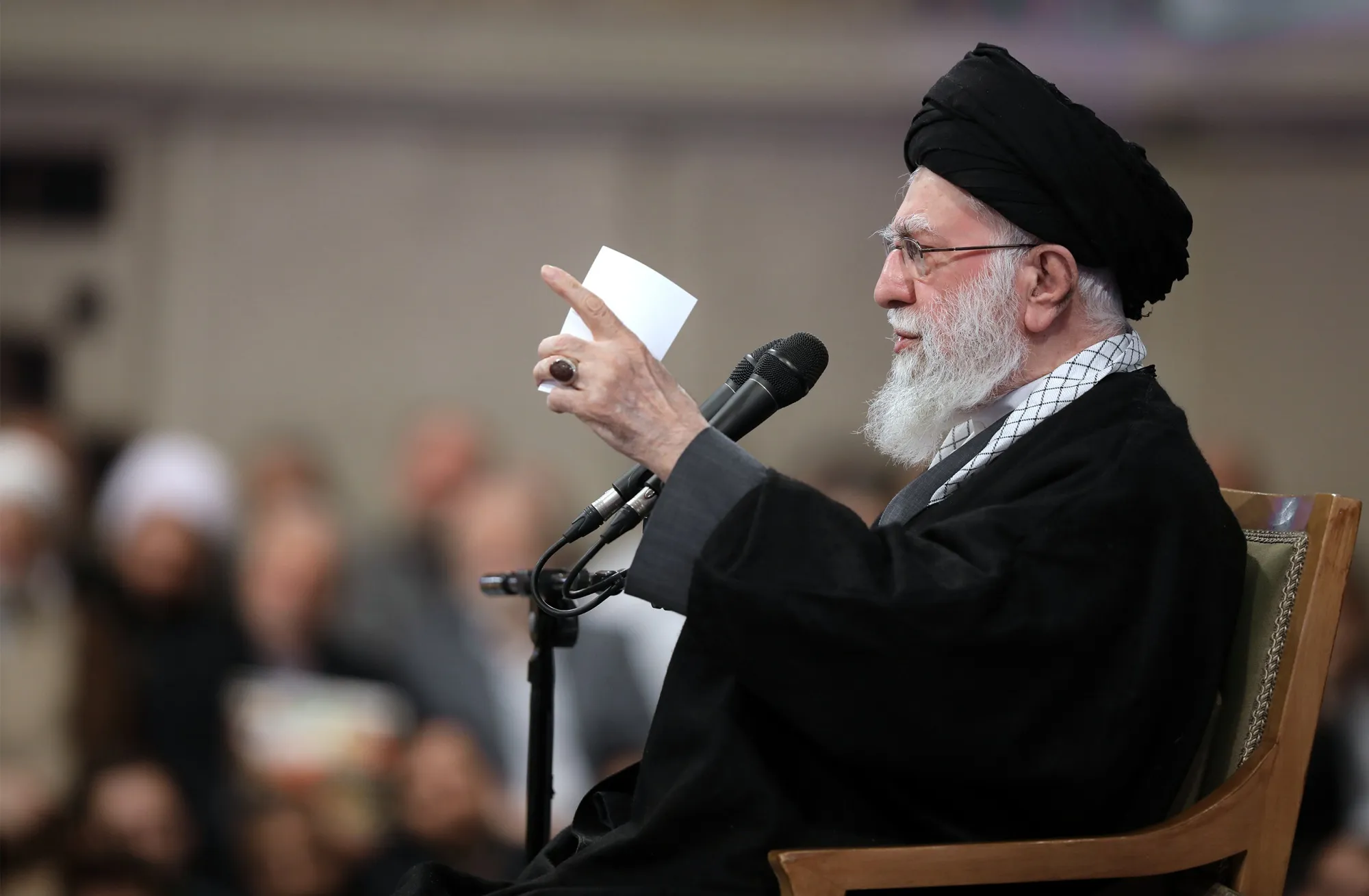
Iran’s Supreme Leader, Ayatollah Ali Khamenei, has called for national “unity” in the face of what he described as “terrorist actions,” as widespread protests driven by economic hardship continue to grip the country.
In a televised address broadcast on Iranian state television on Friday, Khamenei issued a stern warning to protesters, reiterating that the authorities would not hesitate to crack down on unrest. He framed the demonstrations as a foreign-backed plot, accusing the United States and its allies of exploiting internal grievances to destabilise Iran.
The supreme leader alleged that protesters were acting on behalf of U.S. President Donald Trump, accusing them of attacking public property and serving as “mercenaries for foreigners.”
He further accused Trump of having his hands “stained with the blood” of Iranians, warning that Tehran would not tolerate what it views as externally driven disorder.
Iranian authorities have struggled to regain control since the protests erupted on December 28, triggered by mounting economic pressures and a sharp fall in the value of the rial.
According to official and media reports, dozens of protesters and at least four members of the security forces have been killed since the demonstrations began.
READ ALSO: Iran repatriates nearly 1.2m undocumented Afghans since March
While President Masoud Pezeshkian has urged restraint and called on the state to listen to what he described as “genuine” public grievances, hardline voices within the establishment have taken a tougher stance. These officials have insisted that there will be no leniency, citing what they claim is support for the protests from “foreign enemies.”
The unrest was initially sparked by anger among Tehran shopkeepers over the rapid depreciation of the national currency, which has deepened the cost-of-living crisis and intensified public frustration with economic management.
In an apparent attempt to contain the protests, authorities shut down internet access nationwide on Thursday.
The blackout continued into Friday, alongside widespread disruption to phone services. Airlines also cancelled flights in and out of the country, further isolating Iran from the outside world.
Despite the communications shutdown, videos shared by activists appeared to show protesters gathering around bonfires, chanting anti-government slogans as debris littered streets in Tehran and other cities.
Breaking its silence on Friday, Iranian state media alleged that “terrorist agents” linked to the United States and Israel had set fires and incited violence during the demonstrations. The reports acknowledged “casualties” but provided no further details.
Meanwhile, President Trump reiterated a warning that the United States would not tolerate the killing of protesters in Iran.
“Iran has been told very strongly that if they do that, they’re going to have to pay hell,” Trump said in an interview on Thursday.
According to Holly Dagres, a senior fellow at the Washington Institute for Near East Policy, Pahlavi’s appeal helped galvanise the movement.
“His call turned the tide,” Dagres told the Associated Press, adding that social media activity suggested many Iranians were taking the call seriously as a push to remove the Islamic Republic
“This is exactly why the internet was shut down: to prevent the world from seeing the protests,” she said. “Unfortunately, it also likely provided cover for security forces to kill protesters.”


 Crime1 week ago
 Football7 days ago
 Football1 week ago
 Business1 week ago

 Football1 week ago
 Business7 days ago
 Football7 days ago