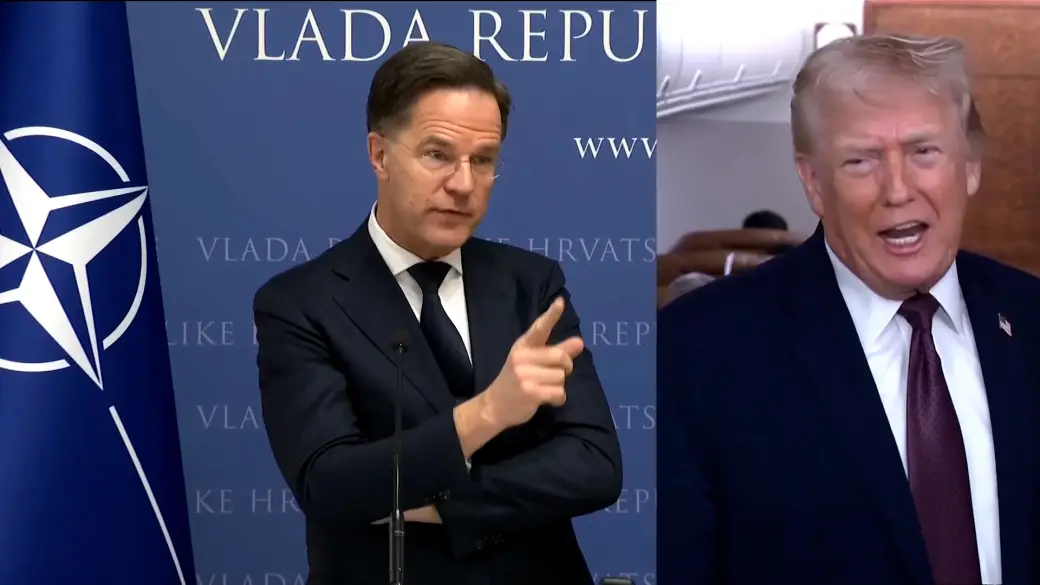
United States President Donald Trump has again insisted that Washington must take control of Greenland for national security reasons, urging the North Atlantic Treaty Organization (NATO) to support his position ahead of high-level diplomatic talks in Washington.
In a post on his Truth Social platform on Wednesday, Trump argued that NATO’s military strength would be significantly enhanced if Greenland were under U.S. control.
He maintained that the alliance’s effectiveness as a deterrent depended largely on American military power, which he said he expanded during his first term and is now elevating further.
“NATO becomes far more formidable and effective with Greenland in the hands of the UNITED STATES,” Trump wrote, adding that without U.S. military might, NATO would not be a credible force.
Trump’s remarks came just hours before Danish Foreign Minister Lars Løkke Rasmussen and Greenland’s Foreign Minister Vivian Motzfeldt were scheduled to meet U.S. Vice President JD Vance and Secretary of State Marco Rubio at the White House.
The meeting follows strong statements from Greenland’s Prime Minister, Jens-Frederik Nielsen, who recently said that if forced to choose, Greenland would remain with Denmark.
The U.S. president has declined to rule out the use of military force to secure Greenland, repeatedly framing control of the Arctic island as essential to U.S. national defense. Rubio has sought to soften that stance, saying the administration’s objective is to purchase Greenland rather than seize it.
Denmark, however, has firmly rejected the idea, stressing that Greenland is not for sale, while Greenlandic leaders have said no amount of money could buy their “national soul.”
READ ALSO: Breaking News: Multiple countries suspend flights to Iran amid rising tensions
Danish officials have countered Trump’s security arguments by pointing to a comprehensive 1951 defense agreement that already grants the U.S. extensive access to Greenland for military purposes. Copenhagen argues that the agreement allows Washington to use the territory as needed for defense, making any takeover unnecessary.
Analysts say Denmark could respond to U.S. pressure by further strengthening its military presence on the island, increasing investment, and deepening coordination with NATO allies.
Another option under discussion is granting the U.S. expanded access within the framework of existing agreements, short of any transfer of sovereignty.
While both Denmark and Greenland have ruled out a sale or near-term independence, observers suggest an alternative “off-ramp” could involve a minerals-for-security deal.
Under such an arrangement, the U.S. could gain access to Greenland’s rare earth resources in exchange for security guarantees, allowing Trump to claim a strategic win without annexation.
The U.S. could also increase troop deployments in Greenland under the 1951 agreement, which places few formal limits on military expansion provided Danish and Greenlandic authorities are notified.
Any move beyond routine defense operations into control of government functions, however, would be widely viewed as a de facto occupation.
European leaders have reacted with growing alarm. France has announced plans to open a consulate in Greenland next month, while German Defence Minister Boris Pistorius warned that annexing the island would represent a grave violation of international law and cooperation.
UK Foreign Secretary Yvette Cooper also emphasized that Arctic security is a critical transatlantic issue best addressed through collective NATO action.
Trump on Tuesday dismissed comments by Greenland’s prime minister rejecting U.S. control, saying disagreement with Washington would create “a big problem” for him.
Danish Prime Minister Mette Frederiksen has since sought to rally European and NATO allies, warning that the dispute goes beyond Greenland and threatens the foundations of the international order.
“This is not just about Greenland or the Kingdom,” Frederiksen said. “It is about the principle that borders must not be changed by force, and that peoples cannot be bought.”



 Business1 week ago
 Agribusiness1 week ago
 Health1 week ago

 Politics1 week ago
 Energy1 week ago
 Health5 days ago