
Business
Rising fuel costs, policy push signal EV boom in Nigeria as industry predicts 2026 takeoff

Published
2 months agoon
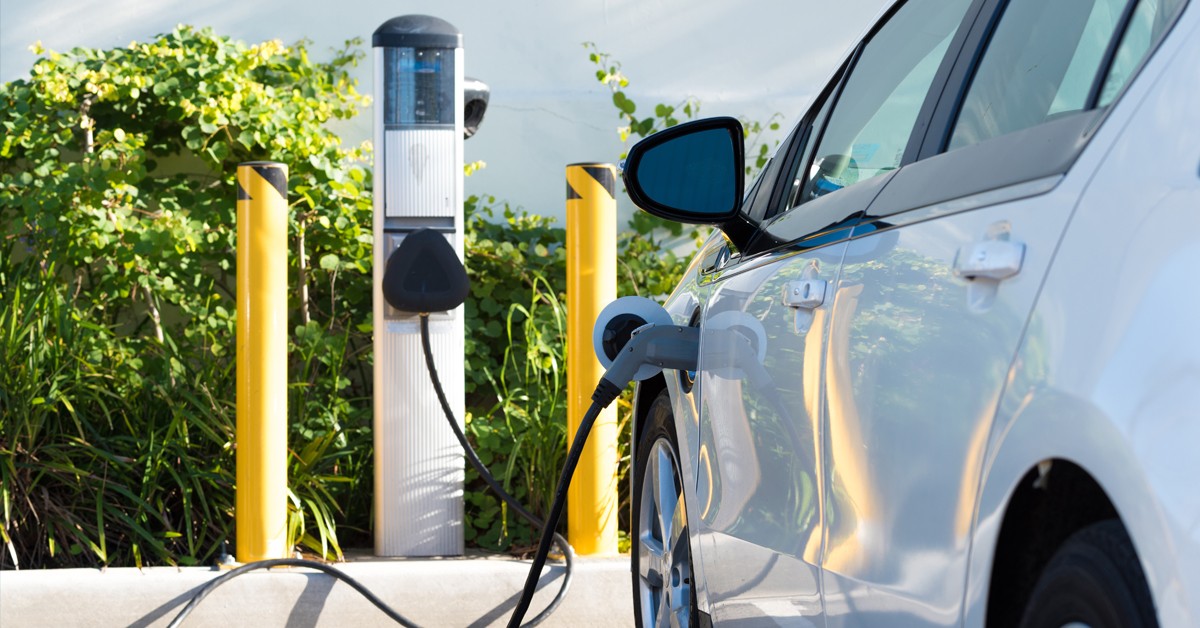
Nigeria’s electric vehicle (EV) market is poised for accelerated growth in 2026, with industry executives projecting a sharp rise in adoption driven by persistently high fuel costs, improving policy signals and increasing private sector investments.
This outlook emerged from separate interviews with electric vehicle distributors and assemblers operating in key commercial centres, including Lagos, Abuja and Port Harcourt. According to the executives, customer inquiries more than doubled in 2025, a trend they believe could mark a tipping point for broader EV adoption among private car buyers and commercial fleet operators.
Speaking on the sector’s prospects, Chairman of Roxettes Group, Dr. Kaycee Orji, said his company, through Roxettes Motors, has consistently championed electric mobility in Nigeria, producing electric, hybrid and internal combustion engine (ICE) vehicles over the years.
Orji pointed to China’s rapid transition to electric vehicles as a clear signal of the direction of the global automotive industry.
READ ALSO: Why does Nigeria buy official cars every budget year?
“China is migrating fully by 2030. They have already achieved about 70 to 80 percent of that transition—almost 90 percent,” he said, noting that ICE vehicles are expected to be completely phased out in China by the end of the decade.
He warned that without a clear and deliberate EV transition strategy, Nigeria risks becoming a dumping ground for used petrol and diesel vehicles from countries enforcing strict phase-out timelines.
“The idea is to send a signal that Nigeria is not a dumping ground for used ICE vehicles from countries that are moving away from them,” Orji said.
Central to accelerating adoption, he explained, is the proposed Electric Vehicle Transition and Green Mobility Bill, 2025, which he described as largely comprehensive in addressing the major barriers to EV uptake. According to Orji, the bill mandates government agencies to transition to electric vehicles, with priority given to locally assembled models.
He added that the proposed legislation also seeks to protect local investors by discouraging indiscriminate licensing of foreign EV assemblers without strong local partnerships. The bill further proposes incentives such as special number plates to visually distinguish electric vehicles from ICE vehicles.
“In China, green number plates are for electric vehicles, while blue ones are for ICE vehicles. That visual distinction alone drives adoption,” Orji noted.
Beyond legislation, Orji highlighted existing fiscal incentives, including the reduced import duty of 10 per cent on fully built electric vehicles. He said local assembly would significantly deepen the benefits by creating jobs, transferring skills and adding value to the Nigerian economy.
He also referenced the Federal Government’s “Nigeria First” policy and ongoing initiatives by the National Automotive Design and Development Council (NADDC) as steps toward a more investor-friendly automotive ecosystem.
“If Nigeria can sustain the tempo and the Electric Vehicle Bill is handled with speed, I see a boom in migration in 2026,” Orji said, adding that EV adoption could continue to grow even without strong government backing because of their cost-efficiency and lower running expenses.
Other players in the sector echoed similar optimism. Olabisi Ajayi, chief executive of an EV import and distribution company, said the removal of fuel subsidies has significantly strengthened the economic case for electric vehicles.
“When you compare the running and maintenance costs of electric vehicles to petrol-powered alternatives—especially now—businesses are doing the math and switching,” Ajayi said.
Another EV distributor, Uche Madunagwu, said sustained alignment between government policy and private investment could move electric vehicles from a niche segment into a core component of Nigeria’s transport system.
“This year has the potential to set the foundation for a decade of growth,” he said.
The rising interest in electric vehicles mirrors broader shifts in Nigeria’s energy and transportation landscape following the removal of fuel subsidies and persistently high petrol prices. For businesses and individuals, EVs are increasingly viewed not only as environmentally friendly alternatives but also as economically viable solutions with lower long-term operating costs.
If supportive legislation such as the Electric Vehicle Bill is passed and implemented effectively, analysts say Nigeria could reduce its dependence on imported used vehicles, stimulate local manufacturing and position itself as a regional hub for electric mobility.
Data from the National Bureau of Statistics (NBS) underscore the urgency of reform. Nigeria recorded passenger car imports valued at N527 billion in the third quarter of 2025, more than double the N254 billion recorded in the same period of 2024, reflecting a sharp year-on-year increase.
The Federal Government has also rolled out a National Action Plan for the Development of Electric Vehicles (EVDP), targeting at least 30 per cent of vehicles produced locally to be electric by 2032, alongside efforts to curb reliance on imported vehicles. Currently, fully built electric vehicles attract a reduced import duty of 10 per cent.
While automotive and energy experts remain divided on whether Nigeria is fully ready for a large-scale EV transition, industry players insist that the combination of economic pressures, policy reforms and private investment could make 2026 a defining year for electric mobility in the country.

You may like
Trending

 Business6 days ago
Big borrowers in Nigeria face loan freeze as CBN acts against defaulters

 Football1 week ago
Chelsea, Man City suffer historic Champions League setback after heavy defeats

 Latest1 week ago
Ondo State introduces entertainment tax on weddings, burials, social events

 Health6 days ago
Family waits over a decade for compensation after toddler suffers paralysis post-vaccination

 Energy1 week ago
Fears of monopoly rise as Dangote controls N14.4tn petrol market
 Health6 days ago
Hundreds speak out against proposed vaccine mandate changes

 Health1 week ago
NMA presses FG to reconstitute MDCN as Chimamanda’s son’s death exposes justice gap

 Business6 days ago
Middle East Crisis: Is Nigeria Ready for another crude oil windfall?