
Business
Vanishing Gigabytes: Why Nigerians question mobile data billing transparency

Published
2 months agoon
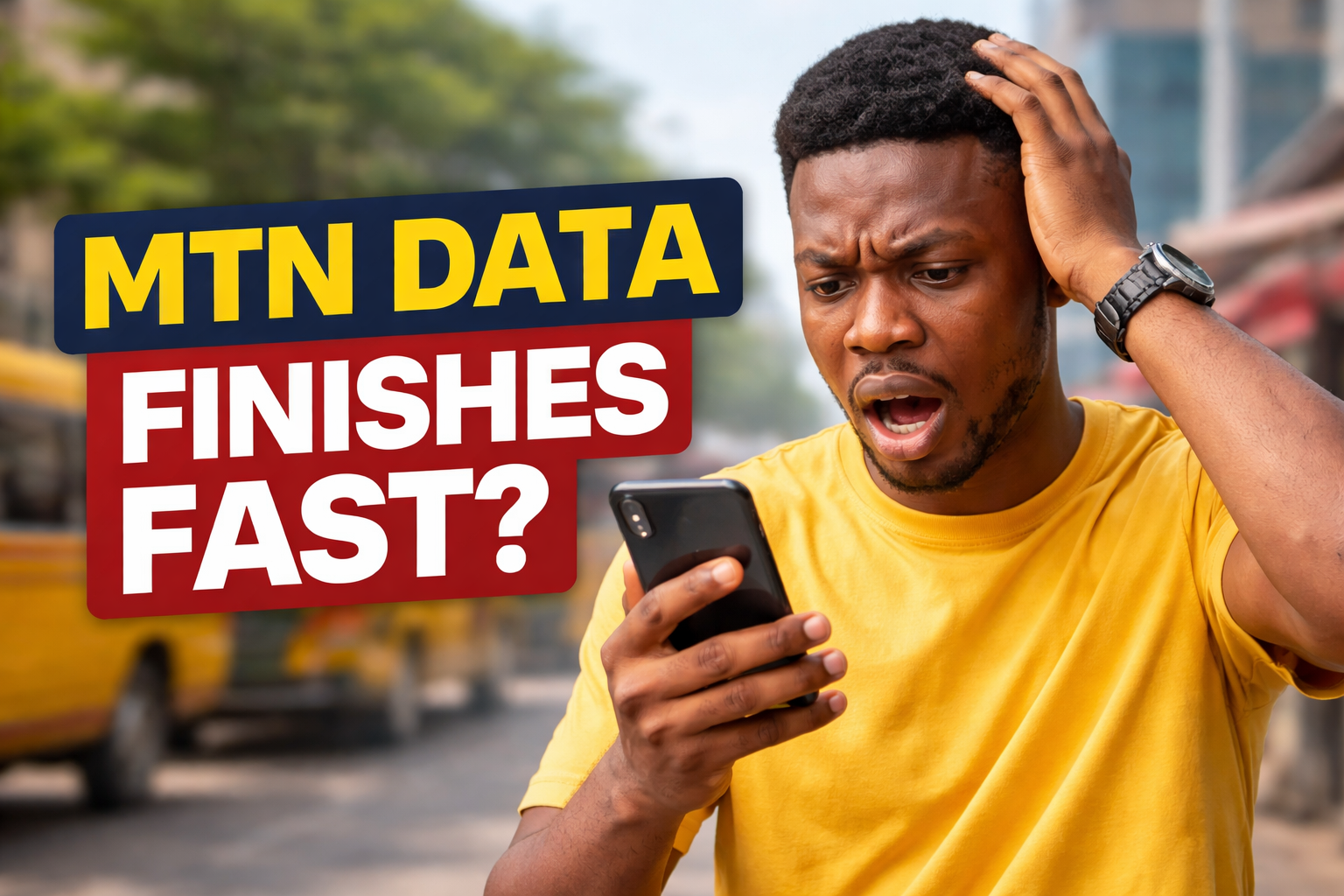
“Is MTN ripping me off?” It is a question many Nigerians quietly ask after yet another data bundle disappears without warning.
The suspicion feels familiar. Nigerians have lived through similar frustrations with electricity distribution companies, where estimated billing became a national grievance because consumers could not clearly determine what they had actually used. Mobile data consumption now evokes comparable anxieties.
A subscriber purchases 1GB of data with confidence in the morning, only for it to vanish before lunchtime.
Days later, the same bundle appears to last much longer under seemingly similar usage conditions. Telecom operators insist consumption depends on user behaviour, but many customers argue that their daily digital routines rarely change.
Platforms such as Instagram, WhatsApp and TikTok dominate Nigeria’s online culture, with auto-playing videos and high-definition streams forming the backbone of everyday browsing. While video content undeniably consumes significant data, inconsistent depletion patterns often breed suspicion more quickly than any buffering symbol on a screen.
Unlike electricity meters that visibly display units in real time, mobile data consumption is largely invisible. Background app updates, automatic cloud backups, silent synchronisations and embedded advertisements consume megabytes without drawing attention.
Telecommunications companies explain that smartphones constantly exchange data packets with network servers, even when users are not actively browsing.
READ ALSO: 9,218 fibre cuts rock MTN network, exposes cracks in Nigeria’s digital backbone
They are technically correct. Every streamed video, refreshed webpage or downloaded file adds to the usage tally. A single high-definition TikTok clip can consume hundreds of megabytes within minutes.
Modern smartphones are particularly data-hungry. Operating systems frequently update apps, upload photos to cloud storage and refresh notifications in the background. The meter is running even during casual scrolling.
Yet the technical explanation offers little comfort to subscribers who find themselves spending as much as N20,000 every few days despite having Wi-Fi access at home and at work. When official network deductions differ from third-party phone data trackers, distrust deepens. The discrepancy may not necessarily indicate fraud, but it highlights a communication gap.
Another source of confusion lies in the popular marketing phrase “unlimited browsing.” The term suggests boundless access. In reality, most unlimited plans operate under fair usage policies.
Subscribers may enjoy high-speed access up to a threshold, sometimes around 100GB or more. After crossing that mark, speeds are significantly reduced. Technically, the customer remains connected, but streaming in high definition becomes slow and frustrating.
Unlimited, therefore, does not mean infinite performance. It represents managed access with speed controls designed to protect network capacity. Beneath the marketing language, billing systems still measure usage per megabyte. Instead of cutting users off after exceeding a cap, networks throttle connection speeds.
Telecom operators argue that such models are necessary. Only a small percentage of subscribers are heavy users, and strategic pricing combined with speed management allows networks to maintain service quality for the majority.
This is where regulatory oversight becomes critical. The Nigerian Communications Commission (NCC) has established consumer protection guidelines, but critics argue that clearer disclosure standards are still needed.
If a plan is subject to throttling after a specified threshold, that limit should be prominently advertised rather than buried in fine print. If background data consumption significantly affects usage, subscribers should have access to simple, real-time, network-verified dashboards that clearly explain deductions.
Transparency, industry observers note, reduces suspicion more effectively than public statements.
There is also the issue of value. Fibre broadband providers in urban areas often offer comparatively affordable, truly unlimited access. Meanwhile, high-capacity GSM bundles remain capped, with premium 250GB plans priced significantly higher.
Consumers increasingly compare pricing globally. In several markets, monthly contracts equivalent to $50 can offer generous unlimited mobile data with minimal throttling. In Nigeria, comparable packages may cost more while still imposing speed limits and caps.
However, context matters. Nigeria’s telecom operators operate in a challenging environment characterised by unreliable power supply, high infrastructure costs and heavy capital expenditure. Companies invest billions of naira in spectrum licences, tower deployment and maintenance.
For instance, MTN Nigeria, the country’s largest telecom operator, consistently cites network expansion costs, foreign exchange pressures and energy expenses as key factors shaping pricing structures.
While these economic realities explain part of the pricing model, they do not eliminate the need for clearer communication.
Industry analysts suggest the answer is likely less dramatic. Opaque billing structures, aggressive background data consumption and persuasive marketing language combine to create a perception of exploitation. Even if billing systems are technically accurate, perception remains powerful.
At the same time, consumer advocates argue that the NCC must continue pushing for simpler, clearer disclosure standards to restore confidence in the system.
Data has become as essential as electricity in Nigeria’s digital economy. Until billing structures become fully transparent and predictable, every vanished gigabyte will continue to spark uneasy questions.
Not because Nigerians enjoy conspiracy theories, but because invisibility breeds suspicion. In a market built on megabytes, trust may ultimately prove to be the most valuable currency of all.

You may like
Trending

 Energy7 days ago
Nigeria leads Africa in refining as Dangote exports 456,000 tonnes of fuel

 Crime6 days ago
Delta Police Arrest Over 270 Suspects in Warri, Ughelli Raids as Activists Accuse Officers of Rights Abuses

 Football7 days ago
Italy lead World Cup playoff team valuations at €839m as DR Congo stand out

 Business7 days ago
Air Peace announces resumption of direct Lagos–Barbados flights from May 2026

 Business6 days ago
NCC launches TIRMS platform to strengthen digital security, combat mobile fraud
 Football5 days ago
Tuchel names Maguire as fifth-choice centre-back
 Crime6 days ago
Tragedy of Benue’s Forced Relocation, Armed Attacks Clear Communities

 Business6 days ago
CBN: Banking sector strengthened as 32 Banks complete recapitalization