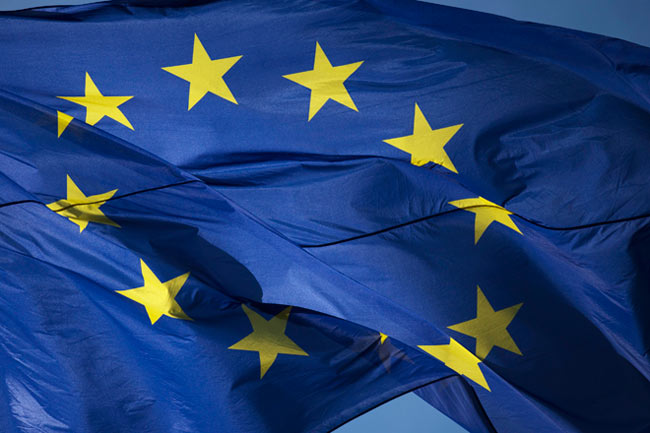
The European Union Ambassador to Nigeria has accused Russia of recruiting Nigerians and other Africans to fight in the Ukraine war, describing it as a disturbing development that exploits desperate job seekers.
Gautier Mignot, speaking on Channels Television’s The Morning Brief programme on Tuesday, said reports from civil society organizations indicate that the recruitment is becoming a growing phenomenon.
“There is another important phenomenon which is impacting Africa, which is recruitment of African men and women by Russia. Women to be sent and work in military plants in Russia and men to be sent as cannon fodder on the front. Of course they are being lured with job promises,” Mignot said.
The EU ambassador’s comments mark the fourth anniversary of the Russia-Ukraine war and follow several reports of Nigerians dying on Ukrainian battlefields after allegedly being recruited under false pretenses.
Ukraine’s Defence Ministry on February 12, 2026 released photographs of two Nigerians, Hamzat Kazeem Kolawole and Mbah Stephen Udoka, who were reported to have died while fighting for Russia in Luhansk. Kolawole reportedly signed a contract with the Russian military in August 2025, while Udoka enlisted in September the same year. Both were said to have had no prior military training and died during an attempted assault on Ukrainian positions.
However, Russian Ambassador to Nigeria, Andrey Podyelyshev, has dismissed reports that Nigerians are being conscripted to fight in Ukraine, insisting that there is no government-supported programme to recruit Nigerians for the war.
“If some illegal people are trying to recruit Nigerians to fight in Ukraine, this is not connected with the Russian state. If anybody has information, we are ready to send it to Russian law enforcement authorities for investigation,” Ambassador Podyelyshev said during a press briefing in Abuja.
A recent CNN investigation alleged that Africans from Nigeria, Ghana, Kenya and Uganda were lured to Russia under the pretext of civilian employment, including roles as drivers and security guards. The report claimed that upon arrival in Russia, the individuals were compelled to join the military, provided with little or no training, and deployed to active combat zones. Some alleged they were forced to sign military contracts written in Russian without legal counsel or translation, while others said their passports were seizeds.
Professor of International Relations, Femi Otubanjo, said the unfolding reports reflect a complex global pattern driven by economic hardship and long-standing international recruitment practices. “The reality is that we have to admit it too, there are a lot of Africans who are desperate to go anywhere,” he said, noting that with between 50 and 60 per cent of Africa’s population made up of young people, the lack of jobs continues to push many to take extreme risks.
Dr Nicholas Erameh of the Nigerian Institute of International Affairs said the Federal Government should consider establishing a fact-finding mission to determine the accuracy of the allegations and clarify whether Nigerians were truly coerced into military service.
The conflicting narratives between the EU and Russia highlight the broader information war surrounding the Ukraine conflict, with Nigeria caught in the middle as its citizens allegedly become casualties of both economic desperation and international geopolitical maneuvering.



 Latest1 week ago
 Football1 week ago
 Business6 days ago
 Latest1 week ago
 Health1 week ago
 Latest6 days ago
 Latest6 days ago
 Latest1 week ago