
Business
Global fallout from Middle East war raises concerns for Nigeria’s economy

Published
5 hours agoon
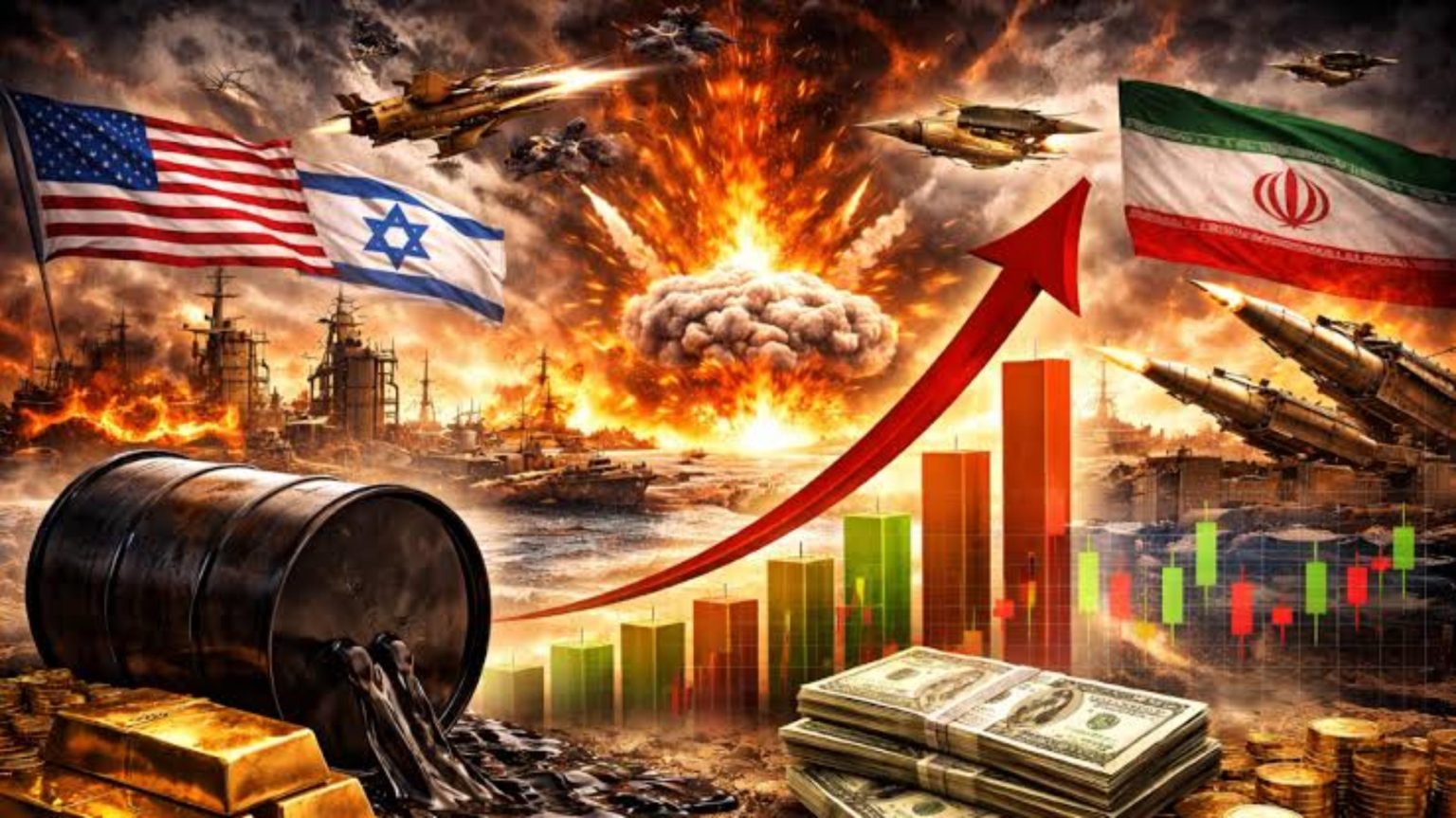
Growing tensions and escalating hostilities involving the United States, Israel and Iran are beginning to send economic shockwaves across the globe, raising fresh concerns about the potential impact on Nigeria’s already fragile economic recovery.
Although the conflict is unfolding thousands of kilometres away—roughly 5,800 kilometres from Nigeria—economists say the ripple effects are already being felt in energy prices, inflation expectations and financial markets.
What initially appeared to be a potential oil windfall for Nigeria is increasingly turning into a complex economic challenge that could disrupt the assumptions underpinning the government’s current reform strategy.
At first glance, rising crude oil prices typically benefit Nigeria, a country that still relies heavily on petroleum exports for government revenues.
Early projections suggested that escalating tensions in the Middle East could push global oil prices close to $100 per barrel. Historically, such price surges have provided Nigeria with temporary fiscal relief and increased government revenues.
However, analysts warn that higher oil prices often trigger broader inflationary pressures across the global economy, which could offset the benefits of stronger export earnings.
Professor Sherman Nwosu, an energy economist at the University of Lagos, said the situation presents a double-edged sword for Nigeria.
“Higher oil prices can improve Nigeria’s revenue outlook, but they also raise the cost of fuel, transportation and production across the economy,” he said. “In many cases, the inflationary impact cancels out the expected fiscal gains.”
Despite the launch of large-scale domestic refining capacity, including the Dangote Refinery, Nigeria remains highly sensitive to global crude price fluctuations.
International crude benchmarks still influence the domestic pricing of petrol, diesel and aviation fuel.
Industry reports suggest that fuel and diesel prices have already increased by roughly 10 per cent in recent weeks, reflecting the early impact of geopolitical uncertainty in global markets.
When energy prices rise, the effects typically cascade through transportation, logistics, agriculture and manufacturing.
READ ALSO: Trump warns Iran will be ‘hit very hard’ as middle east conflict intensifies
“Energy is the backbone of economic activity,” explained financial analyst Bismarck Rewane, Chief Executive Officer of Financial Derivatives Company.
“Once fuel prices increase, the entire cost structure of the economy adjusts upward. That means higher transport fares, higher food prices and increased production costs for businesses.”
Nigeria’s food sector may also face renewed pressure if global shipping routes become disrupted by escalating tensions in the Middle East.
While Nigeria has made efforts in recent years to boost domestic agricultural production, the country still imports significant quantities of processed food and agricultural inputs.
Rising global shipping costs and supply chain disruptions could therefore push food prices even higher in local markets.
Agricultural economist Muda Yusuf of the Centre for the Promotion of Private Enterprise said the risk to food inflation remains significant.
“Nigeria’s food supply chain is still linked to global markets through fertilisers, machinery and processed imports,” Yusuf said. “Any disruption in global trade routes can quickly translate into higher food prices at home.”
Aviation Industry Faces Cost Pressures
Airlines are warning that operating costs could increase significantly due to higher aviation fuel prices, possible airspace closures and longer flight routes.
Such disruptions often force airlines to adjust schedules, reroute aircraft and absorb additional insurance and operational expenses.
Over the past two years, macroeconomic reforms—including exchange rate adjustments and subsidy removals—have begun to stabilise some key economic indicators.
Inflation, although still high, has shown early signs of moderation, providing hope that the economy may gradually stabilise.
READ ALSO: Israel declares any new Iranian leader a target for assassination
However, economists warn that renewed global inflation could force central banks—including the Central Bank of Nigeria (CBN)—to maintain tight monetary policies.
If global energy prices continue rising, the CBN may be compelled to keep interest rates high or even raise them further to contain inflation.
According to economist Pat Utomi, geopolitical shocks often disrupt economic planning in emerging markets.
“When global uncertainty rises, inflation expectations increase and central banks respond by tightening policy,” he said. “For businesses in Nigeria, that means higher borrowing costs and slower investment.”
Risks to Investment and Exchange Rate Stability
Foreign investment flows could also become more volatile if the conflict deepens.
In recent months, Nigeria has seen renewed investor interest following policy reforms and currency adjustments under the administration of President Bola Ahmed Tinubu.
However, much of the inflow has come through short-term portfolio investments rather than long-term direct investments.
During periods of global instability, investors often shift funds toward safer assets in developed markets.
This shift could weaken capital inflows into emerging markets like Nigeria and place additional pressure on the naira.
If the conflict between the United States, Israel and Iran continues to escalate, analysts warn that Nigeria’s fragile macroeconomic progress could face serious headwinds.
“The danger is not just the immediate oil price shock,” said Rewane. “It’s the broader chain reaction across inflation, interest rates and investment confidence.”
For Nigeria, the unfolding crisis may ultimately become an unexpected test of the economic reforms popularly referred to as “Tinubunomics,” and whether the country’s fragile recovery can withstand global geopolitical shocks.

You may like
Trending

 News1 week ago
Former Iranian President Killed in US-Israeli Airstrikes on Tehran

 Crime1 week ago
The Match-Fixing Allegations Threatening to End a Super Eagles Career

 Football6 days ago
Sergi Roberto sounds warning to Barcelona ahead of Copa del Rey clash with Atletico Madrid
 Crime5 days ago
Major, three soldiers slain in Borno Boko Haram assault; military strikes back
 Education1 week ago
Kwara Polytechnic reopens Monday after six-week shutdown over NYSC camp row
 Energy1 week ago
Oil prices poised for sharp surge as Iran moves to close Strait of Hormuz

 Health5 days ago
Children’s brain tumor risk rises with power line exposure, tablet use — Study
 Latest1 week ago
INEC to conduct mock presidential poll ahead of 2027 elections