
Comments and Issues
It Was Always Her

Published
2 hours agoon
By
Olu Emmanuel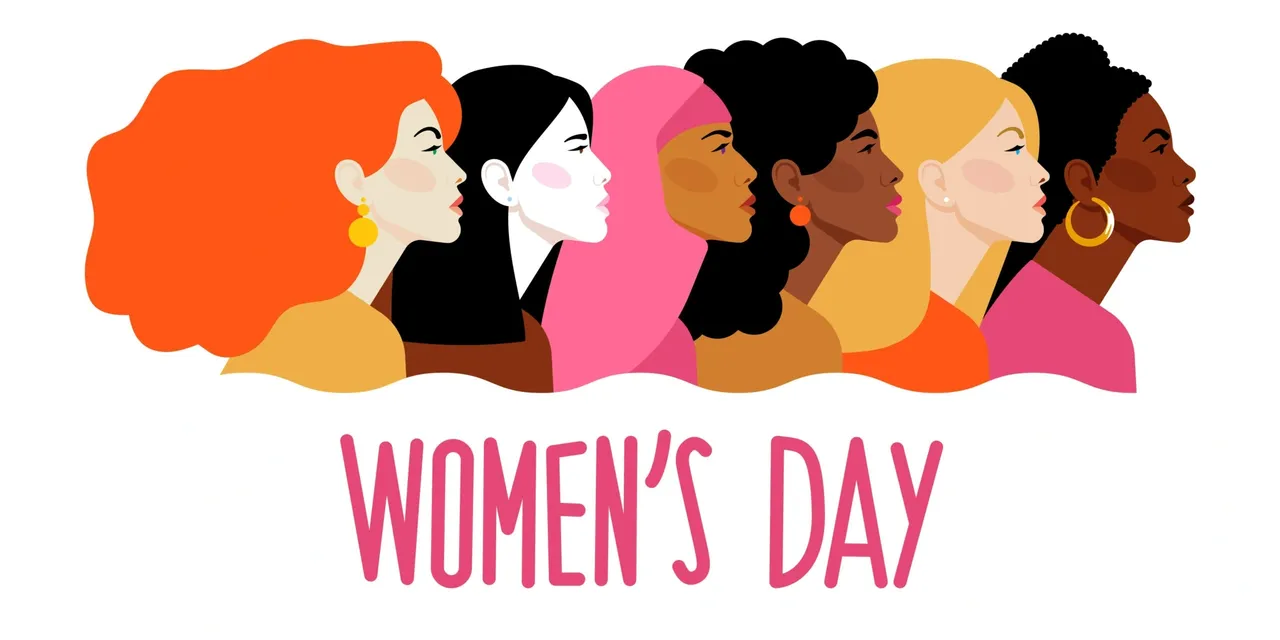
A reflection on women, restriction, and the pattern that crossed every civilisation
I had already told my virtual assistant to put up a post about it. International Women’s Day, Women’s History Month, it was that time of year and I wasn’t going to let it pass without saying something. All over the internet, the posters were dropping, events curated specifically to commemorate the day. The tributes, the threads, the long posts about women who broke barriers and survived systems and outlasted the ‘men’ who built those systems specifically to keep them out.
And somewhere in the middle of taking it all in, I STOPPED.
Not because of any one post. The pattern across all of them. The same story of restrictions, limitations.
These women were not from the same place. They did not share a religion, a language, or a continent. Some of their civilisations rose and fell centuries before others were even born. And yet they were all telling the same story. Restricted. Pushed to the edges. Told through law, through custom, through social pressure that the centre was not for us. There would always be limits.
I sat with that thought for a long time, trying to make sense of it.. the Why.. why her? Why women? So marginalised, so silenced for as long as time itself..
The Western world likes to position itself as the place that figured this out. But women there were still marching for the right to vote in the early twentieth century. Still being told they needed a man’s signature to open a bank account, in some places, until the 1970s.
The rest of the world had its own versions. Sometimes written into law, sometimes just quietly understood. A woman knows her place, and if she’s doing something different, she’s either mentally ill or has been influenced by bad friends. Sounds familiar, doesn’t it?
And yet the pattern was already there. Predating modern laws, contemporary cultures, and the Abrahamic religions we so like to blame for patriarchy. Men at the centre of political structures, inheritance systems, public life. Women managed toward the domestic. Toward the edges. There were exceptions of course, queens, priestesses, scholars, leaders. However, the fact that we still know their names, centuries later, tells you everything. They stood out. Which means the system they stood out from was not built with them in mind.
In ancient Mesopotamia, one of the earliest civilisations we have a detailed record of, the Code of Hammurabi already had things to say about what women could and couldn’t do. They could own property in limited circumstances. They could conduct certain trades. But their legal standing was tied to a father or a husband, and the rules governing their conduct were specific and strict in ways that men’s rules simply were not. This was roughly 1750 BCE. Writing was still relatively new. And already the arrangement was being cemented.
It didn’t get more generous as civilisations got more sophisticated. Athens built the Western world’s template for democracy and excluded women from it entirely, no voting, no office, no seat in the assemblies that everyone still references as the birth of civic life. A woman’s legal identity was managed through a male guardian. Rome on the other hand gave slightly more ground, some property rights and commercial independence, but kept the political world firmly shut. Respect within your domain. Outside it, the doors didn’t open.
Further east, Confucian tradition in ancient China built an entire philosophy of social order around hierarchy within the family and within that hierarchy, women moved through a defined sequence of submission. To the father. Then the husband. Then, in widowhood, the son. It was not presented as a restriction. It was presented as virtue, as the natural order, as the shape of a good life. That framing: restriction dressed as honour would appear in many other places too. Africa, the Middle East, Asia, the Americas … women were forced to carry the burden of a family’s honour, but refused the authority to make decisions.
And in pre colonial Africa, the picture complicates itself, as Africa tends to do when people try to flatten it. There were powerful queens. There were female led traditions, female religious authority, women who held genuine political weight. The Dahomey Amazons were not a metaphor. The queen mothers of various West African kingdoms were far from ceremonial. But even in these societies, the structures of public power were predominantly organised around men. Women’s authority though real was channelled through specific, defined roles rather than the same open structures available to men.
Europe offers its own modern reminders. For centuries under English common law, there was a doctrine called ‘coverture’ a married woman’s legal identity was effectively absorbed into her husband’s. Property, contracts, earnings. All his. That system formally disappeared in the nineteenth century, but its shadow had long legs. Well into the twentieth century, it was still showing up in who controlled the finances, whose career actually mattered, and whose independence was quietly treated as negotiable.
Across parts of Africa, the pattern sometimes appeared less through law and more through expectation. A woman who stepped too far outside what her community considered acceptable behaviour could quickly find herself labelled difficult, disrespectful, or influenced by the wrong people. Ambition in men was praised as leadership. The same ambition in women could be treated as rebellion. The message was rarely written down anywhere, but it was understood: the boundaries of possibility were different depending on who you were. And if you think this is history,it isn’t. In many parts of Africa today, that same unwritten rule is still very much in circulation. The labels have barely changed.
The easy explanation is religion. Or colonialism. Or patriarchy as a viral idea that spread from one culture and infected the rest. But those explanations don’t fully hold. Because the pattern shows up before the major religions emerged. Before colonisation moved anything anywhere. Before the cultures that are usually blamed for exporting this had even developed.
Something older is underneath it. One explanation could be: early human survival organised itself around physical strength, around protection, around who could do what in conditions that were genuinely brutal. And the arrangements that emerged from those conditions , who leads, who decides, who is kept close to safety and who goes out, were simply calcified. Slowly and invisibly, they stopped being practical decisions and became culture. Culture became tradition. Tradition became the way things were, and are, and should be. By the time anyone might have thought to question it, it had already become the air.
What I find striking, and this is the part I kept coming back to as I scrolled yesterday,is that the resistance was just as consistent. Just as universal. Women in every one of these civilisations pushed back. Not always safely or successfully. But the record of women’s refusal to stay contained is as long as the record of their restriction.
Suffragettes marching. Queens ruling in societies that said they couldn’t. Scholars writing in traditions that said they had nothing to say. Traders building wealth in systems that said they couldn’t own it. The Trung sisters in Vietnam led a military revolt against Chinese occupation in 40 CE. Hatshepsut ruled Egypt as pharaoh for nearly twenty years and built some of its most enduring monuments. Fatima al-Fihri founded the world’s oldest continuously operating university in 9th century Morocco.
They were there. Loudly, and in the record.
Which tells us something. That these restrictions were never as complete as they presented themselves. That the rule had edges and gaps that women found, and moved through, and sometimes blew wide open. That the story of limitation and the story of refusal were being written at the same time, in the same civilisations, sometimes by the same women. And that goes on till today.
International Women’s Day asks us to celebrate the refusal, highlight the resistance and document the progress, And we should.
But I think it also quietly asks us to keep looking at the pattern. The one that crossed every border and every century without being formally organised or deliberately spread. Targeted at the same demography. Understanding that pattern, really understanding it, not just naming it is the kind of work that doesn’t fit neatly into a month.
The posts will slow down soon. The graphics will move on to the next occasion.
But the deeper question hasn’t moved anywhere. Why did this pattern show up everywhere, independently, across civilisations that never compared notes/ didn’t live side by side? That question is still waiting for an honest answer. And without one, the restriction will keep recurring. Dressed in different garments.
Aluta Continua.
Pabara L. Ekpebu.

You may like
Trending

 Football7 days ago
Sergi Roberto sounds warning to Barcelona ahead of Copa del Rey clash with Atletico Madrid

 Crime6 days ago
Major, three soldiers slain in Borno Boko Haram assault; military strikes back

 Health6 days ago
Children’s brain tumor risk rises with power line exposure, tablet use — Study

 Crime1 week ago
Police arrest 27-year-old man over alleged killing of nursing mother in Ore

 Energy1 week ago
Oil surges past $79, global stocks plunge as Iran closes Strait of Hormuz
 Aviation7 days ago
House of Reps moves to recover $7bn in aviation debts from foreign airlines

 Crime4 days ago
Armed robbers trail man from Minna Bank, steal over ₦10m, Toyota Camry in brazen daylight attack

 Politics6 days ago
Sanwo-Olu tasks APC newly elected state executive ahead 2027 polls