
Energy
Nigeria’s fuel price rollercoaster: A distant war, three price hikes, one small cut

Published
3 hours agoon
By
Olu Emmanuel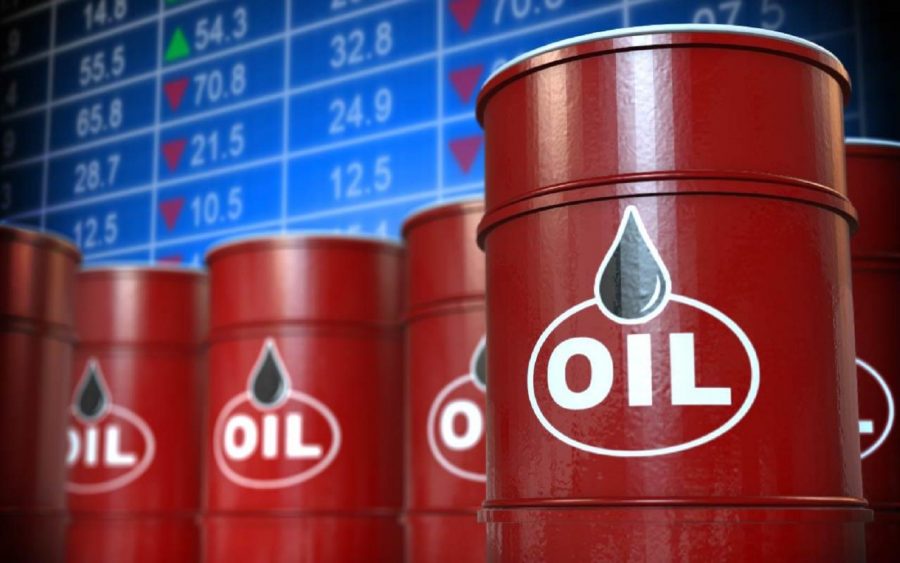
The US-Israel assault on Iran that set the world’s energy markets ablaze has reached deep into Nigerian homes, filling stations and market stalls and may yet decide the outcome of 2027 elections.
Nigeria’s fuel market is in a state of whiplash. In the space of ten days, the Dangote Petroleum Refinery raised its petrol gantry price three times, before partially reversing course on Tuesday, cutting back by ₦100 to ₦1,075 per litre, in a dramatic illustration of how a war being fought thousands of miles away in the Persian Gulf has become one of the most consequential forces in the daily lives of ordinary Nigerians.
The latest escalation began in late February 2026, when Israel, reportedly supported by the United States, launched coordinated airstrikes against Iranian military and nuclear-related targets in a campaign known as Operation Lion’s Roar. Iran responded with missile and drone attacks against Israeli territory and US military installations, quickly turning the confrontation into a broader regional conflict.
The conflict has left ships carrying roughly 20 million barrels of oil a day stranded in the Persian Gulf, unable to safely pass through the Strait of Hormuz — the world’s most critical oil chokepoint. Iran struck a major refinery in Saudi Arabia and a liquefied natural gas facility in Qatar, halting flows of refined products and taking about 20% of the world’s LNG supply offline. Roughly nine million barrels of oil per day are now off the market because of facilities being hit or producers taking precautionary measures.
Global oil prices surged by more than 25 percent since the start of the war. Even if the conflict ends quickly, analysts warn that restoring full confidence in shipping and energy infrastructure may take weeks or months, as damaged facilities require repairs and logistics networks must be rebuilt.
Global oil prices have surged, with Brent and West Texas Intermediate climbing above $90 per barrel. For Nigeria, this should mean higher earnings from crude exports. Yet, paradoxically, citizens are facing harsher realities. Nigeria, despite being Africa’s largest oil producer, remains heavily dependent on imported refined petroleum products — meaning every spike in global crude prices translates directly into higher costs at the pump.
Before February 28, the day the US and Israel launched their strikes on Iran, the Dangote refinery was selling petrol at its gantry for ₦799 per litre. By Monday March 9, the gantry price had been raised three times to ₦1,175 per litre. Tuesday’s cut to ₦1,075 per litre marked the first downward price adjustment after the wave of increases, with diesel also revised down by ₦190 to ₦1,430 per litre, offering some relief to businesses and transport operators.
The refinery’s CEO David Bird had signalled the volatility a day earlier, noting the refinery was not insulated from global oil price shocks as it sources crude on international benchmarks. He also disclosed that the refinery incurs costs from as many as 47 government agencies, a structural burden that places a floor on how low its prices can realistically fall, even when global crude prices ease.
Despite Tuesday’s partial reversal, pump prices across Nigeria remain dramatically higher than they were two weeks ago. Filling stations in Lagos, Abuja and other major cities were selling petrol at between ₦1,095 and ₦1,500 per litre, with long queues persisting at outlets offering lower prices.
The price shocks were felt more heavily in countries that rely on Middle East energy supplies. Diesel prices doubled in Europe; jet fuel prices rose by close to 200% in Asia. In Nigeria, the knock-on effects have been swift and severe, transport fares jumped by as much as 50 percent in major cities within days, food prices surged as the cost of moving agricultural produce from farms to cities increased sharply, and small businesses running on generators saw operational costs double almost overnight.
Food market traders told our correspondent that the price of a small bag of pepper has shot up from ₦18,000 to ₦82,000. Transport operators said bus fares that were ₦400 a fortnight ago have already reached ₦700 on key routes, with further increases expected. For small business owners — the engine room of Nigeria’s informal economy, the squeeze is existential.
The conflict’s effect on the global economy largely hinges on energy prices. A prolonged war that keeps energy prices high could drive up inflation and, with it, interest rates, piling pain on borrowers. Meanwhile, threats to cargo ships could snag supply chains, further raising prices for businesses and consumers.
Global central banks face a fresh dilemma. “So which ‘negative’ do you want to have: higher inflation or worse fiscal? These are policy choices governments have to make,” said Rob Subbaraman, head of global macro research at Nomura, highlighting the impossible trade-off between cushioning consumers through subsidies and maintaining fiscal discipline.
Nigeria’s annual inflation rate had eased to 15.10% in January 2026, its lowest level since November 2020 and the tenth consecutive monthly decline, driven by a stronger naira and falling food prices. That hard-won progress now hangs in the balance. PETROAN warned that petrol could still rise as high as ₦2,000 per litre and diesel to ₦3,000 per litre if the global crisis deepens and domestic supply constraints persist.
As fuel prices rise, the cost of living worsens, and public frustration grows, the 2027 elections may be shaped not just by local campaigns but by global oil shocks. As analyst Lasisi Olagunju observed: “The widening crisis around the Strait of Hormuz may seem distant from Nigeria’s politics, but history teaches that events in the Persian Gulf often echo loudly in oil-producing states.” He cautioned: “Elections are rarely decided by macroeconomic indicators; they are decided by how daily life feels to the voter.”
Iran’s Revolutionary Guard Corps has warned that ongoing US and Israeli strikes on Iranian energy infrastructure could send global oil prices above $200 per barrel, a scenario that, if realised, would make Nigeria’s current fuel price crisis look mild by comparison.
The federal government had not announced any emergency relief measures for households or small businesses at the time of publication. Nigerians, already battered by two years of post-subsidy removal hardship, are being asked to absorb yet another shock — this time imported from a war they had no hand in starting.

You may like
Trending

 Football1 week ago
Sergi Roberto sounds warning to Barcelona ahead of Copa del Rey clash with Atletico Madrid
 Crime7 days ago
Major, three soldiers slain in Borno Boko Haram assault; military strikes back

 Health7 days ago
Children’s brain tumor risk rises with power line exposure, tablet use — Study

 Politics7 days ago
Sanwo-Olu tasks APC newly elected state executive ahead 2027 polls
 Energy1 week ago
Oil surges past $79, global stocks plunge as Iran closes Strait of Hormuz

 Crime4 days ago
Armed robbers trail man from Minna Bank, steal over ₦10m, Toyota Camry in brazen daylight attack
 Aviation1 week ago
House of Reps moves to recover $7bn in aviation debts from foreign airlines

 Trending Stories1 week ago
X suspends revenue sharing for undisclosed AI war videos