
Business
Tinubu approves reform to unlock $50bn deep offshore investment, revive Bonga Southwest

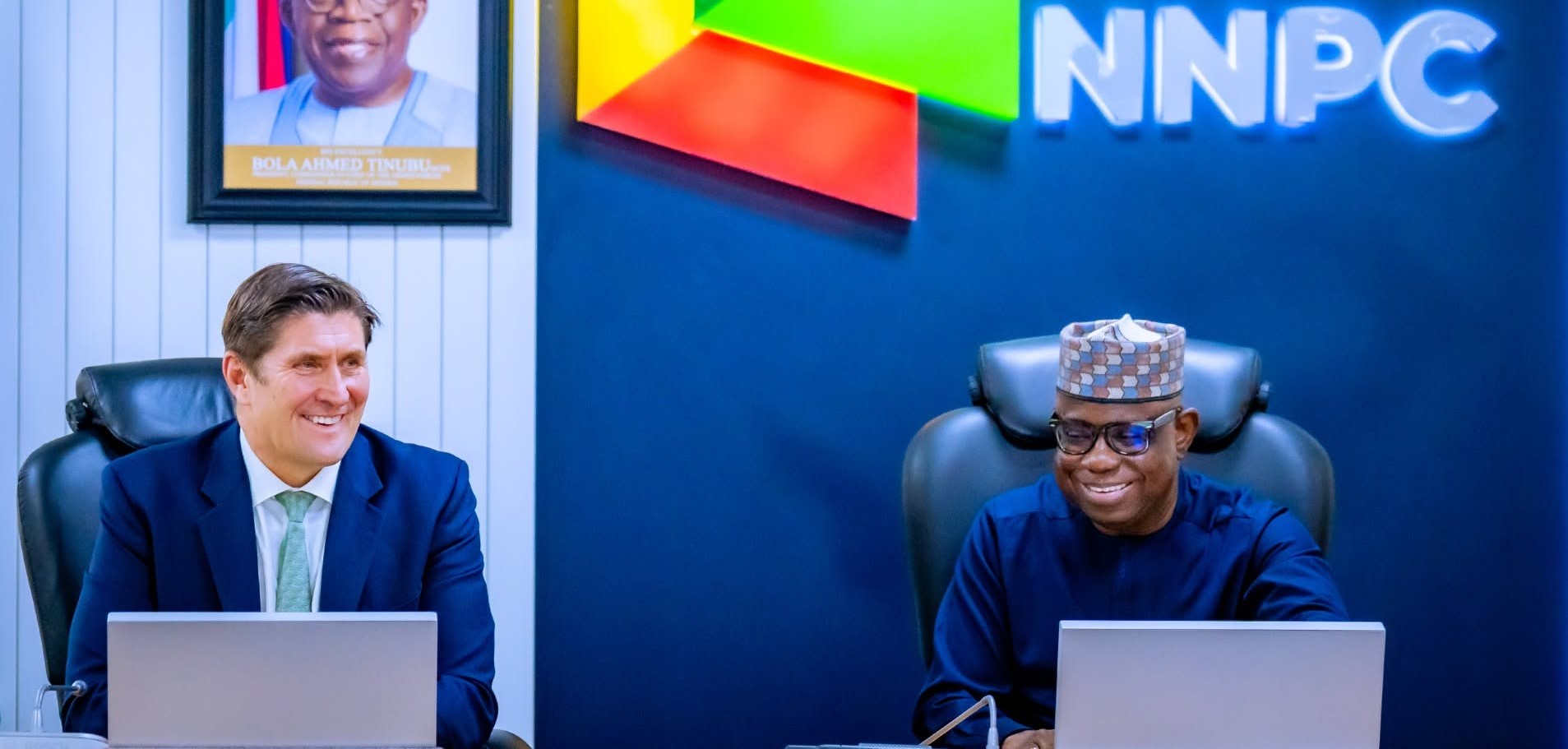
President Bola Ahmed Tinubu has approved a new investment framework aimed at unlocking up to $50 billion in deep offshore oil and gas investments and reviving major projects that have remained stalled for years.
The Federal Government said the reform is designed to replace project-by-project negotiations with a transparent, rules-based framework that provides greater certainty for investors while protecting Nigeria’s long-term economic interests.
The initiative is expected to support the next generation of deep offshore developments, beginning with the approximately $10 billion Bonga South West project.
According to the Presidency, the reform is also intended to strengthen Nigeria’s competitiveness in attracting globally mobile capital to the country’s upstream petroleum sector.
The decision followed discussions between President Tinubu and Shell Plc Chief Executive Officer, Wael Sawan, during which the President directed the development of measures capable of unlocking the next phase of Nigeria’s deep offshore investment pipeline.
Rather than creating a special arrangement for individual projects, the Federal Government subsequently developed a broader framework that would apply to multiple categories of qualifying deep offshore developments.
New framework replaces project-by-project negotiations
The reform has been given effect through the Deep Offshore Oil and Gas Projects Incentives (Tax Remission) Order, 2026.
The Presidency said the new framework establishes transparent eligibility criteria, defined implementation procedures and a long-term investment structure aimed at reducing uncertainty for investors.
It is also expected to provide a more predictable basis for companies considering large-scale capital investments in Nigeria’s deep offshore fields.
Under the approved framework, NNPC Limited, acting as the government’s nominated counterparty under the Production Sharing Contracts (PSCs), has been authorised to proceed with amendments to eligible PSCs required to implement the new investment regime.
The move is expected to remove some of the obstacles that have historically delayed major offshore projects and enable qualifying developments to progress under clearer commercial and fiscal conditions.
Government targets local industrial benefits
NNPC faces fresh scrutiny over oil licensing, production claims, transparency
Beyond attracting foreign investment and increasing oil production, the Federal Government said the framework is designed to strengthen Nigeria’s domestic industrial capacity.
Olu Arowolo-Verheijen, Special Adviser to the President on Oil and Gas, said projects that qualify under the framework would be expected to maximise execution within Nigeria where commercially and technically feasible.
According to her, the policy could boost domestic engineering, fabrication, marine logistics, technical services and project management.
“Projects qualifying under the framework will maximise execution within Nigeria wherever commercially and technically feasible, strengthening domestic engineering, fabrication, marine logistics, technical services and project management,” she said.
She added that the objective extends beyond increasing investment and crude oil production to creating skilled employment, expanding local supply chains and positioning Nigeria as a regional hub for deep offshore project execution.
Inter-agency process
The Presidency said the framework was developed through an extensive inter-agency process involving fiscal, legal, commercial and regulatory institutions.
The process reportedly involved collaboration among the Presidency, the Federal Ministry of Justice, Federal Ministry of Finance, Federal Ministry of Petroleum Resources, Nigeria Revenue Service, NNPC Limited, Nigerian Upstream Petroleum Regulatory Commission and Nigerian Content Development and Monitoring Board.
International oil companies, investing partners and other industry stakeholders were also involved in shaping the framework.
President Tinubu commended the institutions and industry stakeholders involved in the process, saying their technical expertise and collaboration had contributed to the development of the new investment architecture.
Tinubu: Certainty is key to attracting capital
Tinubu said countries seeking long-term investment must create an environment where investors can rely on clear and predictable rules.
“The countries that attract long-term investment are not necessarily those with the greatest natural resources. They are the ones that provide the greatest certainty,” the President said.
He added that the reform reflected his administration’s determination to create an investment environment based on clear rules, strong institutions and long-term partnerships.
“We are creating the conditions for capital to flow, for Nigerian businesses to grow, for our people to prosper and for our natural resources to deliver lasting national value,” he said.
The Presidency said the reform is expected to unlock previously delayed deep offshore investments, increase activity in Nigeria’s upstream petroleum industry and generate wider economic benefits through local participation and job creation.
The administration described the initiative as part of its broader effort to make Nigeria a more attractive destination for long-term energy investment while ensuring that increased exploitation of the country’s offshore resources translates into greater domestic economic value.


-
 Latest1 week ago
Israel marks 3 years since October 7 Hamas attack amid Gaza strikes, election debate
-

 Energy1 week ago
Fuel Battle: Dangote, marketers and government clash over petrol imports
-

 Latest3 days ago
Full List: Meet the 2026 Nobel Prize winners across six categories
-
 Featured6 days ago
103 Million Voters: What does INEC’s new register say about Nigeria’s population?
-

 Business1 week ago
Nigerian startup 3650HQ moves to cut rising WhatsApp costs for businesses
-

 Football2 days ago
Premier League Matchweek 7: Five Fixtures That Could Shape the Weekend
-

 Business7 days ago
The Ministry of Commerce of Loveworld gets a $1 million boost for new investment fund at LTIF 2026 to promote Trade in Ghana
-

 Features7 days ago
Edo’s 2.5 million vote promise: Can the numbers match the politics?