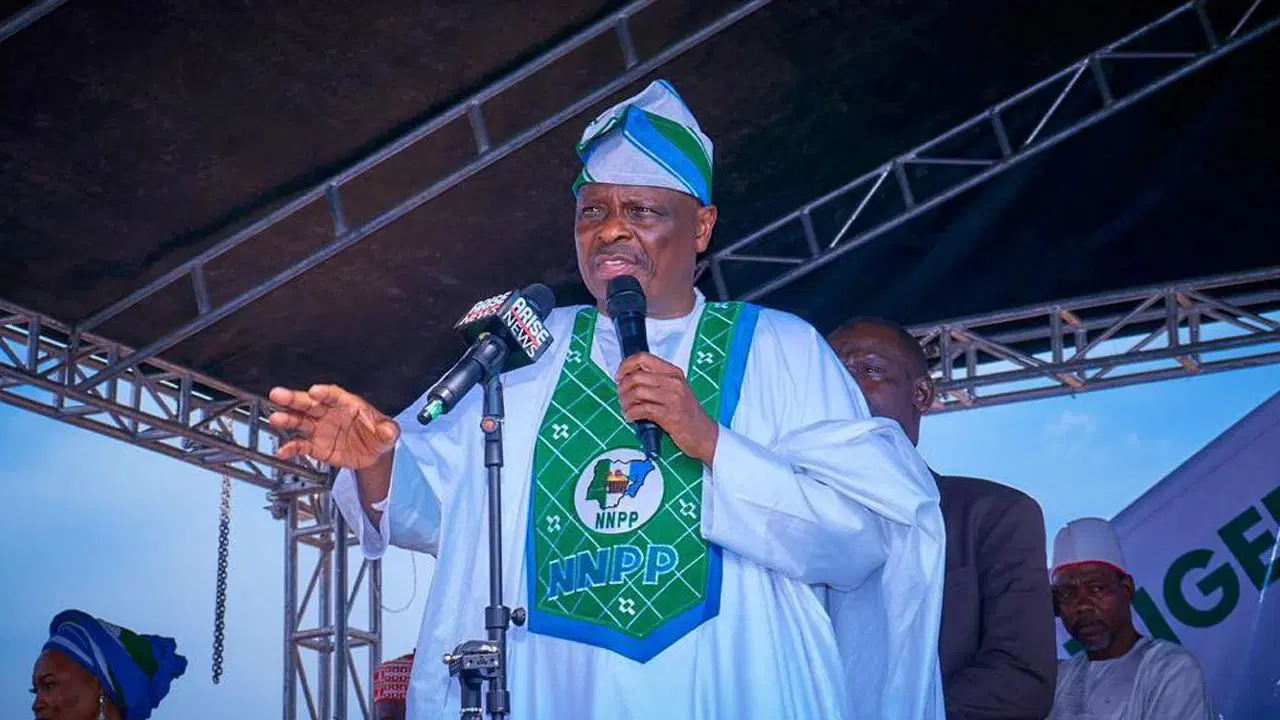
Veteran journalist and former presidential aide, Reuben Abati, has said the defection of Rabiu Musa Kwankwaso to the African Democratic Congress (ADC) could significantly alter the configuration of opposition politics ahead of the 2027 general elections.
Abati made the remarks on Tuesday while speaking on The Morning Show on Arise Television, where he analysed the potential implications of Kwankwaso’s reported movement from the New Nigeria Peoples Party (NNPP) to the ADC.
According to him, Kwankwaso’s defection—alongside his loyal “Kwankwasiyya” supporters—has strengthened the ADC and positioned it as a formidable coalition platform for leading opposition figures.
“Dr Rabiu Kwankwaso has now moved with his NNPP and Kwankwasiyya supporters to the ADC. What has happened with that movement is that the ADC has been strengthened, and it now has a collection of frontline opposition figures,” Abati said.
He noted that the ADC is increasingly emerging as a convergence point for prominent political actors, including Peter Obi, Rotimi Amaechi, and Atiku Abubakar.
Abati emphasized the electoral weight of Kano State, describing it as a critical battleground state in presidential contests. He pointed out that Kano boasts 44 local government areas and a large voter population, making it one of the key states required to secure victory at the national level.
“There are some states that you need to win in this country if you want to be president. Kano is one of them, also Rivers and Lagos,” he said.
READ ALSO: Kwankwaso leaves NNPP for ADC, marks major shift in Kano political landscape
With Kwankwaso widely regarded as the most influential political figure in Kano, Abati argued that his alignment with the ADC could significantly shift the dynamics of the 2027 race.
He also alluded to earlier reports suggesting that Kwankwaso had been in talks to join the All Progressives Congress (APC), noting that the political landscape in Kano remains fluid after the state governor—described as his political protégé—reportedly joined the ruling party ahead of him.
Despite acknowledging the strategic boost to the ADC, Abati raised concerns about possible internal contestations over the party’s presidential ticket.
He noted that Kwankwaso has consistently expressed his ambition to become Nigeria’s president, prompting questions about whether he would secure the ADC ticket, agree to serve as a running mate, or participate in a broader political compromise.
“Dr Kwankwaso has always made it clear that he wants to be president of Nigeria. Now, would they give him the ticket? Will he become a running mate to another person?” Abati queried.
He referenced growing speculation about a potential Obi–Kwankwaso alliance, popularly dubbed “PitaKwa 2027” in political circles, suggesting the possibility of Kwankwaso serving as running mate to Peter Obi under the ADC platform.
Abati, however, questioned how such an arrangement might affect the political standing of Atiku Abubakar within the party.
“Where does that leave Waziri Adamawa, our former vice president, Atiku Abubakar? Will he also just sit back and allow ‘PitaKwa’ in the ADC?” he asked.
Abati concluded that the unfolding realignments represent only the early stages of what could become intense political maneuvering ahead of 2027.
“So we’re just seeing the early moments of the drama, and there’s going to be a lot of drama, either from the politicians themselves or from the entertainment,” he said.
With major opposition figures now gravitating toward a single platform, political observers say the coming months could witness heightened negotiations, strategic alliances, and internal power struggles as parties position themselves for the next presidential election cycle.



 Entertainment1 week ago
 Football1 week ago
 Business1 week ago
 News7 days ago
 Politics1 week ago
 Comments and Issues1 week ago
 Latest1 week ago
 Football6 days ago