Economic experts have warned that Nigerian consumers may face sustained increases in the prices of goods and services throughout 2026 as the escalating conflict involving the United States, Israel and Iran continues to drive up global oil prices.
The crisis, which began in February 2026 following joint US and Israeli strikes on Iran after stalled nuclear negotiations, was initially expected to be short-lived. However, more than a month into the conflict, tensions remain high, fueling uncertainty in global energy markets.
Global crude oil prices have surged above $100 per barrel, triggering a sharp rise in fuel costs in Nigeria. The pump price of petrol has reportedly climbed from below N900 per litre to over N1,350 in recent weeks.
Analysts say the spike is already rippling through the Nigerian economy, increasing manufacturing, transportation and food distribution costs — with consumers bearing the brunt.
Dr. Muda Yusuf, Chief Executive Officer of the Centre for the Promotion of Private Enterprise (CPPE), explained that higher fuel prices have immediate inflationary consequences.
“Rising fuel prices are causing transportation costs to soar, and the costs of goods like food are being pushed up as well. In turn, this is worsening the cost-of-living crisis for Nigerians,” he said.
Dele Oye, former President of the Nigerian Association of Chambers of Commerce, Industry, Mines and Agriculture (NACCIMA), noted that diesel price increases are significantly impacting production costs.
“Once diesel prices go up, it affects the cost of manufacturing, which in turn gets passed on to consumers at higher prices,” Oye stated, warning that with an estimated 139 million Nigerians already living in poverty, further price hikes could deepen economic hardship.
READ ALSO: Nigeria faces inflation pressure as Brent crude prices surge
Small and medium-sized enterprises (SMEs) are reporting shrinking profit margins as operating expenses climb.
Victoria Akai, Chief Executive Officer of Duchess Group, said her company — which produces sweet potato flour and related products — has experienced dramatic increases in logistics costs.
“The cost of transportation has gone up, sometimes doubling or even tripling compared to previous prices,” she said.
According to Akai, the cost of moving goods from farms to processing facilities has surged, with farm workers themselves struggling to afford daily transportation. As a result, the price of sweet potato flour has risen from N48,000 per carton before the crisis to as much as N78,000.
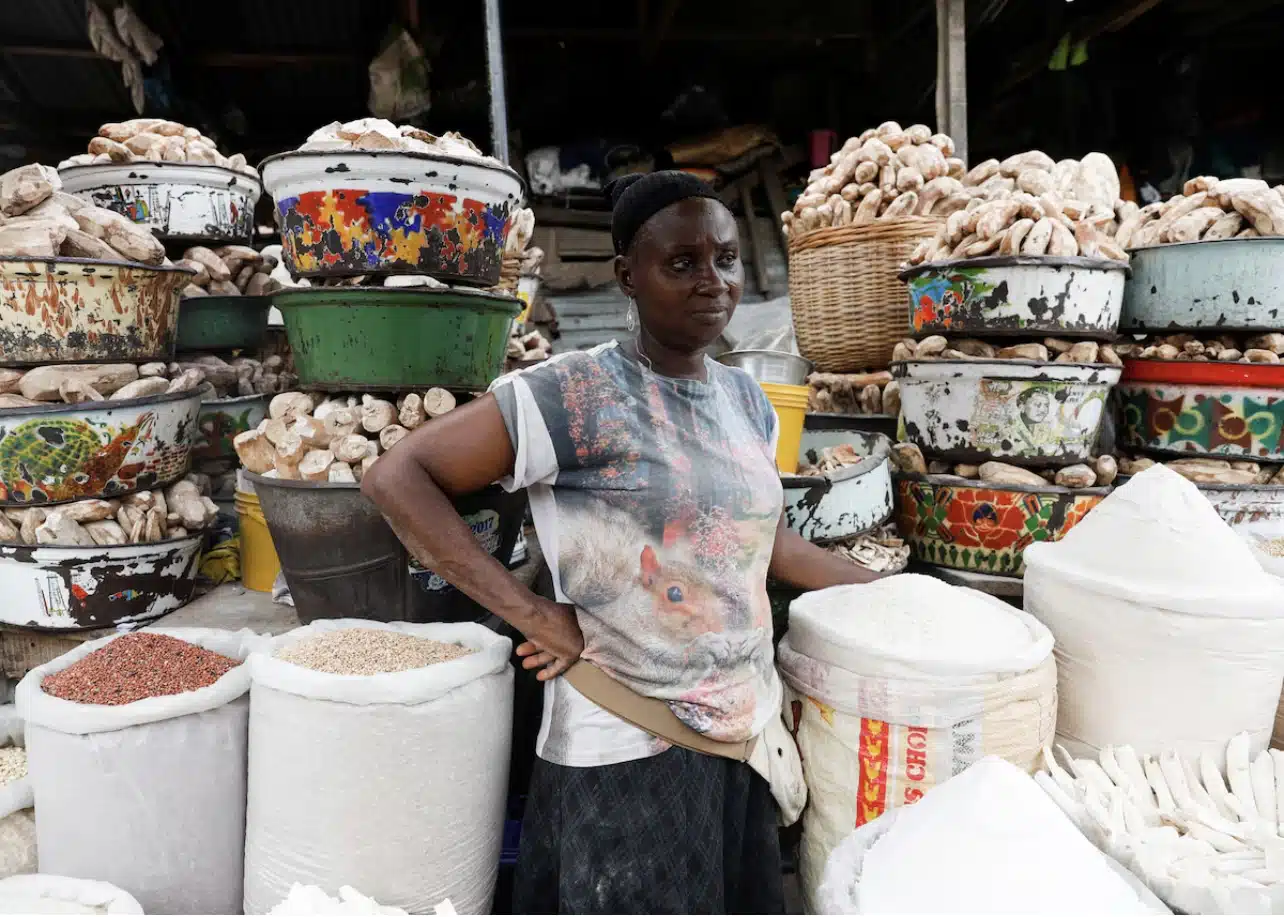
Traders in Abuja and Lagos report significant increases in staple food prices. At Orange Market along the Abuja-Keffi road, a basket of tomatoes that previously sold for between N9,000 and N10,000 is now priced as high as N35,000. A large bag of onions has climbed from N15,000 to N45,000.
Consumers say the impact has been severe. Charles, a Lagos resident, said he has gone into debt to feed his family, while another resident, Seun Johnson, urged the government to find ways to cushion the effect of a war “that does not concern us.”
While some business leaders have called for temporary interventions, opinions differ on whether reinstating fuel subsidies would be effective.
Akai suggested that rather than reversing reforms, the government should consider targeted support for transportation and explore long-term alternatives such as electric vehicles (EVs) to reduce dependence on fossil fuels.
“This is also a good time to look at upscaling and the opportunities for EVs. Governments have to look at how they can control the impact of global energy shocks,” she said.
Economic analysts caution that even if hostilities ease in the coming months, energy market volatility may persist, meaning inflationary pressures could remain elevated throughout much of 2026.
“Energy shocks have multiplier effects,” Dr. Yusuf noted. “Until there is stability in global oil markets, Nigerians should brace for continued price adjustments across multiple sectors.”
For now, the broader outlook remains uncertain as geopolitical tensions in the Middle East continue to disrupt global supply chains, leaving households and businesses in Nigeria grappling with rising costs and tightening budgets.



 Energy1 week ago
 Energy6 days ago
 Football1 week ago
 Football1 week ago
 News1 week ago
 Football1 week ago
 Crime5 days ago