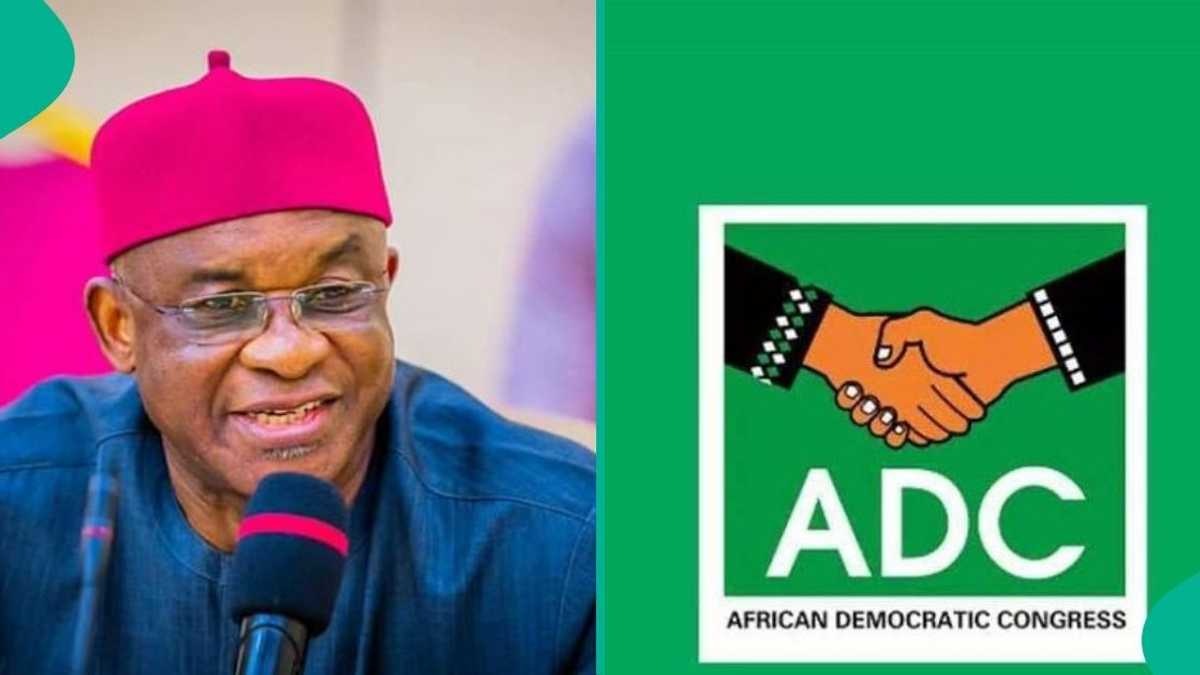
The leadership crisis rocking the African Democratic Congress (ADC) has intensified following a decision by the Independent National Electoral Commission (INEC) to refrain from recognising any faction of the party pending the resolution of an ongoing court case.
At the heart of the dispute are former Senate President David Mark and Nafiu Bala, a former deputy national chairman of the party, both of whom are laying claim to the ADC’s leadership.
The crisis is linked to broader efforts by opposition leaders to build a formidable coalition ahead of the 2027 general elections. In 2025, several prominent political figures across party lines began aligning with the ADC as a potential platform to challenge the ruling All Progressives Congress (APC).
Among those associated with the coalition talks are Atiku Abubakar; Uche Secondus; Babangida Aliyu; Sam Egwu; Aminu Tambuwal; Liyel Imoke; Nasir el-Rufai; Peter Obi; Rauf Aregbesola; Rotimi Amaechi; Solomon Dalung; Odigie Oyegun; and Bolaji Abdullahi, among others.
On July 2, Ralph Nwosu, founder and former national chairman of the ADC, announced the resignation of the party’s National Working Committee (NWC), paving the way for an interim leadership structure headed by Mark.
However, Bala rejected the arrangement, insisting that he never resigned his position and, by virtue of party rules, should have automatically assumed leadership following the chairman’s exit. He subsequently declared himself acting national chairman and initiated legal proceedings to challenge Mark’s leadership.
On September 2, 2025, Bala filed a suit at the Federal High Court in Abuja (FHC/ABJ/CS/1819/2025), seeking to restrain Mark’s team from parading themselves as party leaders. He also asked the court to compel INEC to recognise him as acting national chairman and to stop the party from holding meetings or conventions pending determination of the case.
The trial judge, Emeka Nwite, heard a motion ex parte on September 4, 2025, and ordered that the respondents, including INEC, be put on notice.
Dissatisfied, Mark approached the Court of Appeal, challenging the jurisdiction of the Federal High Court to entertain Bala’s suit. But on March 12, 2026, a three-member panel of the appellate court led by Justice Uchechukwu Onyemenam dismissed Mark’s appeal in its entirety.
The court held that there was no substantive ruling by the lower court to justify an appeal, describing Mark’s action as incompetent and premature. It further ruled that the appeal arose from an interlocutory step for which the required leave had not been obtained.
READ ALSO: Mark to Tinubu: Why fear free elections if you’ve performed well
While dismissing the appeal, the appellate court ordered parties to maintain the status quo ante bellum — the position before September 2, 2025 — and directed accelerated hearing of the substantive suit at the Federal High Court. It also awarded N2 million in costs against Mark.
Importantly, the appellate court did not determine who the legitimate leader of the ADC is, leaving that question to be decided by the trial court.
In a press statement dated April 1, 2026, INEC said it had received conflicting communications from both factions. After reviewing the court ruling, Mohammed Haruna, the commission’s national commissioner for information and voter education, announced that INEC would maintain the status quo ante bellum as directed by the Court of Appeal.
The commission resolved to refrain from recognising either faction or monitoring their meetings, congresses, or conventions pending the final determination of the case.
INEC added that it would avoid taking any action capable of rendering the proceedings before the Federal High Court nugatory.
Despite INEC’s stance, Bolaji Abdullahi, the ADC’s national publicity secretary, stated that the party would proceed with its congresses and convention regardless of whether the electoral body monitors the events.
The development has further complicated the ADC’s internal power struggle and casts uncertainty over the opposition coalition’s plans ahead of the 2027 elections, as the final determination of the party’s leadership now rests with the Federal High Court.



 Energy1 week ago
 Crime6 days ago
 Football1 week ago
 Business1 week ago
 Football2 days ago
 Crime6 days ago

 Business1 week ago