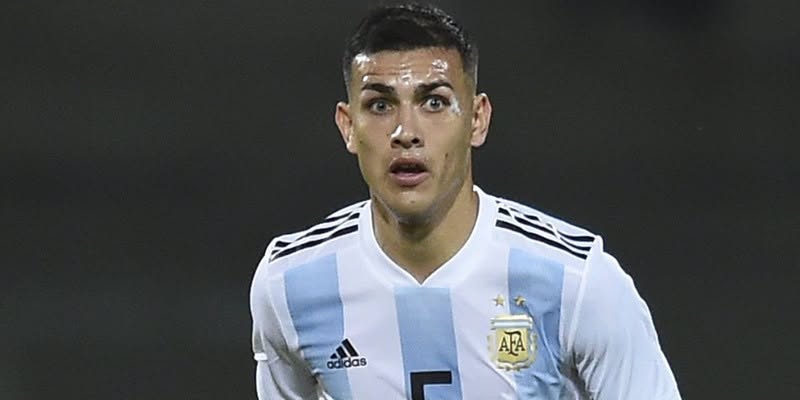
Argentina midfielder Leandro Paredes has admitted that his future with the national team is uncertain following his 10-match FIFA suspension and Lionel Messi’s decision to retire from international football.
Paredes, 32, was suspended by FIFA in August for his involvement in a confrontation that broke out after Argentina’s 2026 World Cup final defeat to Spain. He was also fined $90,000.
The incident occurred after the final whistle, when Paredes became involved in an altercation with Spanish players, including Gavi. FIFA subsequently handed him the 10-match suspension, which applies to Argentina’s upcoming international fixtures.
Speaking to Argentine media, Paredes said the suspension, combined with Messi’s departure from the national team, had made it difficult for him to determine whether he would continue playing for Argentina.
“It’s going to be difficult for me to stay with the national team,” Paredes said, according to Reuters. He added that Messi’s decision and his own suspension meant “it’s going to be difficult for everything to carry on as before.”
Paredes said he had not yet discussed the matter with Argentina head coach Lionel Scaloni, but planned to speak with him before making a decision about his international future.
The midfielder also reflected on Messi’s impact on the Argentina team, describing the veteran forward’s legacy as lasting forever because of what he achieved with the national side.
Paredes revealed that Argentina’s players had discussed during the World Cup that the final could be Messi’s last match for the country, but said they were still not prepared for his eventual decision to retire.
Messi’s international retirement comes after a remarkable career with Argentina, during which he helped the country win the 2022 FIFA World Cup and Copa América titles in 2021 and 2024.
For Paredes, meanwhile, the 10-match suspension means his return to competitive international football will depend partly on how many of the banned matches Argentina can serve during upcoming fixtures. FIFA recently allowed the suspended Argentine players to serve their bans in Class A friendly matches, potentially enabling them to reduce the number of competitive games affected by the sanctions.
Paredes now faces a decision over whether to remain part of Argentina’s post-Messi generation or bring his international career to an end as the national team begins a new era.





 Health6 days ago
 Football6 days ago
 Business6 days ago
 Comments and Issues1 week ago
 Comments and Issues5 days ago
 Business4 days ago
 Energy1 week ago
 Comments and Issues1 week ago