
Latest
Musa: El-Rufai was behind planned killings in Southern Kaduna

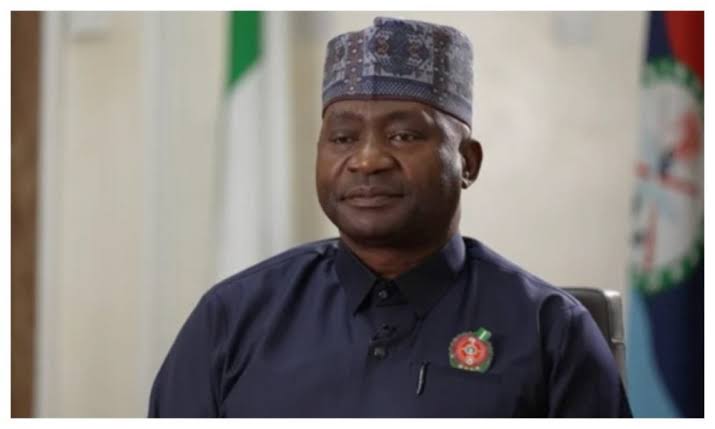
Minister of Defence Christopher Musa has accused former Kaduna State Governor Nasir El-Rufai of deliberately planning the killing of people in Southern Kaduna during his tenure as governor.
Musa made the allegation on Thursday while appearing on Channels Television’s Politics Today, where he also criticised what he described as divisive policies under the former governor’s administration.
According to the Defence Minister, El-Rufai’s tenure deepened divisions between communities in Kaduna State, creating an atmosphere in which residents from Southern Kaduna allegedly found it difficult to live freely in the northern part of the state and vice versa.
“If you are from the south, you cannot go to the north to live. Those ones from the north were moving to the south,” Musa said.
He, however, commended the incumbent governor, Uba Sani, for what he described as deliberate efforts to rebuild trust and restore unity across the state.
“Governor Sani within one year has been able to dissolve all that. You see, now everybody is free, everybody has a say. It’s not 100%. Let me tell you, it’s not 100%, but you can see that he’s making deliberate effort in uniting the state,” he said.
Musa said people in Southern Kaduna remained deeply traumatised by the killings recorded in the region during El-Rufai’s administration.
Responding to questions about the people’s feelings towards the former governor, the minister alleged that El-Rufai deliberately planned the killings.
“Well, I don’t know if being unhappy is an issue. I think if there’s anything worse than unhappiness, we can never be happy with somebody who has deliberately planned for the killing of our people,” Musa said.
He further alleged that El-Rufai had openly spoken about his administration’s dealings with bandits, including claims that he paid them.
READ ALSO; 180 days in captivity: Kaduna woman’s escape ends in double tragedy
“I mean, when you look at it, if you look at his videos, you know, his speeches, he was very proud of what he did.
“He told us he paid bandits. He told us he did this, he did that. He didn’t hide it. He was that arrogant to come out and tell people that this was what he did,” Musa alleged.
The minister said the scale of killings in Southern Kaduna under the former governor could not be compared with the current security situation, which he said had improved.
“The Southern Kaduna people are still very pained. Of course, definitely. I mean, if you look at the number of killings that was done there and what is going on now, you can’t compare at all,” he said.
Musa also accused the former governor of denying some residents opportunities during his administration, alleging that some of his policies negatively affected people from his own part of Kaduna State.
“I can tell you what he has done to people living in Kaduna from his own area. He did a lot of things that I’m sure even he is not proud of,” he added.
The Defence Minister subsequently called on Nigerians to reject politicians who exploit ethnic and religious differences for political purposes.
He argued that Nigeria needs leaders committed to strengthening national unity rather than deepening divisions.
“We should get politicians that want to unite Nigeria. For me, any individual who is using either religion, tribe, creed, or anything to divide the state can never be a friend; can never be somebody we look up to,” Musa said.
“We shouldn’t have those kinds of ones in government. Anybody who is using religion or tribe or whatever to divide Nigeria is an enemy of the state.”


-

 Health1 week ago
ISRT 2026: Global experts converge in Lagos to advance cancer care across Africa
-

 Football1 week ago
Ballon d’Or 2026: The key rules shaping the race for football’s biggest prize
-

 Business1 week ago
Versat Automobile to launch Chery’s EXEED premium brand in Nigeria
-
 Comments and Issues6 days ago
Yes, many kidnappers are embedded in the Nigeria Police
-

 Business5 days ago
Olufemi Olaiya to deliver keynote at Africa Business & Enterprise Conference 2026
-

 Featured2 days ago
Ranking the seven greatest World Cup finals of all time
-

 Football1 week ago
Yaya Touré makes history as Slovan Bratislava reaches Champions League league phase
-

 Business3 days ago
OPay breaks silence on viral September shutdown claim