
Latest
Driver’s alleged ordeal during VIO enforcement sparks outrage in Lagos

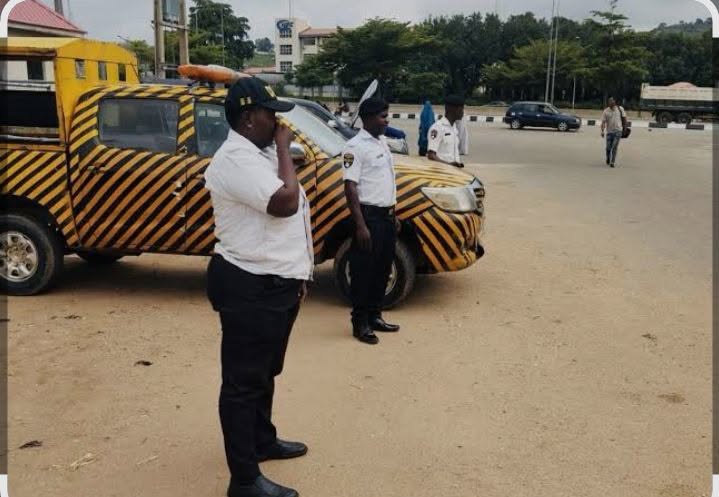
A disturbing incident involving a commercial bus driver and officials of the Vehicle Inspection Office (VIO) has sparked concerns over the manner in which traffic enforcement is conducted in Lagos State.
The incident reportedly occurred on Tuesday afternoon along Agidingbi Road, near the Hon. James Faleke Campaign Office, where witnesses said a commercial driver became severely distressed after his mini-bus, popularly known as a “Korope”, was allegedly impounded by VIO officials over an alleged traffic violation.
An eyewitness who said he personally witnessed the incident described the development as “very disturbing”, saying the driver appeared overwhelmed after his vehicle was taken away.
According to the witness, the driver, who appeared to depend on the mini-bus for his livelihood, subsequently crawled underneath a VIO operational vehicle and repeatedly cried out that he should be killed.
The witness said several people at the scene pleaded with the man to come out from underneath the vehicle, but he reportedly refused and remained there despite efforts to persuade him to leave.
The situation allegedly escalated after policemen were called to the scene.
The eyewitness claimed that officers used an electric-shock device on the distressed driver several times in an attempt to force him out from beneath the vehicle.
According to the account, the man eventually became extremely weak and appeared to lose consciousness.
The witness expressed concern that the driver was allegedly left in a critical condition after the incident, claiming that the police officers and VIO officials subsequently departed the scene.
Another aspect of the incident that has raised concern is the reported condition of the driver after the confrontation.
The eyewitness said the man was apparently unconscious and was later taken to the VIO office in Ojodu by a member of the Lagos State House of Assembly who reportedly encountered the incident.
The circumstances surrounding the driver’s condition, including whether he sustained injuries or received medical attention, could not be independently established from the account.
The incident has prompted calls for an urgent investigation by the Lagos State Government, the VIO authorities and the Nigeria Police Force.
READ ALSO; LAWMA seals four markets, plazas in Ayobo-Ipaja over environmental violations
The eyewitness argued that while enforcement of traffic regulations remains necessary, it should be conducted with restraint and respect for human life, particularly where an individual is visibly distressed.
“Traffic enforcement is necessary, but it should never be carried out in a manner that puts human life at risk,” the witness said.
The witness also questioned whether senior officials of the Lagos State Government, including the Commissioner for Transportation and the state governor, were aware of or had authorised the alleged use of force against the driver.
The incident has consequently raised broader questions about the relationship between traffic enforcement agencies and commercial transport operators, particularly concerning the seizure of vehicles that serve as the primary means of livelihood for many drivers.
The witness stressed that the appeal for an investigation should not be interpreted as support for motorists who violate traffic regulations.
Rather, the concern, according to the witness, is to ensure that enforcement personnel operate within the law and exercise appropriate restraint when dealing with members of the public.
The Lagos State Government, VIO authorities and the police are therefore being urged to establish what led to the confrontation, whether excessive force was used, the circumstances surrounding the driver’s alleged loss of consciousness and whether all officers and officials involved acted in accordance with established procedures.
The incident also underscores the need for appropriate protocols when enforcement officers encounter members of the public who display signs of extreme emotional distress.
Until an official investigation is conducted, the specific circumstances of the confrontation and the allegations of the use of an electric-shock device remain claims requiring verification from the relevant authorities.
Calls are now growing for the authorities to provide a transparent account of the incident and ensure that traffic enforcement in Lagos is carried out without compromising the safety, dignity and fundamental rights of residents.


-

 Featured1 week ago
Ranking the seven greatest World Cup finals of all time
-

 Latest3 days ago
Cole-Alegbe unveils memoir, urges leaders to harness technology for lasting impact
-

 Business6 days ago
X3M Ideas donates 50 Walkie-Talkies to strengthen security operations in Onigbongbo
-

 Latest1 week ago
2027: Atiku vows direct payment of local government funds if elected president
-
 Latest1 week ago
2027: Atiku, Obi absent as opposition begins talks on single presidential candidate
-

 Business3 days ago
Jetour G700 PHEV Storms Abuja as Jetour Nigeria Takes Luxury Mobility Showcase to FCT
-
 Business5 days ago
Rising crude prices threaten fresh petrol price hike in Nigeria
-

 Business6 days ago
Naira breaks below N1,330/$, hits strongest level in over two years