The four astronauts of NASA’s Artemis II mission have entered the final and most perilous phase of their historic journey, as they prepare for re-entry and splashdown after becoming the first humans in more than five decades to fly around the Moon.
The crew—comprising U.S. astronauts Victor Glover, Christina Koch, Reid Wiseman, and Canadian astronaut Jeremy Hansen—completed a successful lunar flyby aboard the Orion spacecraft and are now focused on returning safely to Earth after a mission that took them farther from the planet than any humans before them.
Speaking during a news conference from the Orion capsule, astronaut Victor Glover described the anticipation surrounding re-entry as both intense and deeply personal.
“I’ve actually been thinking about entry since April 3, 2023, when we got assigned to this mission,” Glover said. When asked about the return, he added: “It’s like riding a fireball through the atmosphere.”
The crew is preparing for a high-speed descent that will subject the spacecraft to extreme conditions as it re-enters Earth’s atmosphere.
At the peak of re-entry, Orion is expected to reach speeds of up to approximately 38,400 kilometres per hour, exposing the capsule and its occupants to intense heat and pressure.
The spacecraft’s heat shield is designed to withstand the extreme temperatures generated during atmospheric re-entry, as it protects the crew from the frictional forces created by the rapid descent.
NASA confirmed that communications between Orion and mission control will be temporarily interrupted for about six minutes during this critical phase, a normal occurrence caused by ionisation of the surrounding air.
READ ALSO: Elon Musk’s SpaceX achieves historic first private spacewalk
Following re-entry, the capsule will deploy a series of parachutes to gradually slow its descent before splashing down in the Pacific Ocean near San Diego at approximately 5:07 p.m. local time on Friday (0007 GMT Saturday).
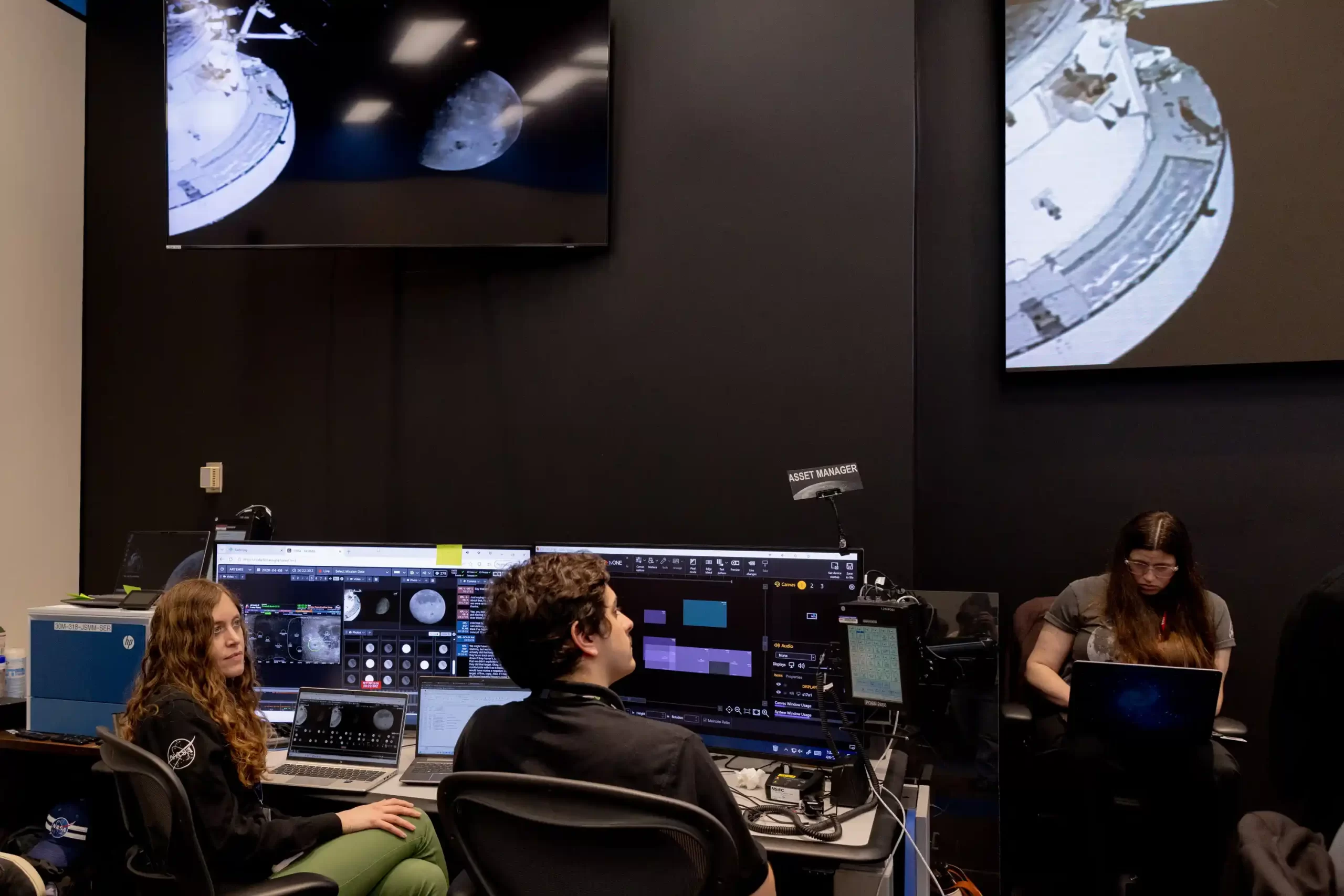
NASA officials said latest weather assessments and final exterior imaging of the Orion spacecraft indicate favourable conditions for recovery operations.
The Artemis II mission marks a major milestone in NASA’s deep space exploration programme. Launched last week from the Kennedy Space Center in Cape Canaveral, Florida, aboard the Space Launch System rocket, the Orion spacecraft carried the crew on a trajectory around the Moon.
During the mission, the astronauts travelled farther from Earth than any human beings in history, conducting systems checks and operational demonstrations critical for future lunar exploration missions.
With re-entry and splashdown now imminent, NASA says the mission represents a crucial step toward returning humans to the lunar surface under the broader Artemis programme.



 Football1 week ago
 Business1 week ago
 Latest1 week ago
 Latest1 week ago
 Latest1 week ago
 Crime1 week ago
 Latest6 days ago
 Latest1 week ago