
Entertainment
AFRIMA summit pushes policy reform, tech, collaboration for Africa’s music growth

Published
3 months agoon
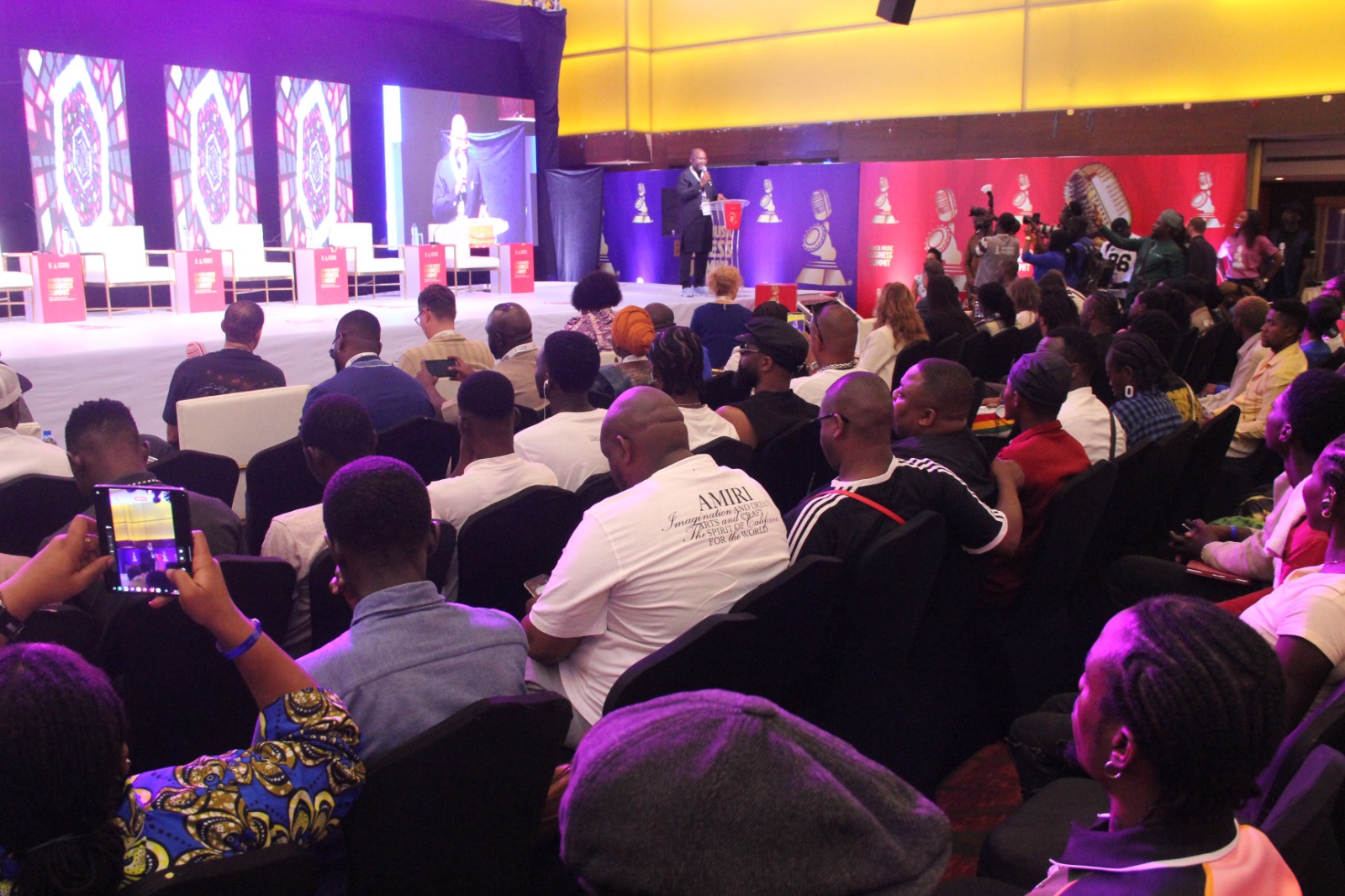
The 9th All Africa Music Awards (AFRIMA) Africa Music Business Summit (AMBS) has identified policy reform, technology adoption and stronger cross-sector collaboration as critical drivers for accelerating the growth and global competitiveness of Africa’s music industry.
The summit, held on Thursday, January 8, 2026, at the Eko Convention Centre, Lagos, convened a diverse mix of artistes, industry executives, policymakers, diplomats and international stakeholders to examine ownership, investment, distribution, copyright protection and the future of African music in the global marketplace.
With the theme “Connect, Build, Own: Monetising Africa’s Music Revolution,” discussions shifted focus from performances and popularity to the structural and economic foundations required to ensure that African music is properly valued, protected and monetised.
In his welcome address, AFRIMA President, Mr. Mike Dada, emphasised that the sustainability of the African music industry depends on stronger business consciousness among creatives and stakeholders.
“African music is not only about the songs and the vibes; it is about building the business side of the industry,” Dada said, adding that the Africa Music Business Summit was conceived to close the gap between creatives and decision-makers.
“The summit is designed to expose African artistes to business leaders within the sector across the continent,” he noted.
Delivering the keynote address, the Ambassador of the Kingdom of Sweden to Nigeria, Ms. Anna Westerholm, praised the rapid rise of African music on the global stage and encouraged young creatives to believe in their talent, regardless of their background.
“Talent knows no bounds, whether you are born into affluence or poverty,” she said, describing Africa as home to some of the most exciting music talents in the world.
“The most exciting music talents globally are not in America, Sweden or the UK, but in Africa—especially in Nigeria,” Westerholm stated.
She highlighted Sweden’s journey in building a globally competitive music industry from the 1990s, noting that African countries can similarly leverage music as a tool for economic development.
She reaffirmed Sweden’s willingness to partner with African creatives in monetisation and global promotion.
READ ALSO: AFRIMA 2026: Over 1,200 artistes, delegates storm Lagos as 9th edition kicks off
Speaking on behalf of the African Union Commission, the Head of Culture Division, Ms. Angela Martins, described music and the broader creative economy as powerful engines for development, employment and unity across the continent.
“At the African Union Commission, we recognise music and the creative economy as key drivers of development, job creation and social cohesion,” Martins said. She pledged continued support for policies and frameworks that strengthen intellectual property rights, ensure fair remuneration and enable creators to own, control and monetise their works across the value chain.
On investment and infrastructure, Mr. Mark Smithson, Country Director, Department for Business and Trade at the British Deputy High Commission, Lagos, urged Africa to prioritise domestic solutions and funding.
“African problems need to be solved by African solutions, with the support of the international community,” he said.
Quoting an African Finance Corporation report, Smithson revealed that Africa has about $1.1 trillion in institutional capital that can be mobilised through pension funds, sovereign wealth funds and insurance schemes to support digital and physical infrastructure. He added that strong domestic investment would boost international confidence and partnerships.
The importance of media and localised growth models also featured prominently. Media professional Lucy Iladoh stressed that African creative industries must develop structures that reflect local realities.
“Nollywood grew because of the locals. They found a formula that fits the Nigerian context,” she said, warning against copying foreign systems without adaptation.
“We cannot reinvent the wheel, but we cannot copy and paste,” Iladoh stated.
She also called for the creation of a unified African streaming platform capable of prioritising African content and fairly compensating artistes, adding that the government’s role should be to create enabling structures rather than distribute handouts.
Technology, particularly artificial intelligence, emerged as a major talking point. Congolese music star Innos’B shared his experience using AI in music production and promotion.
“Technology is helping us a lot in terms of creativity,” he said, recalling a project where an entire music video was produced using AI.
“Nobody went to shoot the video, yet the connection with the audience was massive,” he explained, describing AI as “the next big thing” that artistes should embrace rather than fear.
READ ALSO: AFRIMA unveils Falz, Liliane Maroune as hosts for 9th edition in Lagos
On continental collaboration, Ivorian artiste Didi B called for stronger unity between Anglophone and Francophone artistes.
“To be heard all over the world, we must first be united in Africa,” he said, noting the limited collaboration across language divides and urging more intentional partnerships.
Discussions on copyright and regulation underscored the need for harmonised copyright systems across African countries to protect creatives and guarantee fair earnings beyond national borders.
The Lagos State Government reaffirmed its commitment to the creative sector, with the Commissioner for Tourism, Arts and Culture, Mrs. Toke Benson-Awoyinka, describing Lagos as Africa’s cultural capital. She disclosed that the state invested N8.4 billion in creative industries in 2025 and remains committed to fostering collaboration, training and global competitiveness.
Other industry stakeholders, including producers ID Cabasa and Olisa Adibua, advised artistes to treat music as a long-term career, embrace continuous learning, prioritise originality and view failure as part of growth.
Overall, the summit concluded with a strong consensus that Africa’s music revolution can only be fully realised through coordinated policy reforms, smart use of technology, sustainable investment and deeper collaboration across borders and sectors.

You may like
Trending

 Football5 days ago
Iraq ends 40-year World Cup exile as Baghdad erupts in joy

 Crime1 week ago
12 feared killed in Jos night attack, authorities enforce 48-hour lockdown

 Crime6 days ago
Kano-based lawyer reportedly dies after being trapped in Abuja hotel lift
 News1 week ago
Kwankwaso Resigns from NNPP, Cites ‘Strategic Realignment’
 Business4 days ago
Nigeria braces for cost surge amid 2026 inflation projections
 Business6 days ago
CBN unveils mandatory cybersecurity self-assessment tool for Banks

 Football6 days ago
Woman alleges 18 years of abuse by Mikel Obi’s family as she seeks divorce from former captain’s brother

 Business7 days ago
Petrol price hikes trigger surge in transport fares nationwide