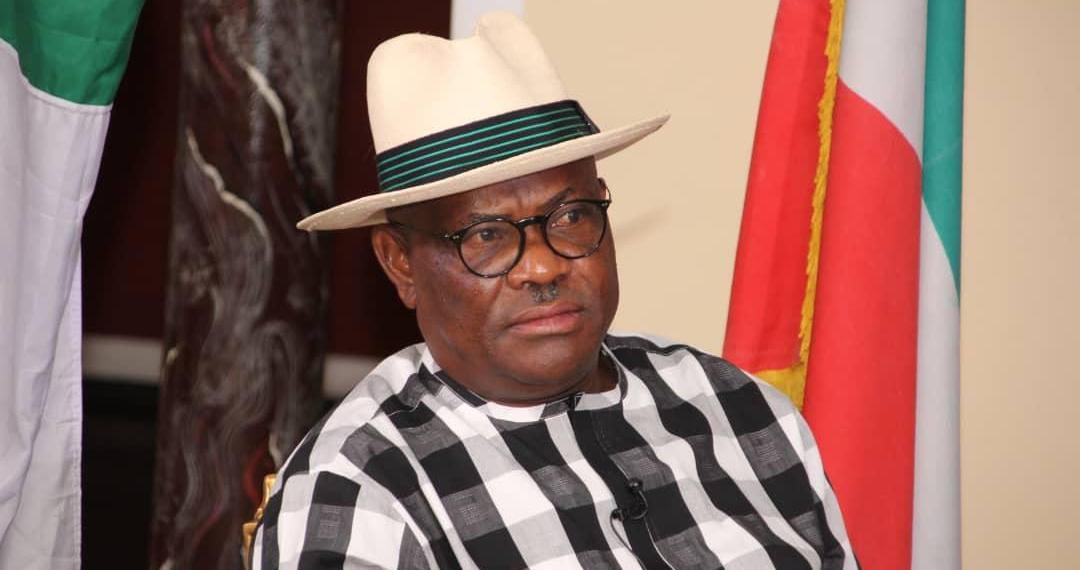
Recent political developments have renewed intense debate over the future of Federal Capital Territory (FCT) Minister, Nyesom Wike, with analysts warning that his growing confrontations within the ruling party structure may be testing the limits of informal power in Nigeria’s politics.
Wike, a former governor of Rivers State, remains one of the most polarising figures in the country’s political landscape. To supporters, he represents courage, political capacity and strategic brilliance.
To critics, he symbolises disruption, excess and unrestrained confrontation. To neutral observers, he stands as a compelling case study in how power is built, exercised and sometimes endangered within Nigeria’s political system.
Widely acknowledged as a key factor in President Bola Ahmed Tinubu’s 2023 electoral victory, Wike has also long dominated Rivers State politics, sidelining former allies and rivals alike.
His political history is marked by sustained conflict — from his prolonged battle with the Peoples Democratic Party (PDP), which he helped drive into internal crisis, to his fierce confrontation with his successor, Governor Siminalayi Fubara, whom he initially sought to keep under firm political control.
Despite his influence and popularity in some quarters, observers note that Wike’s political life has been characterised by constant confrontation.
From Rivers to Abuja and beyond, he has remained perpetually engaged in political battles, projecting himself as the ultimate authority in every space he occupies. Analysts argue that this combative style, while effective in consolidating control, leaves little room for stability or long-term accommodation.
Wike is often regarded as one of the most astute political tacticians in Nigerian politics, known for anticipating opponents’ moves and deploying effective countermeasures.
READ ALSO: Budget dispute sparks fresh political war between Wike, Fubara in Rivers
However, his strategy reportedly assumed that Governor Fubara would remain politically constrained and manageable. That calculation began to shift when Fubara aligned with the All Progressives Congress (APC), altering the political terrain and weakening Wike’s traditional leverage.
Political watchers say the evolving crisis is no longer limited to personal rivalries but now reflects a broader institutional clash. Of particular significance is Wike’s open confrontation with the APC National Secretary, who has publicly called for his resignation from President Tinubu’s cabinet.
Analysts interpret this not as a personal dispute, but as a struggle over influence, authority and the limits of acceptable power within the ruling party.
At the core of the tension is Wike’s ambiguous status — a key ally of the ruling government who is not fully integrated into the party’s internal structure.
While his support was crucial to the APC’s electoral success, party insiders note a clear distinction between allies who help win elections and stakeholders who control party machinery and post-election decision-making.
Wike’s political style, rooted in territorial dominance, has proven effective where he exercises direct control. However, party leaders are said to be increasingly uneasy with what they perceive as attempts to subordinate APC structures in Rivers State to external influence.
Analysts say once a political party senses that its internal hierarchy is being undermined, it is likely to prioritise institutional authority over personal loyalty.
Observers argue that Wike’s current predicament highlights the fragility of informal power. While such influence can be potent, it ultimately depends on the tolerance of those who control formal institutions such as party leadership, candidate selection and political legitimacy.
As the ruling party prepares for future electoral cycles, concerns about discipline, coherence and internal order are expected to intensify.
Political analysts suggest that if Wike’s methods are perceived as generating organisational cost or internal division, efforts may be made to gradually reduce his influence rather than confront him directly.
Speculation over Wike’s political future now centres on several possible outcomes: quiet isolation through loss of access and influence, political neutralisation while retaining office but losing relevance, or forced realignment that requires full submission to party structures.
Some observers, however, believe Wike’s political experience and adaptability could yet enable him to survive — provided he shifts from confrontation to coalition-building.
As tensions continue to simmer, analysts agree on one point: Wike’s situation underscores a fundamental lesson of politics — power that lacks firm institutional roots remains powerful, but also precarious.



 Football5 days ago
 Crime5 days ago
 News1 week ago
 Crime7 days ago
 Business7 days ago
 Business5 days ago
 Football6 days ago
 Business4 days ago