
Latest
APMT Blamed for Persistent Apapa Port Congestion, as Truckers Laud TTP’s Efficiency with E-Call-Up System


APMT Blamed for Persistent Apapa Port Congestion, as Truckers Laud TTP’s Efficiency with E-Call-Up System
In the ever-unfolding saga of traffic gridlock at the Apapa Port access roads, a new wave of discontent is rising — and this time, truckers are pointing fingers squarely at APM Terminals (APMT). At the same time, they are extending rare commendation to Truck Transit Parks Ltd. (TTP), operators of the electronic call-up system known as “Eto,” crediting the platform with bringing sanity to a corridor once ruled by chaos.
Speaking during a stakeholder meeting on Wednesday, Mr. Lukman Shittu Zangalo, Chairman of the Lagos State Trucks and Cargo Operators Committee (LASTCOC), described APMT’s operational inefficiencies as the “single most destabilizing factor” undermining the strides made in traffic control through TTP’s technology-driven approach.
“Anytime APMT sneezes, the entire Apapa logistics chain catches a cold,” Zangalo declared. “They control the lion’s share of cargo movement, exports, reefers, empties, rail traffic, and when they falter, it paralyzes the entire system.”
Zangalo, who also doubles as the Lagos State Chairman of the Association of Maritime Truck Owners (AMATO), expressed frustration at the terminal’s frequent slowdowns, which he said often render the efforts of truckers and digital systems ineffective. The result: trucks stranded, cargo delayed, and queues stretching from the port to city arteries.

Chairman LASTCOC, Lukeman Shittu Zangalo,
Yet amidst the criticism, he found reason to applaud, specifically the TTP’s management of the e-call-up system, Eto. Introduced by the Nigerian Ports Authority (NPA) in 2021, the digital platform was designed to streamline truck entry to the port and eliminate the lawless congestion that once plagued the area.
“Before TTP, we lived on the roads, days without sleep, spending obscene amounts just to access the gates. Today, with just N21,500, a truck can be scheduled and processed remotely. It’s revolutionary,” Zangalo emphasized.
Truckers say the transparency and order introduced by Eto has drastically reduced human interference, eliminated racketeering, and improved the ease of doing business, a key goal of port reform.
READ ALSO: Customs Area II Command Onne Launches ‘B’Odogwu’
But challenges persist. According to Zangalo, some of the delays and road congestion are self-inflicted by certain truckers who, without Terminal Delivery Orders (TDOs), linger around the port hoping to pick up last-minute jobs. This, he says, clogs the road and creates confusion in the otherwise orderly e-call-up system.
“We have bad eggs among us. Some trucks are on the queue with no cargo assignment. Others still try to shunt lines, a behavior that must be addressed if the gains of the Eto system are to be sustained,” he stated candidly.
Despite these hitches, Zangalo is adamant that reverting to the manual call-up process would be a disastrous step backward.
“Those calling for a return to manual operations are the same ones who thrived in the old corrupt system — selling call-up slots for N250,000 and manipulating queues. We are not going back to those dark days.”
Instead, he urged TTP to enhance its monitoring capability, particularly during periods of APMT downtime, to ensure trucks are not released prematurely into an already saturated corridor.
“Eto is working, but it’s only as strong as its weakest link, and right now, that’s APMT. We need accountability from the terminal operators. Otherwise, the burden unfairly falls on truckers and the road network.”
With over 60% of Nigeria’s import and export cargo moving through Apapa, the stakes are high. While the e-call-up system is proving to be a vital tool in modernizing port logistics, experts agree that holistic cooperation among all stakeholders, especially terminal operators — is essential for lasting impact.
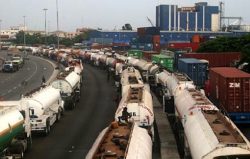
APMT Blamed for Persistent Apapa
As Lagos continues its push toward becoming a globally competitive maritime hub, the message from the truckers is clear: digital reform is not the problem — it’s the inefficiency of legacy systems that refuse to evolve.





 Business1 week ago
Nigeria braces for cost surge amid 2026 inflation projections
 Latest6 days ago
ADC accuses INEC of misinterpreting court order, demands chairman’s removal amidst growing leadership crisis

 Business1 week ago
Naira slips to N1,387/$ in March amid persistent FX market turmoil

 Football5 days ago
Manchester City storm into FA cup semi-finals with 4-0 rout of Liverpool

 Health1 week ago
Emails expose concerns within CDC, FDA over COVID-19 vaccine data mining system

 Business5 days ago
Soaring fuel prices worsen economic hardship for Nigerians

 Football1 week ago
Gravina Resigns as Italy FA President After World Cup Failure

 Latest1 week ago
Political storm in ADC as INEC freezes party status, delists top leaders