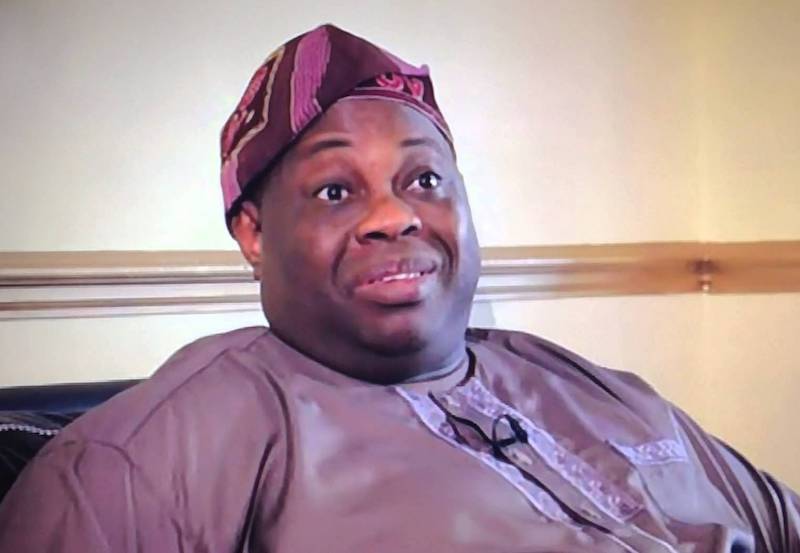
A chieftain of the African Democratic Congress (ADC), Dele Momodu, has suggested that former Vice President Atiku Abubakar could emerge as Nigeria’s equivalent of Abraham Lincoln in the 2027 general election, should circumstances and divine favour align.
Momodu made the remark on Monday while speaking during an X Space session titled “Avrilsspace: The Electoral Mathematics for 2027,” where he responded to questions on permutations ahead of the next presidential election. According to him, Atiku remains one of the strongest contenders for the presidency, despite his long history of unsuccessful bids.
The former Vice President has been a central figure in Nigeria’s presidential politics for over three decades.
His first major presidential ambition dates back to 1993, when he stepped down for the late Chief Moshood Kashimawo Olawale (MKO) Abiola under the Social Democratic Party (SDP) at the party’s Jos convention in Plateau State. Since then, Atiku has contested multiple times across different political platforms.
In the 2023 presidential election, Atiku, who flew the flag of the Peoples Democratic Party (PDP), was defeated by President Bola Tinubu of the All Progressives Congress (APC). However, as political realignments and consultations intensify ahead of 2027, there are growing indications that Atiku may once again seek the nation’s highest office.
Speaking during the session, Momodu dismissed claims of conflict of interest or political fatigue surrounding Atiku’s repeated attempts.
“There is no conflict of interest anywhere. Atiku has been running since 1993, and if God favours him, he may likely become the Abraham Lincoln of Nigeria. I leave that to God,” Momodu said.
He added that his support for Atiku is based on political realism rather than blind loyalty.
“I’m never a desperate supporter of any candidate. I’m a realist, but I believe that he stands the best chance today. He’s in good health, his business is thriving, and his family is adorable,” he stated.
Momodu also highlighted Atiku’s personal discipline and political maturity, noting that despite past disagreements with former President Olusegun Obasanjo, under whom he served as Vice President, Atiku has maintained restraint.
“He has conducted his lifestyle in a very simple and straightforward manner. Despite the occasional skirmishes with his then boss, Obasanjo, he has never uttered any insult against him,” Momodu said.
Political analysts say Momodu’s remarks reflect a growing debate within opposition circles about experience, endurance, and national appeal ahead of 2027.
Dr. Ayo Ogunlade, a political science lecturer, said Atiku’s long-standing presence in Nigerian politics could work both for and against him.
“Atiku’s strength lies in his national network and deep understanding of Nigeria’s political terrain. However, voter fatigue and the demand for generational change remain significant hurdles he must overcome,” Ogunlade noted.
Similarly, governance analyst Ifunanya Okorie described the comparison with Abraham Lincoln as symbolic rather than literal.
“What Momodu is suggesting is redemption after repeated failures. Lincoln lost several elections before becoming U.S. president. The implication is that Atiku could still make history if the political climate shifts in his favour,” she explained.
As discussions around alliances, party platforms, and zoning continue to shape the road to 2027, Atiku Abubakar’s political future remains a major talking point, with supporters hopeful that perseverance may finally translate into victory.



 Business1 week ago
 Latest6 days ago
 Business1 week ago
 Football5 days ago
 Health1 week ago
 Business5 days ago
 Football1 week ago
 Latest1 week ago