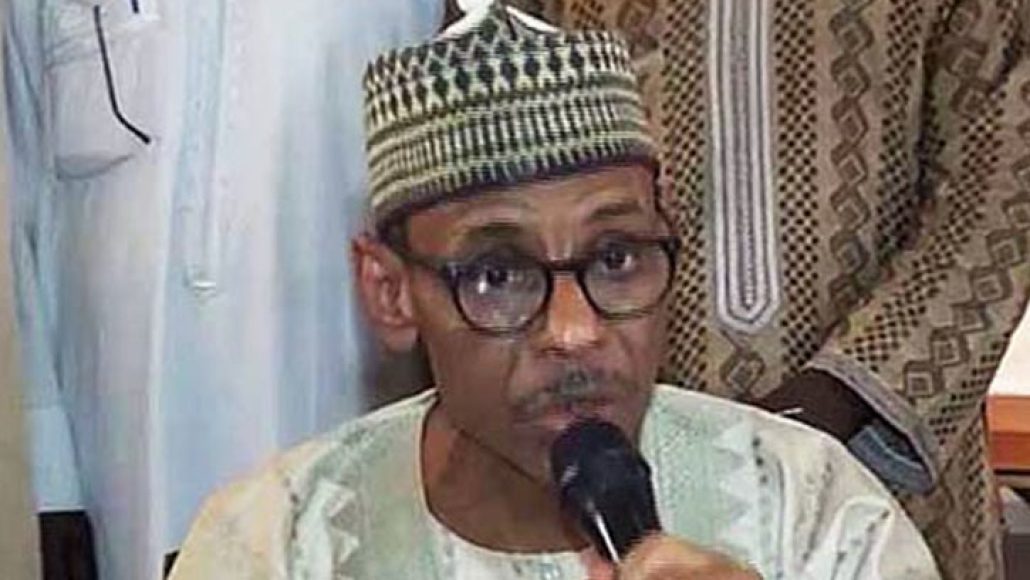
Hakeem Baba-Ahmed, a prominent political analyst and former spokesperson of the Northern Elders Forum (NEF), has criticised the formation and direction of a newly proposed opposition coalition seeking registration as a political party ahead of Nigeria’s 2027 general elections.
The coalition, spearheaded by former Vice-President Atiku Abubakar and ex-Kaduna State Governor Nasir el-Rufai, is pushing to register the All Democratic Alliance (ADA) with the Independent National Electoral Commission (INEC). The aim is to forge a united opposition bloc capable of challenging the ruling All Progressives Congress (APC).
But Baba-Ahmed, speaking on The Morning Show on Arise Television on Monday, expressed strong reservations, arguing that the movement is being hijacked by the same political heavyweights responsible for Nigeria’s governance failures.
“There are clear divisions within the coalition,” Baba-Ahmed stated. “What we’re seeing is the recycling of old political actors who are more interested in preserving their personal legacies than creating genuine change. None of these people should lead or be seen to be determining who leads the coalition.”
Baba-Ahmed, who previously served as Special Adviser on Political Matters to Vice-President Kashim Shettima, said the opposition’s biggest mistake would be to present itself as a mirror image of the APC.
“Nigerians want a clean break, not a rebranded version of the same political class. People are tired of seeing familiar faces—former vice-presidents who have contested three times, governors who became ministers—cycling through the system with nothing new to offer.”
The outspoken elder statesman called for a generational shift and a reorientation of political ideology, warning that public confidence in the coalition is already fragile.
READ ALSO: Why 2027 opposition coalition against Tinubu will fail — Senator Orji Uzor Kalu
“There are millions of capable young Nigerians with fresh ideas, energy, and integrity. This is the time to hand over the microphone, not to keep amplifying the voices of those who have had decades to make a difference and didn’t,” he said.
Baba-Ahmed echoed the sentiment of many Nigerians who are wary that the new opposition bloc is merely interested in power for power’s sake—not transformation.
“People don’t believe that this coalition represents anything fundamentally different from what we already have. They see it as an attempt to replace President Tinubu’s administration with a similar ruling class—just under a different banner,” he said.
Political observers have noted that although the ambition to build a united front is a step in the right direction, questions about credibility, transparency, and inclusivity could undermine its effectiveness.
Political analyst Dr. Adebayo Folarin of the Centre for Democratic Transition agrees with Baba-Ahmed’s view. “If the coalition remains personality-driven and doesn’t embrace ideological renewal and grassroots connection, it will crumble before it even makes it to the ballot,” he said.
Another commentator, Zainab Olaniyi, a public affairs consultant, noted that Nigerians are watching closely. “The electorate is more politically aware than ever. Token unity or elite consensus will not win elections in 2027. The coalition needs to look beyond Abuja and speak to the real aspirations of Nigerians.”




 Football1 week ago
 Business7 days ago
 Latest5 days ago
 Business7 days ago
 Football1 week ago
 Business1 week ago
 Business1 week ago
 Business1 week ago