In a move that has left financial analysts and everyday Nigerians bewildered, the Central Bank of Nigeria (CBN) has introduced new ATM withdrawal charges that threaten to undermine its long-standing push for financial inclusion and a cashless economy.
This latest directive, set to take effect from March 1, 2025, has raised concerns about the apex bank’s policy consistency and its potential impact on the economy, banking accessibility, and digital financial adoption.
CBN’s Contradictory Policy Shift
For years, the CBN has been at the forefront of promoting digital banking, encouraging financial institutions to expand their digital footprint and urging Nigerians to embrace cashless transactions.
These efforts led to widespread adoption of mobile banking, point-of-sale (POS) terminals, and ATM withdrawals as alternatives to long queues in banking halls.
However, in a surprising policy reversal, the CBN has now issued a directive that significantly increases charges on ATM withdrawals, particularly for interbank transactions.
According to the new guidelines, customers withdrawing from ATMs belonging to their banks will not be charged, but those using ATMs of other banks will face a fee of N100 per N20,000 at on-site ATMs and up to N500 at off-site ATMs.
Additionally, international withdrawals will be charged based on acquirer fees, and the previous provision allowing three free interbank withdrawals per month has been scrapped.
One immediate consequence of these new charges will be an influx of customers back into banking halls.
Many Nigerians, particularly those who cannot afford the increased transaction fees, will likely opt to withdraw their funds over the counter instead of using ATMs. This directly contradicts the CBN’s previous efforts to decongest banking halls and make banking services more convenient.
With inflation already eroding the purchasing power of many citizens, the additional financial burden imposed by these charges will exacerbate economic hardship.
READ ALSO: Supreme Court stops CBN, banks from making payments to Rivers State
A person withdrawing N100,000 from an ATM that does not belong to their bank could end up paying close to N3,000 in fees—an astronomical increase compared to the previous system, where customers had three free withdrawals before incurring minimal charges.
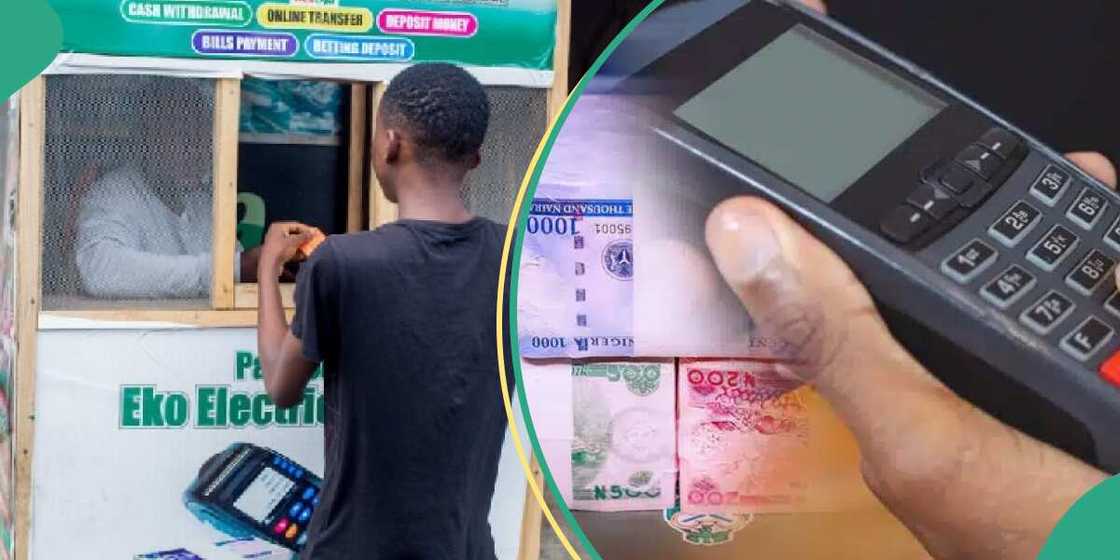
As ATM withdrawals become more expensive, many Nigerians will turn to POS agents for cash withdrawals. This increased demand could push POS operators to raise their service fees, further burdening consumers who rely on them for quick and convenient financial transactions.
Without proper regulation, financial service providers may take advantage of the situation by increasing transaction costs arbitrarily.
The CBN’s latest directive directly contradicts its financial inclusion agenda and could slow down progress toward a fully digital economy. For years, the government has encouraged citizens to move away from cash-based transactions in favor of digital banking.
READ ALSO: Senate accuses CBN of frustrating investigation on Ways and Means
This policy shift could lead to a decline in digital transaction adoption and a resurgence of cash-dependent transactions, which contradicts Nigeria’s commitment to Sustainable Development Goals (SDGs), particularly Goal 8 (Decent Work and Economic Growth) and Goal 9 (Industry, Innovation, and Infrastructure).
To mitigate the negative effects of this policy, the CBN should consider alternative strategies that support financial inclusion rather than discourage it.
Reintroduce Free Interbank Withdrawals: Bringing back the three free interbank withdrawals per month would help sustain ATM usage without discouraging digital banking.
Encourage Competition Among Banks: Instead of imposing additional charges, the CBN should create incentives for banks to expand their ATM networks, particularly in rural areas, reducing the need for interbank withdrawals.
Strengthen Digital Payment Infrastructure: Many Nigerians still struggle with failed transactions, delays, and high mobile banking fees. Addressing these challenges is crucial for fostering trust in digital payments and reducing dependence on physical cash withdrawals.
Regulate POS and Mobile Banking Charges: To prevent price exploitation, the CBN should establish clear guidelines on transaction fees for POS operators and mobile banking services.
Prioritize Public Awareness and Stakeholder Engagement: Before implementing major financial policies, the CBN should engage stakeholders, including financial institutions, consumer advocacy groups, and the general public. This would help ensure new directives are well-received and do not disrupt economic activities.



 Football5 days ago
 Crime5 days ago
 News1 week ago
 Business6 days ago
 Crime7 days ago
 Business5 days ago
 Football5 days ago
 Business4 days ago