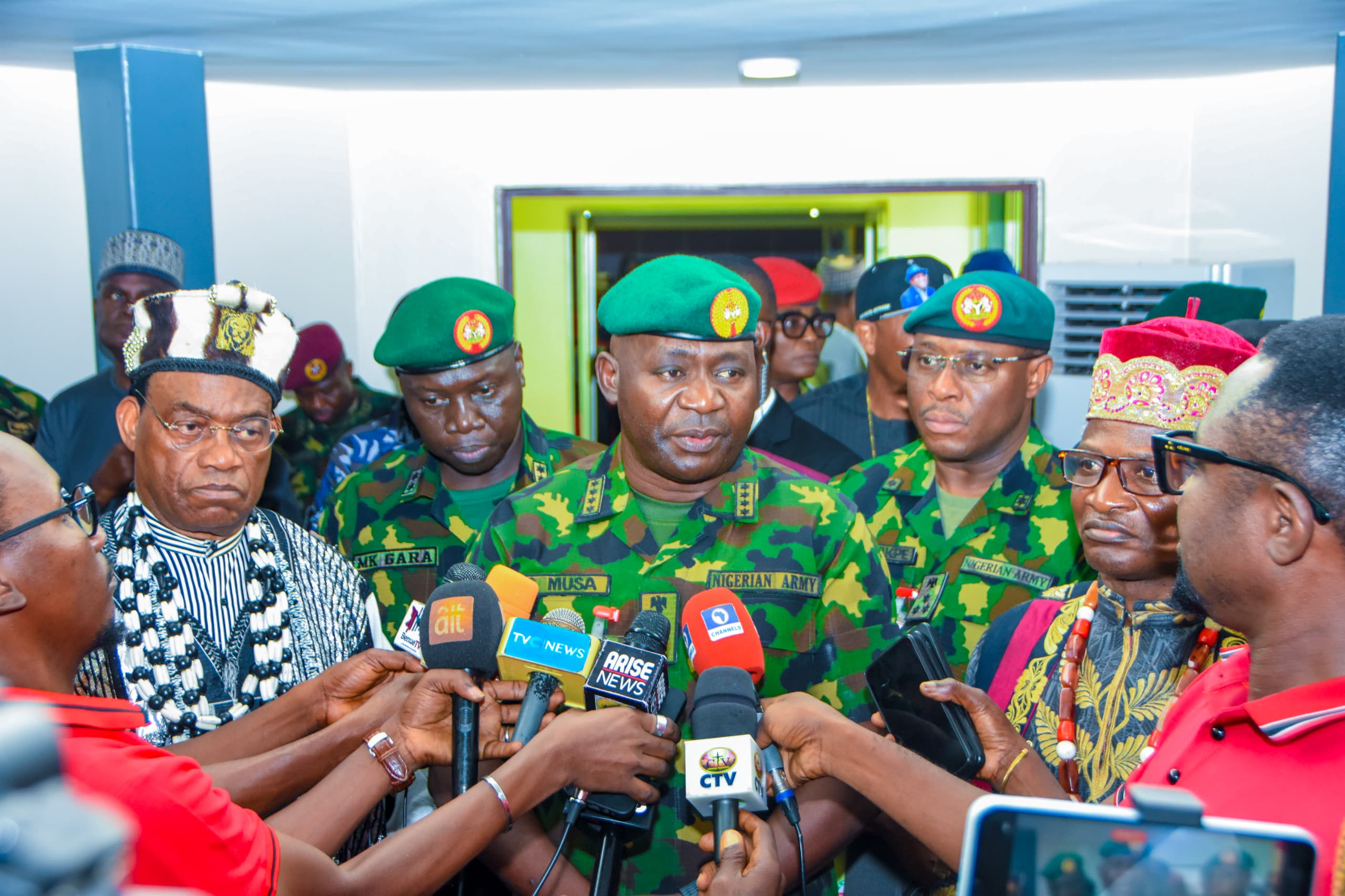
In response to renewed violence and loss of lives in Yelwata town, the Chief of Defence Staff (CDS), General Christopher Gwabin Musa, has visited Benue State, where he held an extensive meeting with traditional rulers and elders, assuring them of strong and coordinated action to restore peace and stability to the troubled region.
The high-level engagement, held on Wednesday, brought together the Tor Tiv and Chairman of the Benue State Traditional Council, His Royal Majesty, Professor James Ortese Tyozua Ayatse; the Ochidoma; other first- and second-class chiefs; and senior elders from across the state.
The session served as a platform for frank discussions on the causes of the persistent attacks by suspected herdsmen and to outline collaborative strategies for a long-term resolution.
In his remarks, General Musa stated that the visit followed the directive of President Bola Ahmed Tinubu, mandating him to personally engage with the Benue Council of Elders.
He said the objective was to unearth both immediate and systemic drivers of the violence and to design comprehensive and workable solutions.
“The security situation in Benue is deeply concerning,” the CDS said. “We are not just here to listen, but to act. A recent high-level security meeting in Abuja involving the Service Chiefs, the Inspector General of Police, and the National Security Adviser was convened to develop a coordinated response.”
The Tor Tiv, Professor Ayatse, while commending the CDS for his prompt and hands-on approach, expressed concern over the continuous displacement of indigenes due to unchecked grazing on farmlands by suspected herders.
He described the attacks as not only security threats but acts that have pushed thousands into Internally Displaced Persons (IDP) camps. He also highlighted the continued marginalization of traditional rulers in governance, despite their strategic role in grassroots peace building.
READ ALSO: CDS Musa charges strategic commanders to act collaboratively in counter-terrorism efforts
The forum heard from the Defence Headquarters’ advisory team, local chiefs, and military commanders who provided critical insights and proposed sustainable solutions.
One of the key recommendations was the adoption of cattle ranching as a modern alternative to open grazing, which has been at the heart of the herder-farmer clashes.
Speakers at the meeting urged the government to maintain neutrality and fairness in handling the crisis to restore confidence among all communities.
Concerns were also raised about the appointment of non-indigenous individuals as traditional rulers in certain communities—an issue some elders said has contributed to tensions and mistrust. Participants advised the CDS to apply lessons from his peace-building experience in Southern Kaduna to the Benue situation.
Responding to these issues, General Musa reiterated the Armed Forces’ readiness to act decisively.
He encouraged traditional leaders to assist security forces by identifying collaborators or suspicious individuals within their domains. He assured the royal fathers that all feedback and resolutions from the meeting would be reported directly to the President.
“We are fully committed to ensuring that Benue does not remain a conflict zone,” he said. “With your support, we can uproot the bad elements and return this land to peace.”
The meeting ended with an exchange of souvenirs between General Musa and the traditional rulers, group photographs, and brief media engagements.
The Defence Headquarters called on the public to remain vigilant, cooperate with security agencies, and support ongoing efforts aimed at restoring lasting peace in Benue State.



 Health6 days ago
 Energy6 days ago
 Latest6 days ago
 Trending Stories6 days ago
 Latest6 days ago
 Latest5 days ago
 Latest6 days ago
 Business5 days ago