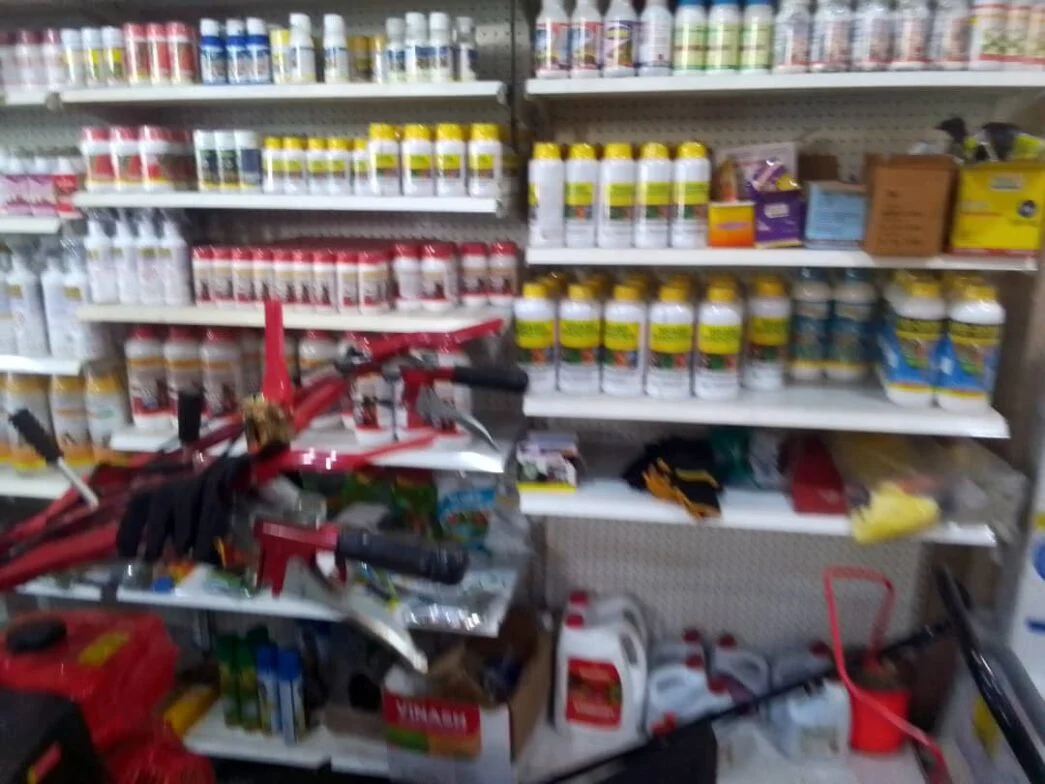
The Centre for Food Safety and Agricultural Research (CEFSAR) has lauded the National Agency for Food and Drug Administration and Control (NAFDAC) for its recent enforcement operation that led to the seizure of banned pesticides valued at over ₦800 million across Ogun, Ondo, Osun, and Oyo States.
In a strongly worded statement issued by its Executive Director, Prof. Qrisstuberg Amua, CEFSAR described the move as a “bold and commendable” step in the right direction, underscoring NAFDAC’s renewed commitment to public health, environmental protection, and the integrity of Nigeria’s agricultural value chain.
“For more than a year, CEFSAR has sounded the alarm on the unchecked circulation of hazardous agrochemicals—many of which are globally banned—on Nigerian farms and in local markets,” Prof. Amua stated.
“NAFDAC’s action is a vindication of our long-standing advocacy to rid Nigeria of dangerous substances like chlorpyrifos, paraquat, and atrazine, which pose grave risks to farmers, consumers, and the nation’s export prospects.”
CEFSAR emphasized that the infiltration of these chemicals into the country’s food systems has not only caused rising health issues such as cancer, respiratory problems, and endocrine disruption but also resulted in international trade setbacks due to non-compliance with global pesticide residue standards.
READ ALSO: Rise in uterine cancer linked to pesticide exposure
The organization credited its ongoing research, policy advocacy, and community engagement initiatives with setting the stage for the crackdown, including collaborations with farmer cooperatives and international development partners to champion organic and bio-rational alternatives.
“We must not forget that Nigeria’s agricultural sector has suffered immensely from weak regulatory enforcement, lack of awareness, and the activities of unscrupulous agrochemical dealers. NAFDAC’s recent action sends a strong message, but the work is far from over,” Amua said.
CEFSAR used the occasion to amplify its call for the Nigerian government to urgently ban glyphosate, a controversial herbicide still legally sold and widely used in the country.
Highlighting international precedents, the organization urged NAFDAC to emulate countries such as Mexico, Austria, Germany, Thailand, Saudi Arabia, and Vietnam, which have prohibited the use of glyphosate due to mounting evidence of its carcinogenic potential.
“In 2015, the World Health Organization’s International Agency for Research on Cancer (IARC) classified glyphosate as ‘probably carcinogenic to humans,’ with approximately 70% of reviewed studies showing increased cancer risk,” Amua noted.
“This is the same chemical that has led to over $14 billion in settlements by Bayer/Monsanto in the U.S. over cancer cases linked to prolonged exposure.”
CEFSAR warned that continued use of glyphosate in Nigeria could further worsen the country’s already alarming cancer burden, citing the WHO’s report of 124,815 new cancer cases in Nigeria in 2020. The group urged NAFDAC to take swift regulatory action to ban the herbicide, which it described as “a ticking time bomb in Nigeria’s public health landscape.”
The organization reaffirmed its dedication to advancing food safety, sustainable farming, and environmental stewardship across Nigeria.
It also expressed willingness to deepen partnerships with NAFDAC, government ministries, and international allies to ensure the transformation of Nigeria’s agro-chemical landscape and alignment with global best practices.
“We stand ready to work hand in hand with regulators, farmers, and policymakers to build a food system that is not only productive but also safe and sustainable for future generations,” Amua concluded.



 Entertainment6 days ago
 Aviation1 week ago

 Crime6 days ago
 Crime6 days ago
 Featured1 week ago
 Politics5 days ago
 Football5 days ago