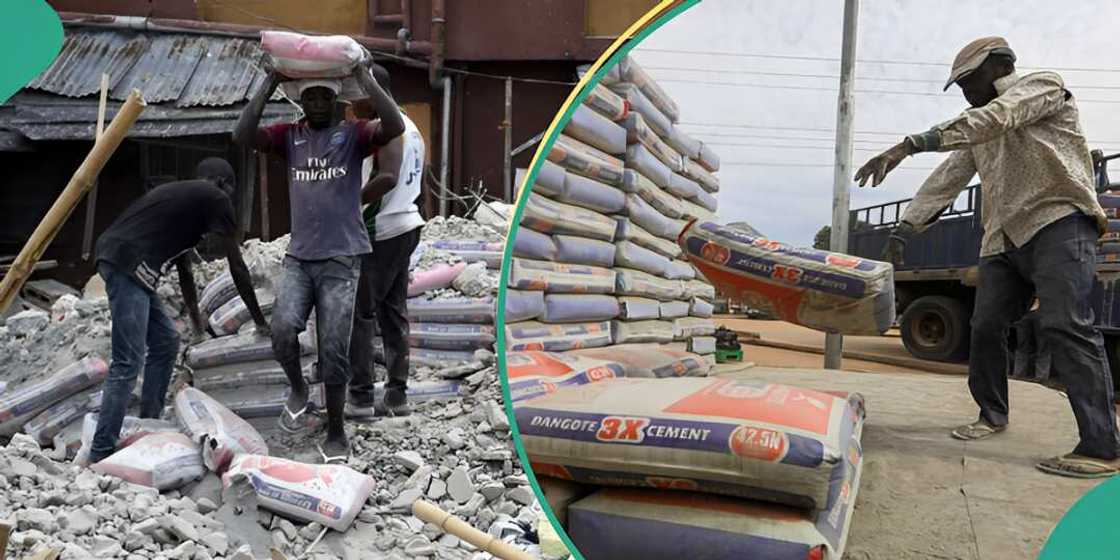
Nigerians are facing renewed economic pressure as the prices of cement produced by major manufacturers, including Dangote Cement and Mangal, rose sharply in January 2026, further worsening the cost of housing and construction nationwide.
Market checks indicate that the price of a 50-kilogramme bag of cement increased to as high as N10,500 in January, up from about N9,800 in December 2025.
This represents an increase of roughly N1,000 per bag, or about 7.1 per cent within a single month.
The new price regime has reportedly taken effect in Abuja, Nasarawa, Niger and several other parts of the country, with variations depending on location and distribution costs.
The latest hike has sparked concerns among consumers and industry stakeholders, particularly given Nigeria’s vast natural endowments for cement production, including limestone deposits in Obajana, Kogi State; Okpella in Edo State; and other parts of the country.
The increase has also come despite earlier assurances by major cement producers and industry stakeholders that cement prices would be stabilised and kept below N7,000 per bag.
The rising cost of cement is already having a knock-on effect on housing, with rents climbing sharply, especially in major urban centres.
Reports indicate that the minimum annual rent for self-contained apartments has surged by more than 100 per cent to about N800,000, from roughly N400,000 previously, particularly in cities such as Abuja and Lagos.
The situation has compounded the broader cost-of-living crisis, amid concerns that government intervention has been slow or inadequate. In December 2025, Nigeria’s inflation rate rose to 15.15 per cent, up from 14.45 per cent in November, further eroding household purchasing power.
READ ALSO: Lagos approves 3-month rebate for replacement of faded number plates
Reacting to the development, former President of the Real Estate Developers Association of Nigeria (REDAN), Alhaji Aliyu Oroji Wamakko, expressed dissatisfaction with the renewed increase in cement prices, warning that it poses serious risks to property development, housing affordability and employment.
Wamakko said the sustained rise in cement costs would significantly increase construction expenses, inevitably pushing up rents and property prices nationwide.
According to him, many businesses operating along the construction value chain could be forced to shut down as rising costs make operations unsustainable, leading to widespread job losses.
He recalled that in 2025, major cement producers such as Dangote and BUA were summoned by the Presidency after cement prices rose to about N10,000 per bag. At the time, the companies reportedly pledged to bring prices down to around N7,000.
However, Wamakko noted that the reasons for the current increase remain unclear, adding that the government has yet to provide any explanation or policy response.
He also criticised what he described as the apparent inactivity of the Price Control Board, which he said should be monitoring and regulating unjustified price increases in critical commodities such as cement.
“The situation has become very unpredictable. We cannot even quantify how high cement prices may go,” Wamakko said.
Calling for urgent action, Wamakko urged the government to undertake a comprehensive review of the cement production and pricing system to identify the root causes of the persistent increases and develop long-term solutions.
“To tell you the truth, we are not happy with this development. First, it will raise the cost of property development across the country. Secondly, rents will go up, and many people may lose their jobs as some businesses will no longer be able to continue,” he said.
He stressed that without decisive intervention, cement prices could rise beyond current levels, further deepening Nigeria’s housing deficit and economic challenges.



 Football1 week ago
 Football1 week ago
 Comments and Issues7 days ago
 Business1 week ago
 Football1 week ago
 Comments and Issues7 days ago
 Football1 week ago
 Comments and Issues7 days ago