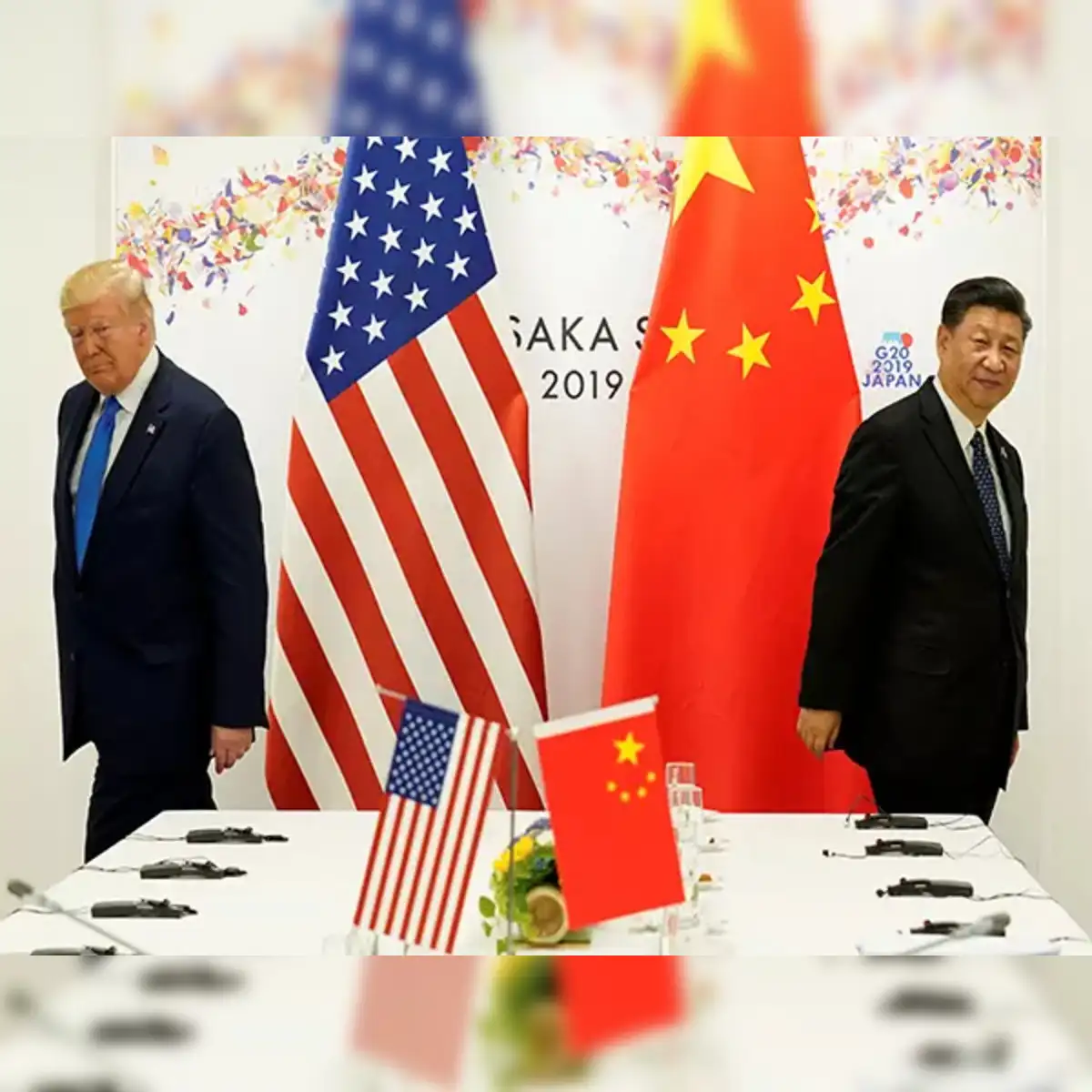
China has launched a sharp rebuke against the United States, accusing Washington of violating the terms of their recent trade agreement and vowing to take decisive action to defend its economic and sovereign interests.
The diplomatic row has cast a shadow over the possibility of a leadership-level call between President Donald Trump and Chinese President Xi Jinping, which Trump had suggested as a means to revive stalled bilateral negotiations.
In a strongly worded statement released on Monday, China’s Ministry of Commerce dismissed President Trump’s accusations that Beijing had reneged on commitments made during the trade consensus reached in Geneva last month.
The ministry described the U.S. actions as “unilateral and discriminatory,” highlighting a series of policy moves it says breach the agreement.
Among the cited actions were the U.S.’s recent restrictions on artificial intelligence chip exports to China, new limits on the sale of chip-design software to Chinese companies, and the cancellation of student visas for Chinese nationals studying in the U.S.
“If the U.S. insists on its own way and continues to damage China’s interests,” the ministry warned, “China will continue to take resolute and forceful measures to safeguard its legitimate rights and interests.”
China also accused Washington of breaking the understanding reached between Trump and Xi during their last phone conversation on January 17, though the statement stopped short of outlining specific violations. The ministry urged the U.S. to “immediately correct relevant wrong practices” and return to the framework of cooperation.
READ ALSO: Wike: FCT to undergo two-week water supply rationing due to plant rehabilitation
The diplomatic flare-up quickly rattled global markets. Hong Kong-listed Chinese stocks plunged, with the Hang Seng China Enterprises Index falling as much as 2.9 per cent—its steepest decline in nearly two months. U.S. stock-index futures also dipped, reflecting growing investor anxiety over the trajectory of U.S.-China trade relations and their broader implications for the global economy.
Beyond trade, the two superpowers are increasingly clashing on the geopolitical front. Over the weekend, China’s Foreign Ministry condemned remarks by U.S. Defense Secretary Pete Hegseth, who labeled China a looming threat to Taiwan.
Beijing views Taiwan as a breakaway province and fiercely opposes any foreign engagement with the island’s government.
President Trump has accused China of undermining the tariff truce, though he has yet to offer concrete evidence.
However, U.S. Trade Representative Jamieson Greer pointed to China’s slow progress in boosting exports of critical minerals—essential for the high-tech sector—as a sign of non-compliance.
Michael Hart, President of the American Chamber of Commerce in China, acknowledged a modest uptick in China’s rare earth mineral exports, but noted that the pace of growth remains “slower than industry would like.”
The escalating tensions follow last month’s partial tariff rollback, which saw the U.S. reduce duties on Chinese goods from 145% to 30%, while China cut its retaliatory tariffs from 125% to 10%. The 90-day deal was intended to provide a window for negotiators to hammer out a more comprehensive agreement.
However, the path to lasting resolution now appears increasingly uncertain. U.S. Treasury Secretary Scott Bessent confirmed over the weekend that trade talks have hit a wall, suggesting that only direct communication between Trump and Xi might offer a breakthrough.
Meanwhile, Beijing maintains that it has honored the terms of the Geneva consensus and accused Washington of using baseless allegations to pressure China into further concessions.


 Latest1 week ago
 Football6 days ago
 Business6 days ago
 Latest6 days ago
 Health7 days ago
 Latest6 days ago
 Latest1 week ago
 Latest6 days ago