A fresh wave of debate has erupted over the operations of the $20 billion Dangote Refinery, with industry observers and commentators alleging a long-standing pattern of resistance against the project by sections of Nigeria’s oil and gas establishment.
Supporters of Africa’s largest refinery argue that Aliko Dangote’s refining ambition has faced repeated institutional and political hurdles over the years, dating back to the administration of former President Olusegun Obasanjo.
During that period, the Port Harcourt Refinery was reportedly sold to Dangote, a move that triggered protests by staff of the Nigerian National Petroleum Corporation (NNPC). The transaction was later reversed under the late President Umaru Musa Yar’Adua, with the refinery returned to government control.
Following that reversal, Dangote opted to pursue a private-sector solution, investing about $20 billion of personal and borrowed funds to construct a new, state-of-the-art refinery in Lagos. However, critics say the challenges did not end there.
At various points, the Nigerian Midstream and Downstream Petroleum Regulatory Authority (NMDPRA) issued statements questioning the quality of products from the Dangote Refinery, claims that refinery representatives and independent assessments later disputed.
Around the same period, NNPC was accused of declining to supply crude oil to the facility, forcing Dangote to source crude from the United States and other international markets, a practice that continues in part today.
The situation appeared to shift after President Bola Ahmed Tinubu reportedly directed NNPC to supply crude oil to the refinery and accept payments in naira.
Analysts say this directive was met with internal resistance, further deepening tensions between the refinery and key industry institutions.
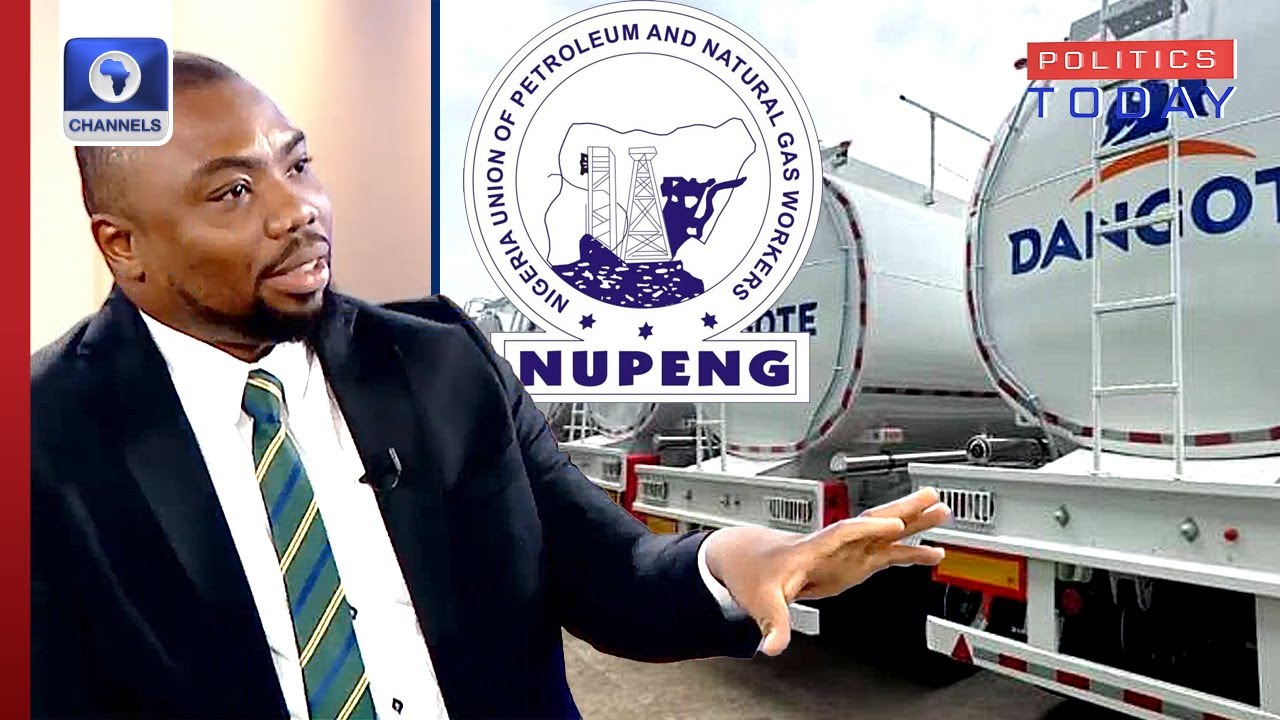
Labour relations also became a flashpoint. Oil sector unions, the Nigeria Union of Petroleum and Natural Gas Workers (NUPENG) and the Petroleum and Natural Gas Senior Staff Association of Nigeria (PENGASSAN), accused Dangote of monopolistic practices, particularly after the refinery moved away from the long-standing practice of paying truck-loading levies reportedly running into millions of naira per vehicle.
In response, Dangote Industries Limited invested in about 2,000 compressed natural gas (CNG) tankers to handle product evacuation independently.
The unions subsequently embarked on strike actions, demanding that refinery workers be allowed to unionise under their platforms. According to sources close to the refinery, Dangote management asked employees to indicate their willingness to join PENGASSAN, after which about 800 staff members reportedly signed up. These employees were later dismissed, with management citing multiple incidents of alleged sabotage, including unexplained fires within the facility.
Following further industrial action, the National Assembly intervened, urging the refinery to reabsorb the affected workers. The staff were eventually reinstated but redeployed to other Dangote facilities, including cement plants, away from the refinery complex.
Despite the controversies, the Dangote Refinery is now fully operational, producing Premium Motor Spirit (PMS), diesel, aviation fuel and other petroleum products, alongside fertiliser outputs.
The facility has commenced exports to markets in the United States, Asia and several African countries, generating foreign exchange earnings for Nigeria.
However, critics continue to question the insistence by some regulators, particularly officials within the downstream petroleum sector, on importing PMS using scarce foreign exchange while a domestic refinery is operational.
Some commentators have accused industry leaders, including NMDPRA Chief Executive Ahmed Farouk, of prioritising fuel imports over local refining, alleging—without judicial proof—that vested interests and possible rent-seeking motives may be involved.
Proponents of local refining argue that major indigenous players such as Dangote and BUA Group represent healthy competition capable of driving Nigeria’s industrial revival, conserving foreign exchange and strengthening energy security.
They have called on the federal government to decisively address what they describe as systemic sabotage of local investments.
As the debate continues, analysts say the Dangote Refinery has become a symbol of Nigeria’s broader struggle between import dependence and industrial self-sufficiency, with the outcome likely to shape the country’s economic direction for decades to come.


 Energy1 week ago
 Crime7 days ago
 Football2 days ago
 Football1 week ago
 Business1 week ago
 Crime7 days ago
 Business1 week ago