While defections are not new in Nigerian politics, the frequency and timing—especially mid-term or ahead of elections—raise questions about party ideology and accountability.
Dr. Zainab Lawal, a governance expert, warned that: “These crossovers often prioritize political expediency over democratic stability. Voters elect a candidate based on party platforms. When that platform changes midstream, it undermines democratic choice.”
In what continues to shape the trajectory of Nigeria’s democratic evolution, a pattern of high-profile defections from the Peoples Democratic Party (PDP) to the All Progressives Congress (APC) has steadily gained momentum over the years.
From the South-South to the Northwest, sitting governors—some of them in PDP strongholds—have crossed the political aisle in moves that have often shifted the balance of power both at the state and national levels.
Political observers believe these defections are not isolated events but part of broader realignments influenced by internal party conflicts, regional grievances, electoral calculations, and access to federal support.
Below is a closer look at seven sitting governors who have made the leap from PDP to APC—and what political experts think these moves signify.
READ ALSO: Onanuga: Atiku a “Loser” as PDP defections shatter 2027 coalition dreams
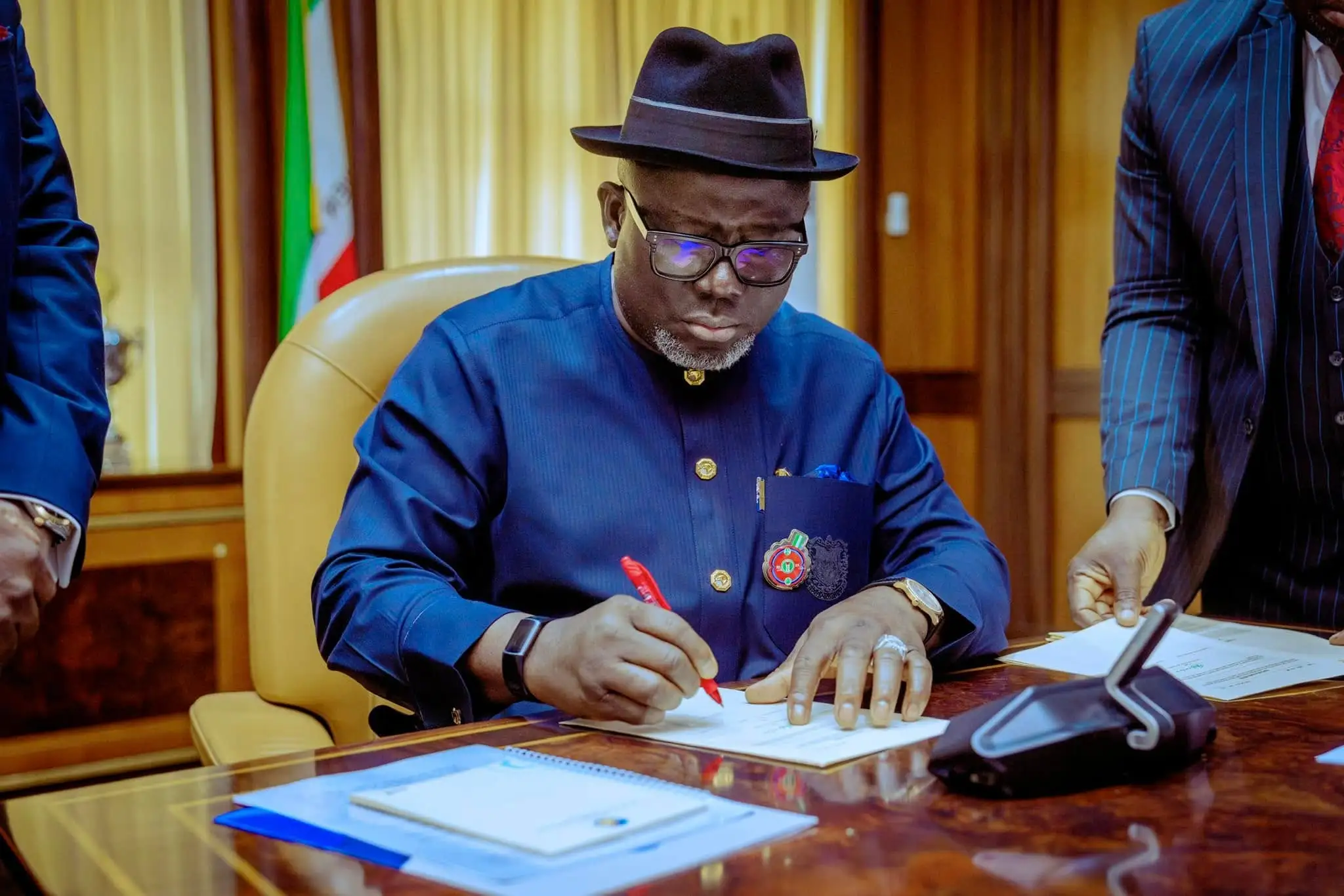
Sheriff Oborevwori (Delta State)
The most recent and arguably the most shocking, Oborevwori’s defection on Wednesday sent ripples through Delta State and beyond.
Delta has remained a PDP stronghold since 1999, making his defection to the APC a significant blow to the opposition party.
Dr. Tade Ogunlade, a political scientist at the University of Ibadan, called the move “a strategic recalibration by Oborevwori.”
“He’s aligning with the federal centre, possibly in anticipation of greater resource flow and support for Delta’s infrastructural needs. But it could also be a defensive move ahead of future electoral battles,” he said.
Dave Umahi (Ebonyi State)
Governor Umahi’s defection in November 2020 was framed around the marginalisation of the Southeast region. He praised the APC’s infrastructure efforts and said the PDP had taken the Igbo for granted for too long.
Professor Ifeanyi Madu, a Southeast-based political analyst, said Umahi’s move laid the groundwork for similar decisions in the region.
“Umahi opened the door for Southeastern realignment. He positioned himself not just politically but economically for the benefit of his state,” he noted.
Ben Ayade (Cross River State)
In May 2021, Ayade joined the APC, citing the need for federal alignment to attract more development. His move came at a time Cross River was facing economic challenges.
“Ayade’s defection was motivated more by pragmatism than ideology,” said Joyce Ekanem, a political commentator from Calabar. “Governors want to be on the same side as Abuja when the chips are down.”
Bello Matawalle (Zamfara State)
Matawalle defected in June 2021, amidst political instability in Zamfara. His move was interpreted as an attempt to consolidate his grip on power and stabilize his administration.
Dr. Musa Auwalu, a Kaduna-based political affairs analyst, said:
“Matawalle needed political survival. The APC offered a safer base after intra-party squabbles weakened the PDP in Zamfara.”
Aminu Tambuwal (Sokoto State)
A serial defector, Tambuwal left the PDP for APC before the 2015 elections, returned to PDP in 2018, and has been linked to another shift back. His case exemplifies the fluid nature of Nigerian political loyalty.
“Tambuwal’s journey is a case study in realpolitik,” said Prof. Tanko Idris of Ahmadu Bello University. “He moves where the tide offers the most advantage.”
Aliyu Wamakko (Sokoto State)
Wamakko was among the pioneers who defected from PDP to APC in 2014, contributing to the coalition that unseated the PDP in 2015.
“He played a critical role in shaping the APC’s national dominance. His defection wasn’t just a state issue—it had ripple effects nationally,” said Barr. Yusuf Liman, a political historian.
Abdulfatah Ahmed (Kwara State)
Ahmed’s 2014 defection alongside Bukola Saraki marked the beginning of the “political tsunami” that ousted PDP from Kwara. Though he later returned to PDP, his defection while in office was crucial.
“Kwara’s defection wasn’t just symbolic—it changed the political order of an entire region,” explained Kola Adebayo, a media consultant based in Ilorin.
As Nigeria prepares for future elections, these political shifts will undoubtedly shape narratives, coalitions, and voter behavior. Whether these moves translate into better governance or remain tools of political maneuvering remains to be seen.



 Business1 week ago
 Latest6 days ago
 Business1 week ago
 Football5 days ago
 Health1 week ago
 Business5 days ago
 Football1 week ago
 Latest1 week ago