Asaba, Nigeria – Delta State has recorded a remarkable leap in its Internally Generated Revenue (IGR), rising from N83 billion in 2023 to N158 billion in 2024, marking a 90.4% increase.
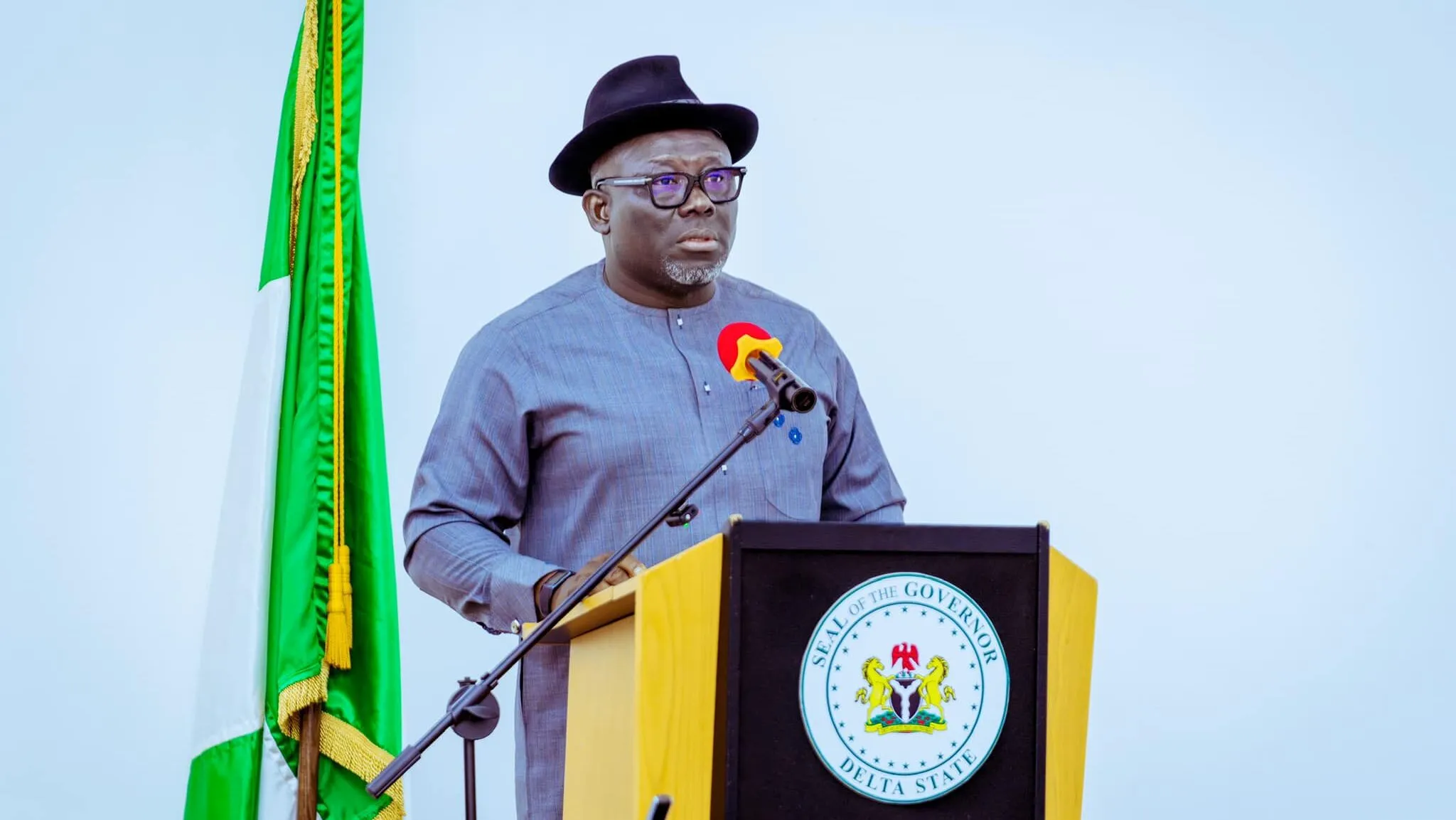
This was revealed by Governor Sheriff Oborevwori during the presentation of his administration’s performance scorecard before the Delta State House of Assembly on Wednesday.
The governor described the revenue growth as a major milestone achieved without introducing new tax burdens on citizens, in keeping with the administration’s pro-people governance philosophy.
“For 2025, we project the figure will reach N165 billion. It is worthy of note that we achieved this growth without increasing the personal tax liabilities of our people,” Oborevwori stated.
Governor Oborevwori attributed the surge in revenue to the state’s increasingly business-friendly environment, supported by strategic peace-building initiatives and infrastructure development, which have collectively enhanced investor confidence and improved tax compliance among residents.
He also applauded the Delta State Internal Revenue Service for its diligence, professionalism, and reforms that have plugged leakages and strengthened revenue systems.
In another significant financial stride, Governor Oborevwori revealed that Delta State had reduced its debt stock by N216.1 billion, from N465.3 billion at the start of his administration to N249.2 billion as of December 31, 2024—a 46.4% reduction.
“This debt reduction reflects our prudent fiscal management and commitment to long-term sustainability,” he noted.
Highlighting public sector reforms, Oborevwori stated that Delta was one of the first states in the country to implement a new minimum wage of N77,500, surpassing the national benchmark of N70,000. The move has raised the state’s monthly wage bill from N11.5 billion to N15.3 billion.
READ ALSO: Oborevwori reaffirms commitment to quality infrastructure in Delta State
To strengthen public service delivery, the administration hosted three town hall meetings and a first-of-its-kind dinner with senior civil servants, promoting open dialogue and engagement.
More than 8,000 public servants have been trained since the start of his administration, including 450 senior management staff who completed a comprehensive weekend training programme in partnership with the Administrative Staff College of Nigeria (ASCON).
“We are building leadership capacity across all levels of government,” the governor emphasized.
Additionally, a strategic retreat was held with Sewa Assets Management for commissioners and heads of inter-ministerial agencies to translate the MORE Agenda into actionable and measurable outcomes.
“Through this retreat, the strategic imperatives of the MORE agenda were distilled into deliverables that can be tracked and reported,” Oborevwori said.
In response to manpower shortages, the state government recruited 13,497 new teaching and non-teaching staff across Delta’s 25 local government areas. Also, promotion interviews were conducted for 2,193 officers, demonstrating a commitment to staff development and career progression.
“These reforms and investments reaffirm our unwavering resolve to build a robust, efficient, and professional civil service,” Oborevwori added.
The latest figures from the National Bureau of Statistics (NBS) show that Nigeria’s 36 states and the FCT collectively generated N2.43 trillion in IGR in 2023, up from N1.93 trillion in 2022, representing a 26.03% increase.
By comparison, Delta’s N158 billion places it firmly among the top-performing states, far surpassing states like Taraba (N10.87 billion), Yobe (N11.19 billion), and Kebbi (N11.74 billion).
Governor Oborevwori reaffirmed his administration’s commitment to fiscal responsibility, public sector development, and inclusive growth.
“We remain focused on delivering sustainable prosperity to all Deltans by driving reforms that improve lives and position Delta as a model of good governance,” he concluded.


 Latest1 week ago
 Football7 days ago
 Business6 days ago
 Latest7 days ago
 Health1 week ago
 Latest6 days ago
 Latest6 days ago
 Latest1 week ago